The digital tug of war for your eyeballs
If you have spent more than thirty seconds on social media today, you have seen the footage. WWE clips are everywhere, cut into snappy high-definition reels that make you want to click follow. Then, you head over to a Mexican wrestling account and see AAA highlights that feel like they were filmed through a screen door from 2004.
We are currently living in the middle of a massive disconnect between how the two biggest promotions in the world handle their digital assets. It is not just a difference in production value. This is a battle for the soul of the casual fan who discovers wrestling through a vertical video on a subway commute.
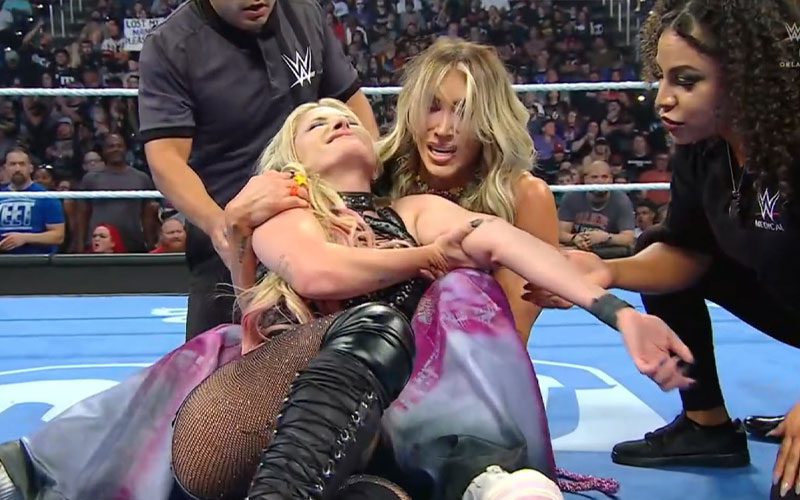
WWE handles the clip game like a Fortune 500 company
Let's be honest about where the bar is set. WWE treats every single spot, kickout, and promo segment like it is a precious commodity. They curate their own highlights with surgical precision, cleaning up the audio and making sure the light hits the logo at the perfect angle.
When you watch those clips, they look like a finished product. It is the wrestling equivalent of a blockbuster film trailer. They understand that most people today are not sitting down for a three-hour show in real time. They are watching the highlights, and the company wants to make sure those clips are the most polished things on your feed.
The problem is that this controlled environment takes the soul out of the moment. You watch a finish, and it feels designed to trend rather than designed to thrill. There are no raw reactions, no stray shouts from the crowd, just a sanitized loop of a finishing move.
AAA highlights are the wild west of lucha
Then you toggle over to AAA and it is a total different story. You might be watching a high-altitude spectacle involving El Hijo del Vikingo flying across the ring, and the camera work is shaking like it is being held by a toddler on a sugar rush. It is chaotic, messy, and absolutely electric.
This is where the magic happens. You see the crowd pouring over the barricades or a fan holding a giant soda cup while a top-rope hurricanrana happens six feet away. It doesn't look like a polished movie. It looks like a riot that just happened to have some really athletic people in the middle of it.
The downside? Nobody can find these videos. If you are not following a specific fan account or scrolling through the murky depths of a niche forum, those AAA highlights might as well not exist. It is a tragedy because the product in the ring is often lightyears ahead of what is happening in the mainstream media bubble.
The danger of losing the grit
Why does this matter? Look at what happened when promotion styles started to converge in the past. When everyone starts editing their clips to look like a glossy commercial, they stop capturing the atmosphere. We risk losing the specific kinetic energy of a live show.
I remember watching old tapes of early nineties lucha where you could barely see the ring, but you could hear the desperation in the crowd. When you over-edit that for a corporate highlight package, you aren't just cleaning up the footage. You are lobotomizing the experience.
WWE has clearly mastered the art of the 60-second hook. They know how to get your attention before the thumb naturally swipes to the next video. Their metrics are likely through the roof. But if they keep smoothing out all the edges, they are going to end up with a product that looks like a video game instead of a fight.
AAA needs to find a middle ground. They have the best performers on the planet, but they are serving that art through a blurry straw. They don't need a corporate hand-wringing session about branding. They just need a steady tripod and someone who knows how to export a file that isn't a compressed nightmare.
The cold, hard truth
The wrestling industry is currently fractured by this digital divide. One side gives us a beautifully rendered, hollow shell of a match. The other gives us a raw, authentic, and completely unwatchable pixelated disaster. You shouldn't have to choose between quality production and actual emotional weight.
It is worth noting that some independent promotions have figured this out. They manage to retain that indie grit while delivering high-definition files that actually make the move look like an impact. The companies that are failing are the ones treating their highlights like a secret state document rather than a marketing funnel.
If you want to see a masterclass in how this goes wrong, just compare a 2024 WWE clip of a simple superkick to a grainy, shaky highlight of a multi-man tag in Tijuana from last month. One makes you feel like you are at a boardroom meeting. The other makes you want to travel to Mexico just to see who gets thrown through the floor next.
At the end of the day, wrestling is a circus. It is supposed to be loud, imperfect, and slightly dangerous. If you sanitizing the clips, you are selling the circus, but you are hiding the clowns. And trust me, the fans are smart enough to know when they are being fed a polished lie.