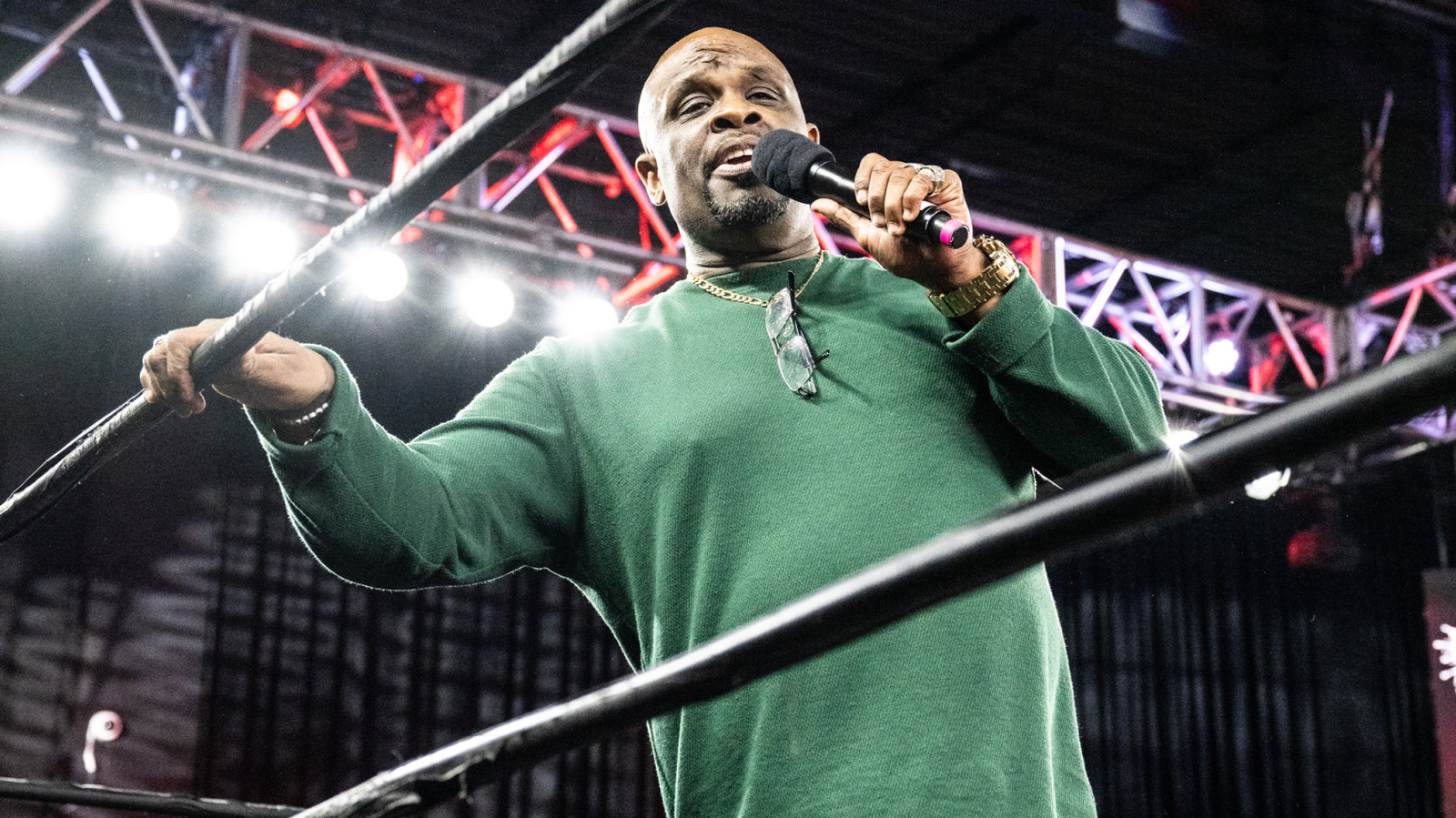
D-Von Dudley reveals the strange reality of wrestling The Sandman
The physics of in-ring chaos
D-Von Dudley recently provided an unvarnished look at the internal logistics of the ECW locker room, suggesting that wrestling The Sandman required a specific set of tactical adjustments depending on his sobriety. In the high-risk environment of Extreme Championship Wrestling, where weapons use and improvised spots were the standard, the difference between a controlled sequence and a shoot injury often came down to balance.
D-Von noted that working with The Sandman was far more manageable when his opponent had been drinking. It is a counter-intuitive take for those expecting a professional athlete's focus, but the logic holds up under scrutiny. When a wrestler who relies on brawling and weapon spots is intoxicated, their movements become predictable, sluggish, and arguably softer. They are less likely to attempt explosive, high-stiffness maneuvers that require precise timing.
When sobriety becomes a liability
The inverse, according to D-Von, was considerably more dangerous. When The Sandman was sober, his intent often shifted; he was more volatile, more prone to stiff shots, and less consistent in his physical execution. In professional wrestling, the safest opponent is a calculated one. An opponent whose output fluctuates wildly with their blood alcohol content forces the other participant to shift into a defensive, reactive posture.
This insight highlights the inherent instability of the ECW product. While the atmosphere was electric, the lack of a standardized athletic performance model meant wrestlers were often navigating unpredictable variables in the ring. When one participant is working to maintain a structured sequence while the other is operating on pure stimulus-response, the risk of a botched spot increases exponentially.
The evolution of wrestling mechanics
D-Von Dudley’s assessment serves as a reminder of how industry standards have shifted. Modern performance centers focus on repetition and safety protocols to ensure that every sequence, whether a basic lock-up or a high-angle suplex, operates within a narrow margin of error. The ECW era, by contrast, frequently outsourced its safety to the experience and instincts of the veterans involved.
The Sandman’s style was never about technical proficiency; it was about the spectacle of the entrance, the beer, and the sing-song participation of the crowd. Yet, even in a gimmick-heavy presentation, the physical toll remained real. D-Von’s comments underscore that behind the chaotic facade of an ECW match, there were human beings trying to keep one another upright while navigating a total lack of standard operating procedure.
There is, however, a critical flaw in this workflow. By allowing such variance in the in-ring environment, the promotion essentially gambled with talent health on a nightly basis. While D-Von manages to frame this as an interesting locker room anecdote, it effectively explains why so many performers from that era suffered chronic injuries. If a match needs to be adjusted based on whether the opponent is sober, the match cannot be executed with the consistency required for long-term health.
As reported by Wrestling Inc, these behind-the-scenes realities define the lore of ECW. It remains a fascinating study in contrast, comparing the rough-hewn, erratic nature of the hardcore scene with the highly produced, health-conscious scripts of the current era. The Sandman was a icon of a specific movement, but the cost of that movement was a complete disregard for the technical consistency of the product.
WWE Winged Eagle Championship Mini Replica Title Belt
Own a piece of history from WWE's most iconic era.
Frequently Asked Questions
Why did D-Von Dudley find wrestling The Sandman easier when he was intoxicated?
What made The Sandman dangerous when he was sober?
How did ECW’s lack of safety standards affect wrestlers?
How do modern wrestling mechanics differ from the ECW era?
What defined The Sandman's in-ring style?
More Coverage
Paul Heyman admits the AEW effect is actually good for business
3 hours ago
Top 10: Iconic Jim Ross Moments and Contributions
6 hours agoWWE Hall of Fame 2027 needs less filler and more actual legends
12 hours ago
The Nation of Domination deserves more than a footnote in wrestling history
14 hours agoCrusherFest is coming back to Milwaukee and it's a fever dream
22 hours agoTop 10: The Definitive Dusty Rhodes Moments
22 hours agoMore Analysis
Tony Khan is panic-booking television again
an hour ago
Paul Heyman's undisclosed health battle raises questions about WWE medical oversight
an hour ago
AEW's market impact is finally forcing WWE to refine its product
an hour ago
Brock Lesnar's ring exit turned the IWC into a war zone
an hour ago
Mick Foley will not appear at AEW x NJPW Forbidden Door
an hour ago