The true test of a catch wrestler
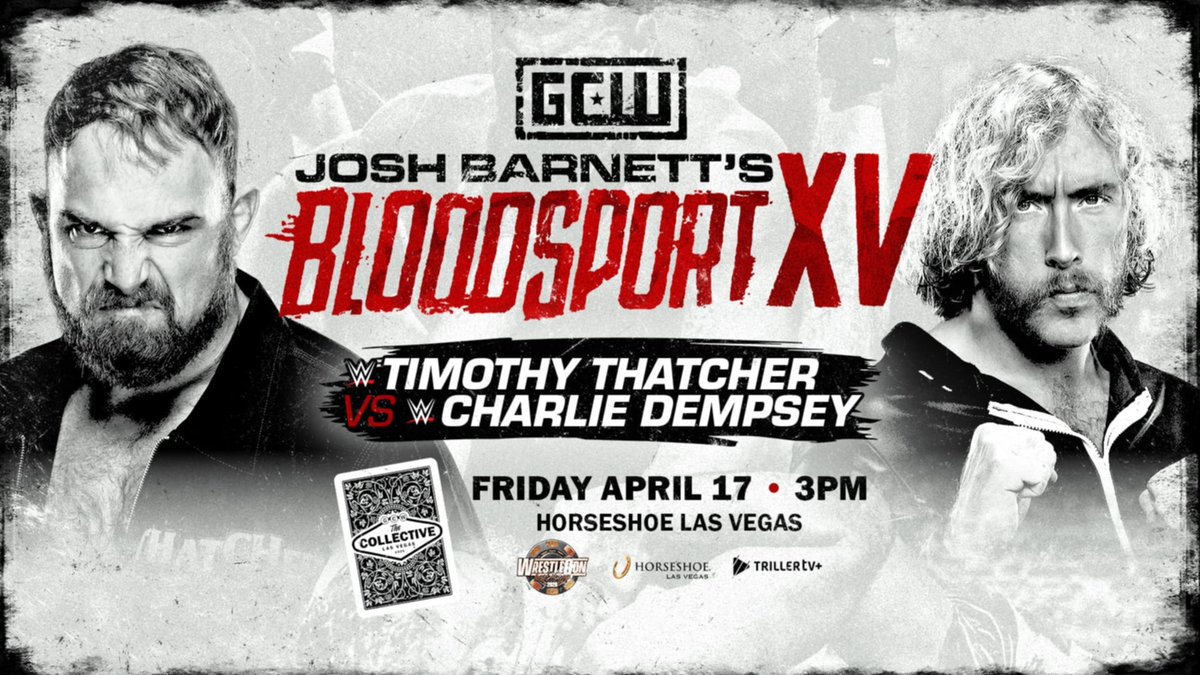
WWE is finally learning how to effectively deploy its talent outside the main developmental bubble. Sending Charlie Dempsey to Josh Barnett’s Bloodsport XV is not just a fun indie crossover. It is a highly specific, tactical deployment of their most authentic technical wrestler into an environment designed to brutally test his limits. F4WOnline confirmed the booking this week, and it completely changes the complexion of the event.
Dempsey is a stylistic outlier in modern WWE. He does not run the ropes. He does not look for the hard camera when locking in a submission. He grinds. He works the mat with a viciousness that looks completely alien next to the heavily choreographed gymnastics that populate most of Tuesday nights.
Bloodsport strips away the traditional safety nets. There are no ropes to force a break. You win by knockout or submission. That is the entire ruleset. For a member of the No Quarter Catch Crew, this is essentially a home game. Dempsey’s entire offensive repertoire is built on positional dominance, joint manipulation, and exhausting his opponent's central nervous system.
Let us look at the mechanics of his mat work. Dempsey heavily favors the double wrist-lock. In a standard NXT ring, an opponent will usually drag themselves to the bottom rope to force a referee intervention. Take the ropes away, and the escape options vanish instantly. You either have to roll through, risking a worse defensive position, or tap out.
He also uses a bridging suppression system when applying holds. He does not just torque the arm. He drops his hips, drives his body weight directly through his opponent's chest, and creates maximum mechanical advantage. It is ugly, brutal, and brilliantly effective.
The problem with the Gauntlet
This aggressive, shoot-style booking sits in stark contrast to what is currently happening on the main NXT brand. While Dempsey prepares for a legitimate, grueling fight, the rest of the midcard is trapped in booking purgatory.
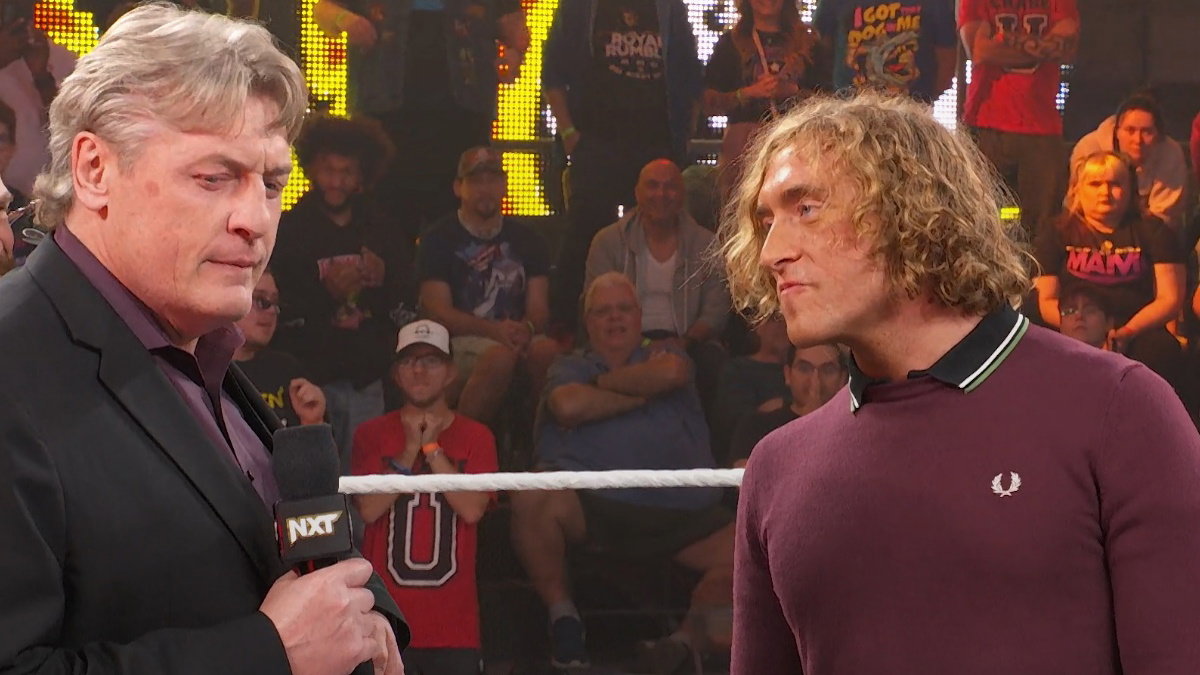
We are seeing a worrying, persistent trend with the NXT North American Championship. Instead of building clear, logical contenders through singles feuds, the creative team is relying heavily on multi-man chaos. Ringside News noted that two more names were just randomly thrown into the upcoming Gauntlet match for the title.
This is lazy. It creates the illusion of a stacked division, masking a complete lack of focused storytelling. Adding more bodies to a match does not make the match more important. It usually just makes the match a structural mess.
A Gauntlet match is inherently flawed from a competitive standpoint. The wrestler who enters first has an impossible mountain to climb. The wrestler who enters last has a massive, unearned physical advantage. It is a format that rewards luck over skill, which undercuts the prestige of any championship.
When you cram six or eight guys into a single bout, nobody gets the time to establish a rhythm. Matches devolve into a sequence of rushed, sloppy high spots. Someone hits a finisher, scores a pin, and immediately gets rolled up by the next entrant. It feels incredibly cheap.
Tactical advantages on the mat
Contrast that midcard chaos with the Bloodsport model. Two fighters. One mat. A clear winner and a clear loser. Dempsey’s involvement in Bloodsport XV, which recently saw two more matches added to the card, shows a willingness from WWE management to experiment with alternative match structures.
In a Bloodsport ring, the match is often decided in the first thirty seconds. It is all about the grip fight. If you can secure inside control, you dictate the entire pace of the contest.
Dempsey is excellent at pummeling for underhooks. He does not throw blind, looping strikes. He closes the distance, secures the clinch, and looks for an inside trip or a belly-to-belly suplex to take the fight to the ground.
Once on the mat, his Lancashire catch wrestling background shines. Catch wrestling is deeply aggressive. It is not about stalling in a full guard. It is about actively seeking submissions from every conceivable angle. Dempsey will attack a knee bar just as quickly as a rear-naked choke.
Dempsey’s usage of the cravate is a perfect example of his ring intelligence. He does not use it as a rest hold like ninety percent of the current roster. He uses it to control the opponent's posture entirely. By forcing the chin down into the chest, he restricts their breathing and breaks their vertical balance.
From that single control position, he can snap them down into a front facelock, throw a stiff knee to the sternum, or transition directly into a guillotine choke. In Bloodsport, the cravate becomes even more dangerous. Without ropes to fall back against, the opponent has to carry Dempsey's dead weight. It exhausts the neck and shoulder muscles rapidly.
The risk and the reward
There is a significant risk here, of course. Dempsey is still relatively young in his career. He is stepping into a ring where he might face a seasoned mixed martial artist or a grizzled indie veteran who specializes in this exact shoot-style format.
If he gets caught in a bad position, he will not have the referee or the ropes to save him. He will have to fight his way out using pure technique. He cannot rely on a dramatic kick-out at two-and-a-half to pop the crowd. He has to defend the joint or he loses.
This is where we will see what he is truly made of. A strong showing at Bloodsport does more for Dempsey than winning a dozen squash matches on Tuesday nights. It gives him an aura of legitimate danger. It proves that his shooter gimmick is not just television character work. He can actually back it up when the training wheels are completely removed.
As for the North American title picture, I expect the Gauntlet match to be exactly what it appears to be: a rushed, overbooked cluster of near-falls. Someone will walk out with the belt, but the victory will feel incredibly hollow because of the convoluted format.
WWE needs to decide what kind of wrestling product they want to present in their developmental system. Do they want the gritty, realistic grappling of a Charlie Dempsey? Or do they want the arcade-style, multi-man chaos of the Gauntlet?
Right now, they are trying to do both, and it creates a wildly disjointed viewing experience. But for one night at least, Dempsey will get to show exactly how effective traditional catch wrestling can be when applied in its purest, most violent form.
My prediction for the Bloodsport match is straightforward. Dempsey will submit his opponent within the first five minutes. He will secure a takedown early, grind them down from the top position, and lock in a bridging double wrist-lock. It will not be flashy. It will be brutally efficient. And it will be the best piece of business WWE has done with their developmental roster all year.