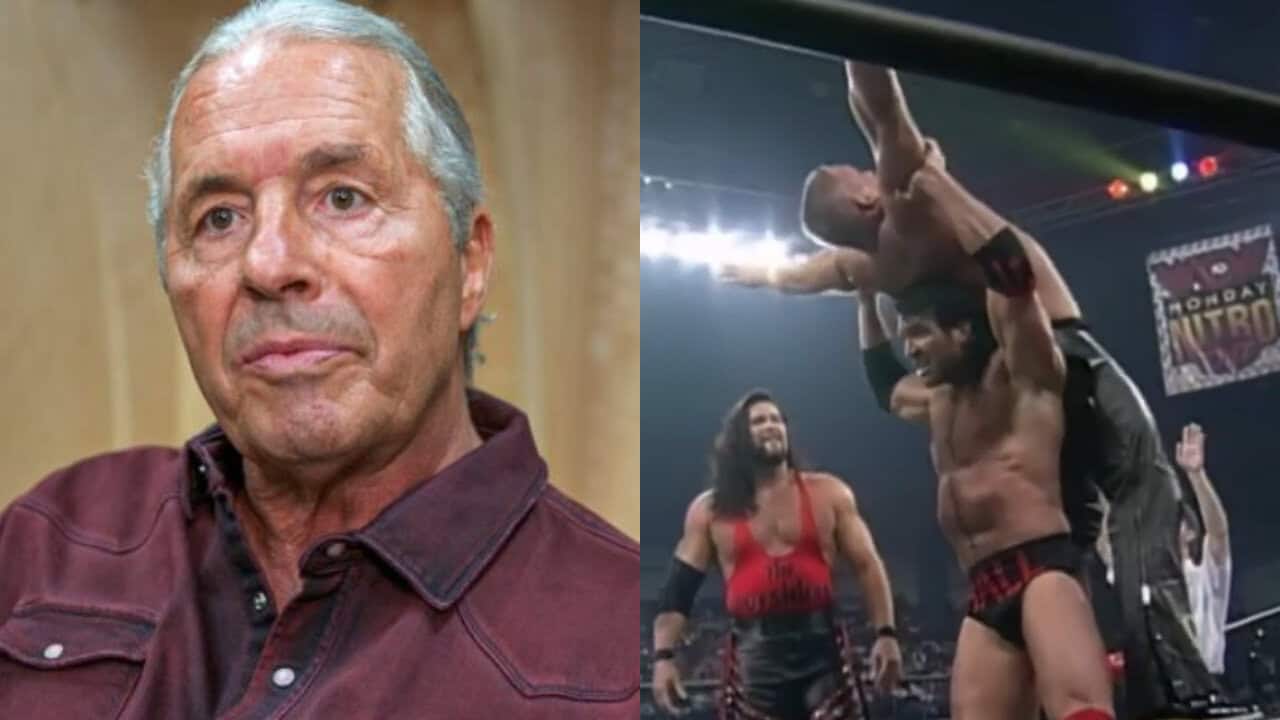
The Hitman keeps his eyes on the prize
Bret Hart recently dropped a truth bomb that made every internet wrestling smark lose their minds. He said he still watches 1990s wrestling because it is better than what they do today. Some people are acting like he just insulted their mother. Calm your nerves and look at the actual output of the current product if you want to understand his point.
When Hart criticizes the current style, he is not just an old guy yelling at clouds in a backyard. He is the guy who worked a 60-minute Iron Man match against Shawn Michaels at WrestleMania XII. He understands the mechanics of building a story inside the ring better than anyone drawing a paycheck in 2026. If the Hitman feels like he is watching a highlight reel of bad habits in modern matches, maybe we should listen.
The logic behind the legendary gripes
Here is the reality of the situation. Modern wrestling is obsessed with the transition. Everyone wants that highlight-reel spot or the crazy superkick sequence that pops the crowd for ten seconds. Then the wrestlers go right back to standing around waiting for the next spot. It is a cardio-heavy sprint that leaves no room for the internal logic that defined the 90s.
Bret Hart never moved with wasted motion in his career. When he locked in the figure-four around the ring post, he was not trying to win a gymnastics competition. He was trying to dismantle a leg so that he could eventually hit a Sharpshooter. Today, you see guys kick out of three finishers in a main event only to shrug it off and restart the sequence. It makes the finisher feel like a minor inconvenience rather than a match-ending maneuver.
Bret Hart Still Watches 1990s Wrestling: 'It's Better Than What They Do Today'
We see this obsession with "cool" factor over substance every week on television. Too many wrestlers treat their match like a montage in an action movie. They want to show you every trick in the bag without remembering that the bag needs to mean something. In the 90s, if somebody hit a flying clothesline, it didn't just look cool. It was a desperate attempt to put down an opponent they had spent fifteen minutes beating into submission. It mattered.
The lack of consequence in booking
The biggest flaw right now is the lack of consequence for the spots taken. We just saw the craziness that was NXT Stand & Deliver 2026, where the level of athleticism was frankly terrifying. Yet, after the chaos, you have to ask yourself who is actually more over because of the moves they hit. Being at risk of injury does not equal telling a great story.
Hart’s era had its own problems, sure. We saw some sluggish pacing and matches that definitely didn't need to go twenty minutes. But the emotional payoff for a win was infinitely larger. When you lose that connection, you lose the crowd’s ability to treat the wrestlers like human beings instead of stunt doubles. When everything is extreme, nothing is extreme. That is the lesson the industry has forgotten.
It is worth noting that just as recent coverage noted, there were brilliance-filled moments at Stand & Deliver that teased a better future. But those flashes are too intermittent. You have these incredible athletes dying for a chance to shine, but the booking team gives them a structure that forces them to sprint until they collapse. If the booking is lazy, it doesn't matter how hard the guys work.
The fans keep paying for the spectacle, but that doesn't mean they are being served a great meal. You can stack a card with every high-flyer in the world, just like the late territorial era veterans like Flying Fred Curry helped pioneer, but without the underlying psychology, the show is empty. Bret Hart isn't just watching the past because he misses it. He watches it because it functions like a coherent television show instead of a video game glitch.
A plea for simple psychology
If you want to fix the product, stop catering to the crowd that only cares about the next viral gif on social media. Start selling the damage. Stop popping up from powerbombs at the count of 1. A match should be a journey from point A to point B, not a series of disconnected explosions. The Hitman was the master of that linear progression, and he clearly misses seeing it executed at the highest level.
Until promoters realize that they are paying for a narrative and not just a stunt show, Hart will keep the remote stuck on his 90s tape collection. And frankly? I cannot blame him. He protected the business throughout his whole run, and he is trying to tell us that we are failing to do the same. If we want wrestling to grow rather than just spin its wheels in the mud, we need a dose of that 90s reality.
Keep the dives if you must, but for the love of everything, make them mean something. Make the fans believe that a move might actually end the match. If the biggest legend of the era thinks it was better back then, maybe it is time to look at the scoreboard and realize he is winning this debate, 100 to zero.