Biaggio Ali Walsh just took his grandfather's fight to the Senate floor
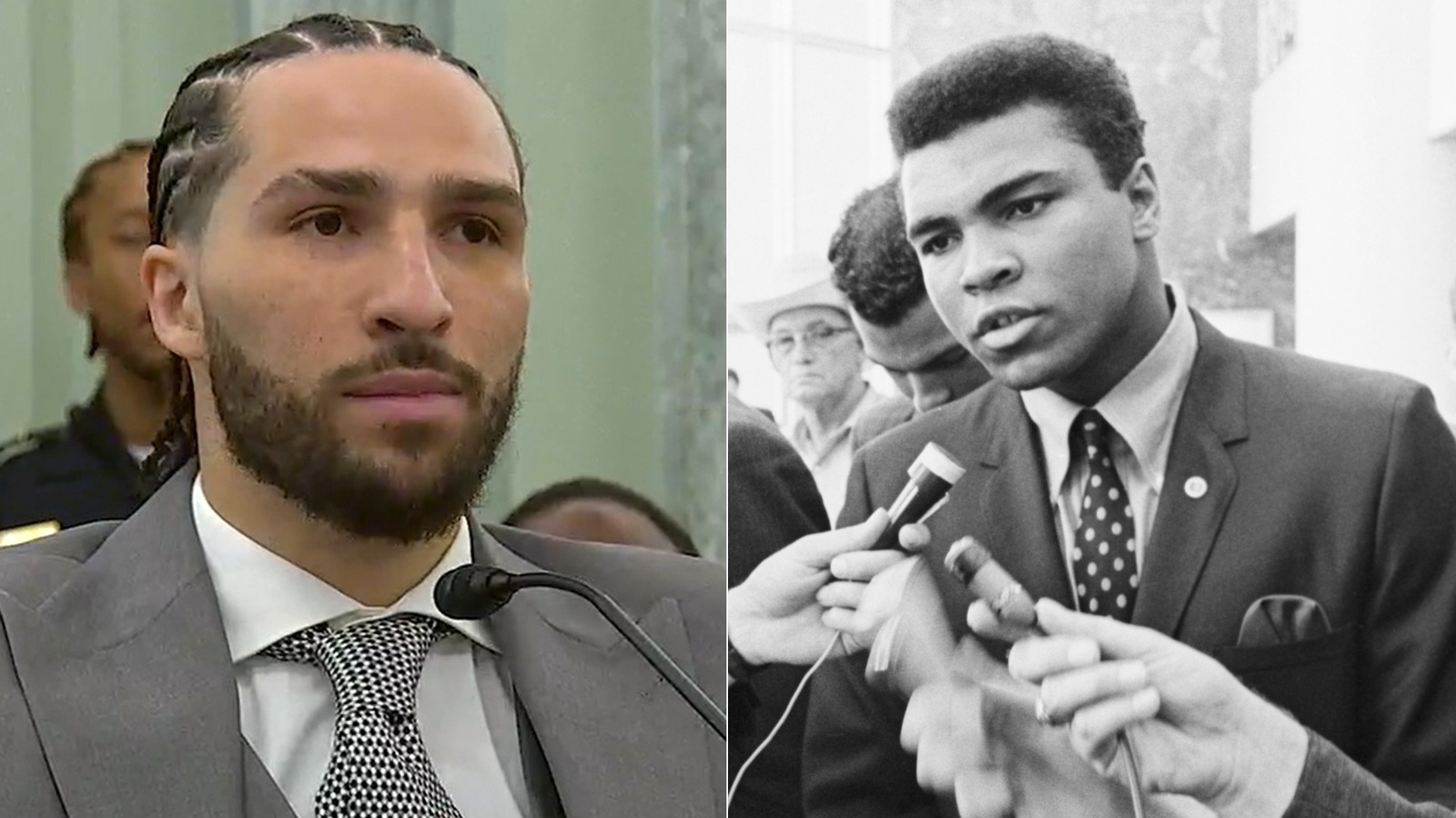
The ghosts of the 2000 Ali Act
In a wood-paneled hearing room in Washington D.C., the weight of a surname finally met the friction of federal policy. On April 22, 2026, Biaggio Ali Walsh sat before a Senate subcommittee chaired by Ted Cruz to testify on the proposed Muhammad Ali Boxing Revival Act. For the uninitiated, Biaggio is not just a carrier of the Ali DNA; he is a professional lightweight in the PFL, a promotion built on the very tournament structures that the original 2000 Ali Act sought to make mandatory for boxing. The irony of an MMA fighter defending a boxing bill was not lost on the room, yet the technical arguments presented were far more interesting than the optics.
The original Muhammad Ali Boxing Reform Act was passed in 2000 to protect fighters from predatory contracts and the conflict of interest inherent when a manager also acts as a promoter. It was a 1.0 release for athlete rights that succeeded in its narrowest goals but failed to prevent the fragmentation that has left boxing with four major belts and zero clarity for the casual fan. The 2026 Revival Act seeks to address the 'promoter-manager' loophole that has migrated into the digital age, particularly regarding how streaming platforms and private equity groups now control the entire stack of a fighter's career, from their gym fees to their post-fight documentaries.
The PFL model as a regulatory blueprint
Biaggio Ali Walsh's presence is a tactical masterstroke by the bill's proponents. By moving through the PFL—a league that uses a meritocratic seasonal structure—Walsh can argue that the chaos of boxing is a result of regulatory gaps rather than a lack of talent. He pointed to the lack of standardized medical protocols across state lines as a primary failure of the current system. When a fighter is suspended in Nevada, they should not be able to find a sanctioned loophole in a neighboring jurisdiction just to save a main event gate. This is not just about safety; it is about the structural integrity of the sport's data.
Senator Cruz’s interest in this revival appears rooted in the 'Big Tech' adjacent nature of modern sports broadcasting. As the UFC and PFL have consolidated power, the individual athlete has become a cog in a massive content engine. The Revival Act proposes a federal standard for fighter rankings, moving the power away from sanctioning bodies like the WBC or WBA—who often charge 'sanctioning fees' that look more like kickbacks—and toward an independent, data-driven system. It is an attempt to apply the logic of a playoff bracket to a sport that currently operates on the logic of a smoke-filled room.
The cost of compliance and the promoter’s paradox
Every piece of regulation comes with a price tag, and the Boxing Revival Act is no exception. The most vocal critics of the bill argue that by enforcing strict transparency in contract negotiations, the bill will effectively kill the 'super-fight' economy. Promoters like Eddie Hearn and Oscar De La Hoya have long operated on the ability to 'marinate' a fight, building value over years by keeping their stars away from each other. If the new act mandates that a #1 contender must be offered a title shot within 180 days of achieving that rank, the business model of strategic avoidance evaporates.
This is where the technical analysis gets messy. While the bill protects the fighter's wallet in the short term, it potentially reduces the total capital available in the sport. If promoters cannot guarantee long-term exclusivity, they are less likely to invest the millions required to turn a prospect into a household name. We are seeing a shift from the 'star system' to a 'platform system.' In the UFC, the brand is the draw; in boxing, the individual is the brand. The Ali Revival Act is an attempt to force boxing to behave like a league, but boxing has never been a league—it is a collection of warring city-states held together by tenuous agreements and litigation.
Data transparency and the ranking problem
One of the most ambitious sections of the bill involves the 'Independent Ranking Council.' Currently, rankings are a black box. A fighter can drop five spots in the WBC rankings for failing to pay a fee or for signing with a rival promoter. The Revival Act wants to mandate a public audit of ranking criteria. This sounds like progress, but it ignores the subjective nature of combat sports. You cannot 'Moneyball' a knockout. A fighter might be 20-0 against low-level competition, but they are technically and physically inferior to a 10-2 fighter who has faced top-ten opponents. Forcing a computer-generated ranking into a sport that requires human 'eye-test' evaluation is a recipe for catastrophic mismatches.
The original Act was a shield for the fighter. This new Act is an attempt to rebuild the arena itself, but you cannot legislate the heart of a promoter out of the business.
There is also the issue of international jurisdiction. If the U.S. Senate passes the Ali Revival Act, it only applies to fights on American soil. We have already seen the center of gravity in boxing shift toward Saudi Arabia and the UAE. By adding more layers of federal oversight in the U.S., the bill might inadvertently accelerate the 'brain drain' of combat sports. Why would a promoter deal with a 15% cap on manager fees and mandatory public contract disclosure in Las Vegas when they can run a show in Riyadh with zero transparency and triple the site fee?
A critical look at the Ali legacy
It is easy to get swept up in the sentimentality of an Ali testifying for an Ali Act, but the reality is more complicated. The 2000 Act has been toothless for most of its existence. Federal prosecutors have almost never used it to go after promoters. Adding more pages to a law that is rarely enforced feels like a performance rather than a solution. If Biaggio Ali Walsh wants to truly honor his grandfather's legacy, he needs to look at the lack of a fighter's union rather than a federal bill. A law is only as good as the lawyers willing to defend it, and most fighters cannot afford the retainer to sue a multi-billion dollar promotion.
The bill also fails to address the 'contractual lock-in' that happens with apparel and image rights. In 2026, a fighter's value is often tied more to their social media presence and their likeness in video games than their actual performance in the ring. The Revival Act mentions 'ancillary rights' but does not provide a mechanism for athletes to reclaim their digital identity once a contract expires. This is a massive oversight in a world where AI-generated likenesses could potentially allow a promotion to 'fight' a retired athlete against a current star without paying a cent in perpetuity.
The road to Backlash and beyond
As we look toward WWE Backlash 2026 on May 9, the contrast in athlete management is stark. The WWE operates as a closed system where 'regulation' is internal. While boxing and MMA struggle with the Ali Act, professional wrestling has largely avoided this specific type of federal scrutiny by maintaining the 'independent contractor' fiction. The Ali Revival Act specifically excludes professional wrestling, a move that many see as a missed opportunity to address similar issues of healthcare and long-term disability for athletes who take comparable physical risks.
The hearing ended with a promise of a follow-up session in June, but the lines have been drawn. On one side, you have the legacy of the greatest of all time being used as a rhetorical hammer to force transparency. On the other, you have a combat sports industry that has become more centralized and more profitable by ignoring the spirit of the law while technically complying with its letter. Biaggio Ali Walsh stood his ground, but the legislative process is a much longer fight than three rounds in a cage. If this bill passes, the 'Revival' might just be the thing that finally pushes the business of boxing entirely out of American reach.
- The proposed act mandates a 72-hour window for all medical data to be uploaded to a national registry.
- It requires promoters to disclose all 'side-letter' agreements with streaming partners.
- It establishes a federal ombudsman for fighter grievances, funded by a 0.5% tax on all pay-per-view revenue.
- It bans 'option clauses' that extend a contract automatically if a fighter wins a championship.
- It mandates that all ranking changes must be accompanied by a written justification from the ranking committee.
Ultimately, the Muhammad Ali Boxing Revival Act is an attempt to fix a 100-year-old sport with 20th-century tools. The era of the regional promoter is over, replaced by global content conglomerates that view fighters as interchangeable assets. No amount of Senate hearings can change the fact that the money in combat sports now comes from the platform, not the fight. Biaggio Ali Walsh is fighting a noble battle, but the architecture of the industry has already moved past the point where a single piece of legislation can bring back the 'Golden Age' of the heavyweights.
The skepticism remains high. We have seen these 'revivals' before, and they usually end with the powerful getting more powerful by hiring better compliance officers. If the goal is truly to protect the next generation of Alis, the focus should be on the bank accounts, not the belts. Until a fighter can see exactly where every dollar of a $100 million gate is going, the sport will remain as opaque as it was in 2000, regardless of whose name is on the bill.
Funko Pop! WWE: Cody Rhodes (American Nightmare)
Bring the American Nightmare to your desk.
Frequently Asked Questions
What is the Muhammad Ali Boxing Revival Act?
Why did Biaggio Ali Walsh testify before the Senate?
How did the original 2000 Ali Act impact boxing?
What changes does the Revival Act propose for fighter rankings?
Why are some promoters criticizing the new boxing bill?
More Coverage

Top 10: Top Moments
2 weeks, 6 days ago
Top 10: Defining Moments in UFC History
1 month, 2 weeks ago
Why Becky Lynch to MMA chatter is getting louder
1 month, 2 weeks ago
Ronda Rousey’s Netflix showcase proves MMA is now a content play
2 months agoRonda vs. Gina is the beautiful disaster we deserve on Netflix
2 months ago
Top 10 UFC Middleweight Power Rankings: Post-UFC 328 Shakeup
2 months, 1 week agoMore Analysis
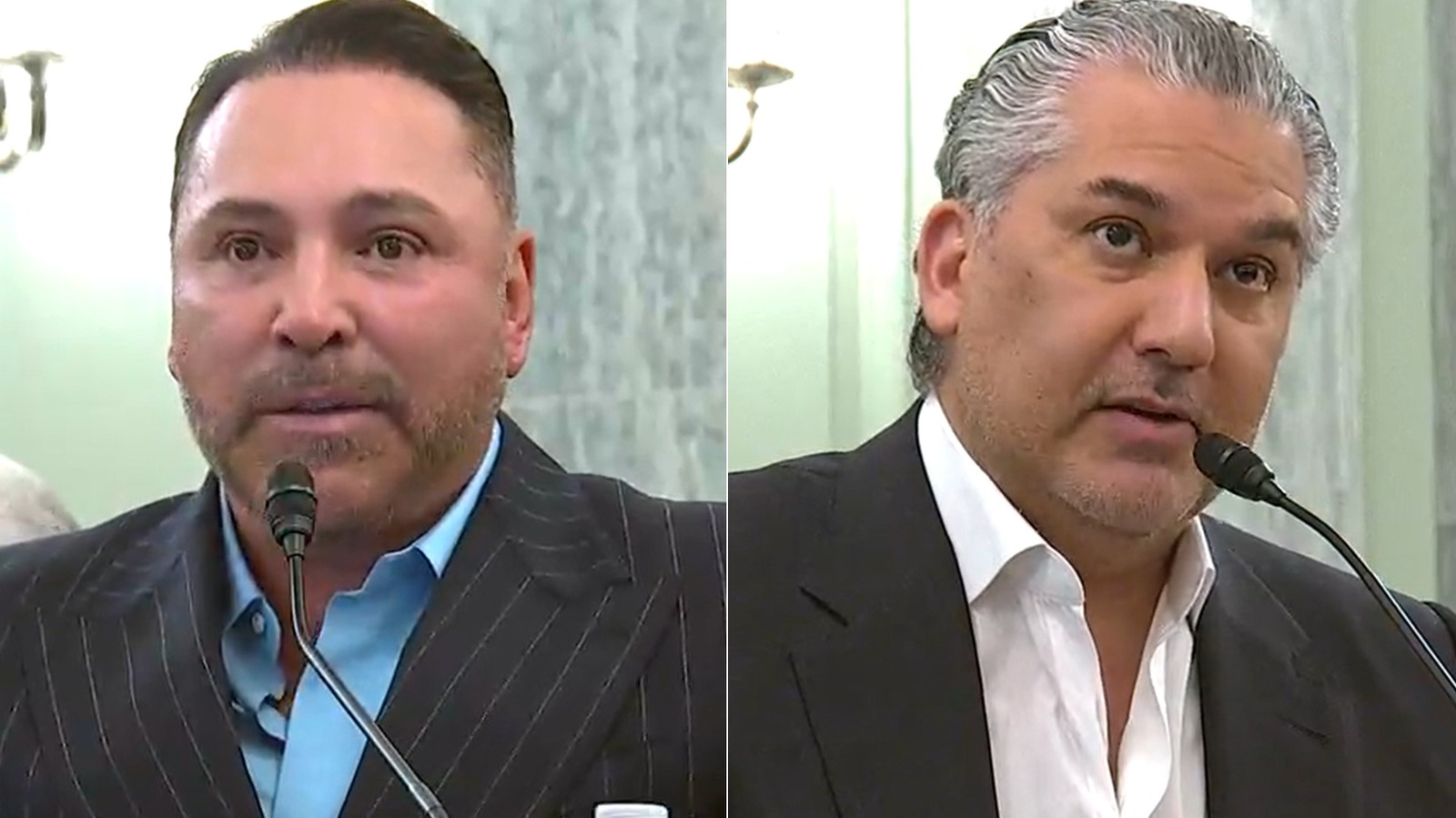
Oscar De La Hoya is bringing the heat to Capitol Hill
2 months, 3 weeks ago
Dan Canobio (The Ariel Helwani Show): "The Muhammad Ali Revival Act is one step closer to becoming the law of the land. It's now headed ..."
3 months, 3 weeks ago
PFL just pulled the rug out from under their Saudi Arabia card
1 month ago
PFL is trying to fix their fan engagement problem with the Summer Series
3 weeks, 5 days ago
The combat sports economy is broken and nobody wants to admit it
1 month, 3 weeks ago