
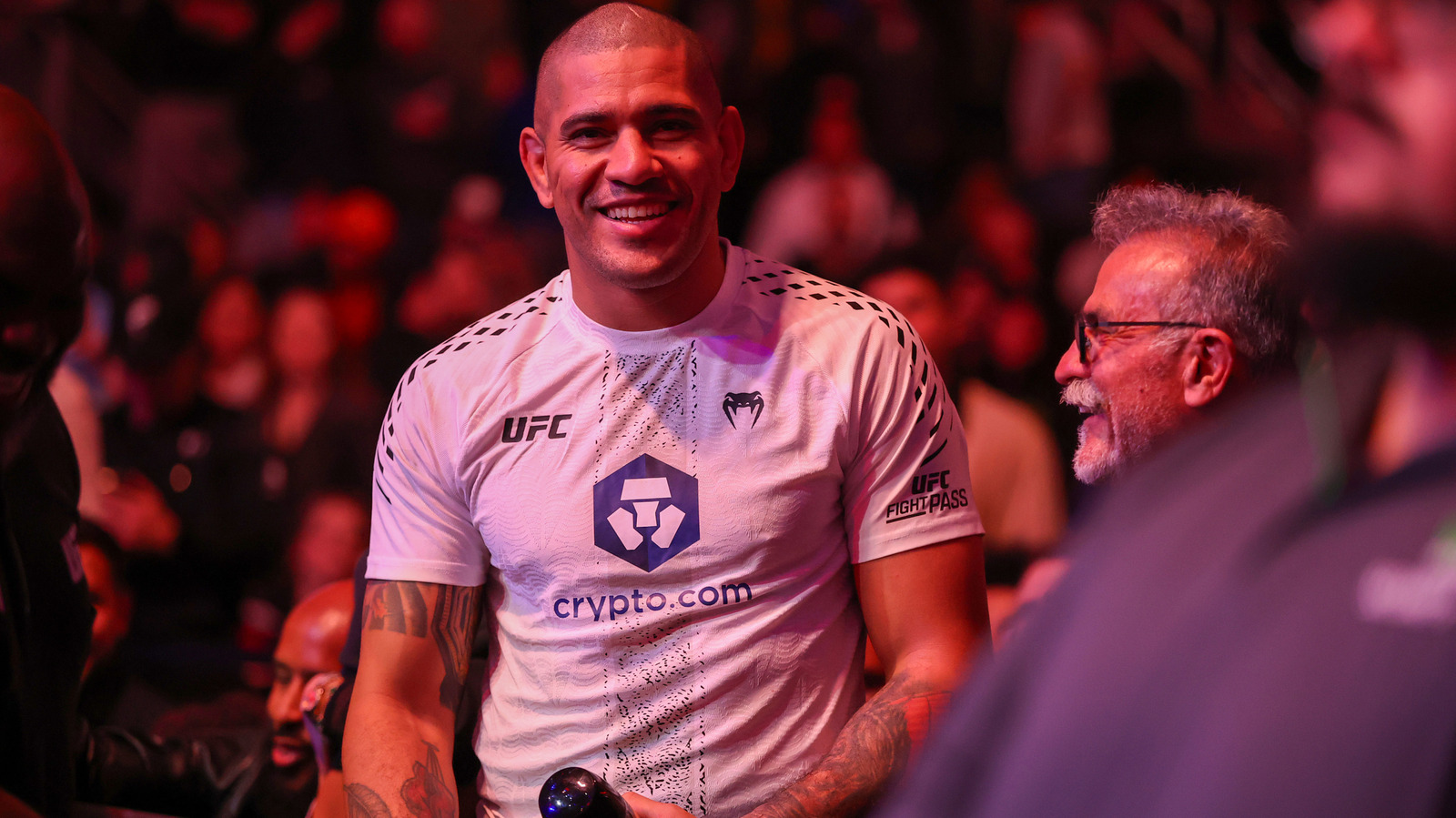
The Poatan Myth Meets Physical Reality
The aura of invincibility surrounding Alex Pereira has always been tied to his availability. In an era where champions often hibernate for a year between defenses, Pereira has been the UFC’s ultimate insurance policy. He saves cards, he takes short-notice headliners, and he ignores medical suspensions like they are mere suggestions. However, the bill for that frantic pace might finally be coming due in April 2026.
A recent report from Wrestling Inc highlights a significant crack in the 'Poatan' narrative. A teammate of a rival UFC champion has publicly blamed Pereira for a lack of fight, claiming the Brazilian turned down a major championship opportunity. This isn't just a matter of contract disputes or ego. For a man who has made a career out of saying 'Chama' to every challenge, a rejection usually points to a body that is no longer cooperating with the mind's demands.
Pereira is currently 38 years old, an age where the explosive fast-twitch fibers required for his signature left hook begin to betray him. While he has moved up to the light heavyweight division to mitigate the brutal weight cuts he endured at middleweight, the cumulative damage is undeniable. Sources within the training circles suggest that the 'lack of fight' isn't about fear, but about a central nervous system that is screaming for a localized reset.
The Hidden Cost of Being the Company Man
To understand why Pereira might be turning down fights now, we have to look at his medical history over the last 24 months. He has navigated recurring fractures in his toes and a persistent rib issue that was whispered about but never officially documented. In the UFC, being a 'warrior' is a marketing tool, but in the gym, it is a recipe for chronic inflammation. Pereira’s style relies on a heavy lead leg and a planted stance, both of which put immense pressure on his lower back and hips.
When a fighter of his caliber turns down a champion, it usually indicates a failure in camp during the 'return to play' phase. We have seen this before with legends like Donald 'Cowboy' Cerrone or even Anderson Silva. There is a specific threshold where the body stops recovering in a standard four months cycle. If Pereira is experiencing the kind of adrenal fatigue common in high-volume strikers, no amount of mental toughness can bridge the gap in a championship-level cage.
The teammate's blame is a strategic move, likely coming from a camp that wants to paint Pereira as a paper champion who is selective about his risks. If Pereira is indeed ducking a specific matchup, it suggests his coaching staff has identified a physical vulnerability. Perhaps it is a decreased ability to absorb leg kicks or a lingering hand injury that prevents him from closing the distance with confidence. In the elite levels of MMA, 'fitness' isn't just about cardio; it's about the structural integrity of the joints.
The Strategic Implications of the Missed Opportunity
The timing of this revelation is particularly damaging as we approach the summer blockbuster season. With WrestleMania 41 just four days away, the sports world is focused on cross-platform athletes and major spectacles. For Pereira to be sidelined or accused of inactivity during this window hurts his leverage as a global draw. If he isn't fighting, he isn't earning, and more importantly, he isn't maintaining the terrifying momentum that has carried him through two weight classes.
There is a cynical side to this 'lack of fight' accusation that needs addressing. The UFC has arguably over-leveraged Pereira, using him as a fire extinguisher for every failing pay-per-view. This 'company man' status has a shelf life. By forcing himself to be ready for 85% of the calendar year, Pereira has likely skipped necessary physical therapy and long-term strength conditioning. This creates a situation where a fighter is 'fit to fight' but not 'fit to win,' a distinction that his rivals are clearly beginning to exploit.
Alex Pereira previously turned down an opportunity to fight a UFC Champion, according to his teammate.
This quote from the Wrestling Inc source serves as a warning shot to the Brazilian's camp. The transparency regarding his health has been nearly non-existent. While other fighters post clips of their surgeries and rehab, Pereira maintains a stoic social media presence. This silence worked when he was winning every eight weeks, but now that he is turning down fights, the lack of medical clarity is being filled by the narrative of his competitors.
Historical Context and the Burnout Pattern
History is littered with champions who hit a wall they never saw coming. Chuck Liddell once seemed indestructible until his chin and his reaction time vanished overnight. Pereira's reliance on his 'stone power' often masks the fact that he takes a significant amount of damage to land his own shots. If his recovery times are lengthening, it is a biological sign that the high-mileage career—including his extensive kickboxing background—is reaching its natural conclusion.
A critical observation here is that Pereira's camp, led by Glover Teixeira, might be struggling to manage a veteran who doesn't know how to say no. Teixeira himself fought well into his 40s, but he transitioned to a grappling-heavy style to survive. Pereira does not have that luxury. He is a specialist who needs his timing to be perfect. If he is even 10% off due to lingering 'micro-injuries' or chronic fatigue, he becomes a target for the younger, more fresh-legged contenders in the 205 pounds division.
The internal politics of the UFC also play a role. If the promotion offered him a champion from a different weight class—perhaps a heavyweight superfight—and he turned it down, it suggests a massive loss of confidence in his physical frame's ability to hold the extra weight. We are looking at a potential transition period where Pereira must decide if he wants to remain a frequent-flier fighter or if he needs to take a full year off to undergo the kind of stem-cell and physical overhauls that have extended the careers of other aging stars.
Looking Ahead to the Recovery Timeline
What should fans expect for a return date? Given the 'turned down' status, we are likely looking at a late 2026 return at the earliest. This would mean Pereira misses the entire spring and summer cycles. For a fighter who thrives on rhythm, this kind of layoff can be a double-edged sword. It allows the joints to heal, but it also allows the rust to settle into those complex striking patterns that make him so dangerous.
The criticism from the rival camp is a tactical masterpiece. It forces Pereira to either fight before he is ready to prove them wrong, or sit out and watch his stock drop. It is a classic 'damned if you do, damned if you don't' scenario. If he steps into the cage and looks sluggish, the narrative will be that he is washed. If he stays away, the narrative is that he is scared. The reality is likely much more boring: he is a human being who has been treated like a video game character for too long.
Pereira has achieved three title defenses across two divisions in record time, but the human body doesn't care about records. It cares about inflammation, bone density, and sleep cycles. If the teammate's report is accurate, we are witnessing the first real signs of the 'Poatan' era winding down. It is a reminder that in the fight game, your greatest strength—your willingness to show up—is often the very thing that eventually breaks you down. The Brazilian needs to ignore the noise, ignore the 'lack of fight' labels, and actually focus on a medical plan that prioritizes his 2027 health over his 2026 pride.


