The lawyers are writing the script
The United States Patent and Trademark Office is the professional wrestling industry's worst-kept secret. You do not need a deep-throat backstage source when corporate attorneys are legally obligated to file public documents.
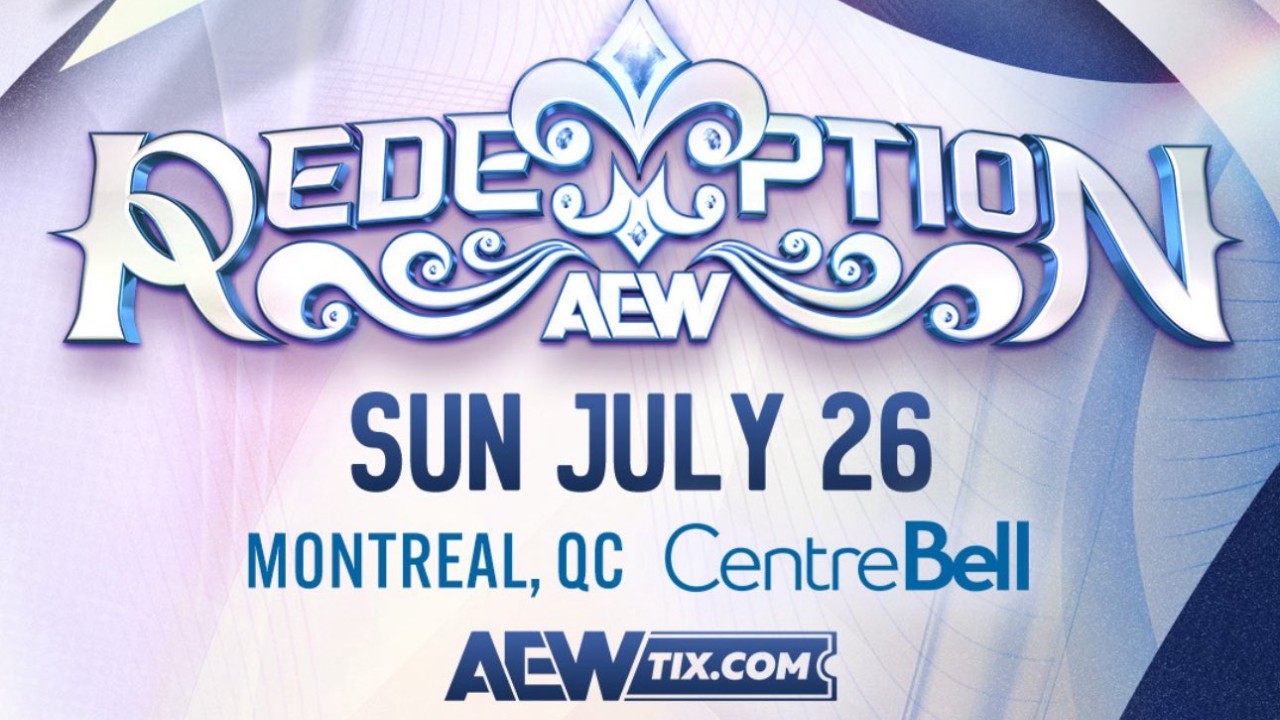
As WrestleTalk reported this week, All Elite Wrestling has officially filed to trademark the term "AEW Redemption." The filing was made under the standard classification for wrestling exhibitions and entertainment services. It is a mundane legal maneuver that immediately tips Tony Khan's hand regarding the back half of the 2026 calendar.
When a wrestling company files a new trademark in mid-April, they are generally planning a late-summer or early-fall rollout. The trademark publication process typically takes a few months to clear any opposition.
This timeline puts "Redemption" squarely in the August or September window. But the most pressing question isn't when this event will happen. The question is whether AEW's already bloated schedule can physically accommodate it.
The themed episode inflation problem
All Elite Wrestling fundamentally changed its pay-per-view strategy years ago. The promotion abandoned its patient, four-show-a-year model in favor of a monthly premium live event cycle. The calendar is packed.
We are currently on the road to Double or Nothing on May 24. Following that, the summer schedule becomes a relentless sprint through Forbidden Door, All In, and All Out. There is virtually no empty real estate on the Sunday night calendar for a new pay-per-view concept.
This strongly indicates that AEW Redemption is destined for free television. And that is where the criticism is necessary. AEW's television strategy suffers from severe themed-episode inflation.
We already sit through Title Tuesday, Big Business, Winter is Coming, Blood and Guts, Grand Slam, and Fyter Fest. When every second episode of Dynamite carries a subtitle, the subtitles stop mattering. It creates a lazy booking crutch.
Instead of building organic heat for a television main event through weeks of compelling promos, the promotion slaps a branded graphic on the screen. They expect the audience to treat the night like a major milestone just because the ring apron is a different color. Sometimes it works. Often, it just feels like a regular two-hour broadcast wearing a different hat.
If Redemption is just another Wednesday night theme meant to pop a singular rating, AEW is making a mistake. They need to cull the herd of special episodes, not add another pony to the stable.
The bizarre historical baggage
AEW is not the first promotion to lean on this specific noun. The word carries some incredibly strange baggage in the wrestling business.
Longtime fans will immediately wince at the memory of NXT Redemption. Before NXT was a super-indie or a neon-drenched developmental territory, it was a wretched reality game show. Season five was officially dubbed "NXT Redemption."
It lasted an agonizing 67 weeks from 2011 to 2012. It was supposed to be a second chance for previously eliminated rookies. Instead, it devolved into a surreal, plotless fever dream featuring Derrick Bateman, Maxine, and Johnny Curtis.
WWE management seemingly forgot the show was even on the air. It was objectively terrible wrestling television, yet it achieved a weird cult status because of the complete lack of oversight.
Impact Wrestling also utilized the name. They ran a pay-per-view explicitly titled Redemption in April 2018. It actually featured a phenomenal main event where Pentagón Jr. defeated Austin Aries and Fénix for the world championship.
Tony Khan is an obsessive wrestling historian. He knows this lineage. He knows the baggage attached to the branding. So why invest the legal fees to secure it now?
The business of television rights
We have to look at the corporate side of the wrestling business. Television networks love tentpole events. When executives look at a spreadsheet, they want to see identifiable "big nights" that they can pitch to advertisers.
A trademark like "Redemption" sounds serious. It sounds like an event with stakes. Compare it to AEW's other naming conventions.
The company has a wildly inconsistent branding department. "Double or Nothing" is a casino pun born from a specific bet made on Twitter years before the company existed. "Full Gear" is an inside joke originating from a YouTube vlog about a wrestler's physique.
Then you have the ultra-serious names. Revolution. Dynasty. And now, Redemption. It feels like two different marketing philosophies are constantly at war over AEW's visual identity.
One side wants to appeal to the hardcore internet fan with meta-references. The other side wants to present a polished, mainstream sports aesthetic. "Redemption" firmly belongs in the latter category.
It is a very WWE-sounding event name. That is not necessarily an insult. WWE built a multi-billion dollar empire on easily digestible branding. Payback. Vengeance. Retribution. Redemption tells the casual fan exactly what to expect before they even look at the match card.
Booking the climb back up
Think about the current roster dynamics. A redemption angle requires a massive, undeniable failure. Somebody has to lose everything to make the climb back up mean anything.
This is where Tony Khan frequently struggles as a booker. He excels at the spectacular fall. He excels at the heavily produced, emotionally satisfying triumph at the end of the road. But the middle chapters? The grueling months in between?
That is where AEW programming frequently sags. Wrestlers get lost in the shuffle of an oversized roster. They disappear to Ring of Honor for six weeks, or they tread water in meaningless trios matches on Collision.
If you are going to brand an entire television special around the concept of redemption, you actually have to book the week-to-week struggle. You cannot just jump from the tragedy to the triumph. The audience needs to see the work.
The roster candidates
Who actually needs redemption in AEW right now? Look at the sheer volume of talent sitting on the sidelines or spinning their tires in midcard purgatory.
We have former world champions who have been completely marginalized by the recent influx of free agents. We have tag teams that were white-hot two years ago who can barely get booked on Rampage. The roster is practically overflowing with candidates for a redemption arc.
But AEW has a bad habit of defining wrestlers by their win-loss records rather than their emotional journeys. The ranking system, whether it is officially enforced or just lingering in the background, forces the booking to remain largely mathematical.
A show built around redemption requires the opposite approach. It requires vulnerability. It requires acknowledging that a wrestler has hit rock bottom. If AEW is going to commit to this branding, they have to let their top stars look weak on television.
They have to let the audience see the desperation. That is a booking muscle Tony Khan rarely flexes. He prefers his top guys to be untouchable gladiators. Booking a true redemption story means letting the armor crack.
The final prediction
AEW is heading into the dog days of summer. The gap between the spring pay-per-views and the massive Wembley stadium show in August is traditionally when the weekly television product loses focus.
Here is my call. AEW Redemption will not be a pay-per-view. It will be a two-week television event taking place in late July across both Dynamite and Collision.
It will serve as the hard reset before the All In build begins in earnest. AEW will use this specific branding to clear out the lingering, stale feuds from the spring and establish the number one contenders for London.
I will take it a step further. Tony Khan will use the Redemption moniker to overhaul the TNT Championship picture. The secondary title has felt rudderless for entirely too long. A "Redemption" themed tournament culminating on a special Saturday night episode is exactly the kind of structural crutch AEW relies on when they need to kill four weeks of television time.
They have the trademark. Now they just need a storyline actually worth the name.