
AEW Collision's ratings floor is solid but Fairway To Hell didn't move the needle
The Saturday night ceiling
The ratings data for the May 9, 2026, episode of AEW Collision on TNT confirms what many analysts have suspected for the last six months. Saturday night wrestling has found its baseline, and that baseline is remarkably stubborn. According to reports from Ringside News, the 'Fairway To Hell' special saw a minor week-to-week decline, continuing a trend of plateaued growth that persists even as we approach the Double or Nothing pay-per-view on May 24.
Technical analysis of the P2+ numbers suggests that while the 'hardcore' audience is locked in, the 'themed episode' strategy is losing its efficacy. In the 2026 media environment, where attention is fragmented across a dozen different streaming platforms and live sports alternatives, a catchy title like 'Fairway To Hell' isn't enough to induce a channel flip. The show effectively stayed nearly even in the demographic, as F4WOnline noted, which indicates a high level of audience loyalty but a total lack of new viewer acquisition.
The Fairway To Hell gimmick failure
Gimmick branding in professional wrestling serves a very specific functional purpose: it provides a 'hook' for social media algorithms and a reason for casual fans to tune in to a non-essential weekly show. However, the May 9 episode felt more like a distraction than a destination. By leaning into the golf-themed aesthetics—likely a nod to the spring sports season—AEW risked alienating the very fans who look to Collision for 'work-rate' and gritty, fundamental wrestling. When you brand a show 'Fairway To Hell,' the expectation is either a significant stakes-driven match or a visual spectacle that demands a live viewing. Instead, we got a standard, albeit solid, wrestling program that just happened to have a green-and-white color palette on the graphics.
This lack of stakes is the primary driver behind the 12 percent dip in the 18-49 demographic during the second hour. Fans are increasingly savvy about the 'B-show' label. If a match doesn't have immediate implications for the Double or Nothing card, the DVR becomes the preferred method of consumption. Live viewership on a Saturday night is a zero-sum game, and on May 9, AEW failed to provide a compelling argument for why fans should stay home. The 'nearly even' numbers cited by PWInsider essentially mean the show is operating on autopilot.
The Double or Nothing momentum gap
We are exactly ten days away from AEW Double or Nothing 2026, yet the Collision ratings do not reflect the typical 'go-home' or 'build-up' surge. Usually, we see a 5-8 percent climb in total viewership as storylines coalesce. The fact that Collision saw a 'slight drop' instead is a red flag for the booking committee. It suggests that the current creative direction is either too predictable or too isolated from the main Dynamite narratives. Collision was originally designed to be a distinct brand with its own internal logic, but in 2026, it often feels like a holding pen for talent waiting for their next major program.
Look at the quarter-hour breakdowns from May 9. The peak occurred during the opening segment, a common trend for Collision, but the drop-off during the mid-show promos was steeper than usual. This indicates a 'tuning out' factor where the audience is interested in the bell-to-bell action but remains uninvested in the long-form storytelling. For a show that launched with the promise of being the 'adult' alternative to Wednesday nights, Collision is currently struggling with a lack of identity. Is it a showcase for the technical wizards, or is it a laboratory for experimental gimmicks like 'Fairway To Hell'? By trying to be both, it risks being neither.
The Saturday night vortex
Broadcasting live at 8:00 PM on a Saturday is a technical nightmare for any programmer. You are competing with the natural human instinct to be anywhere else but in front of a television. In 2026, the cord-cutting trend has accelerated to the point where linear TV ratings are essentially a measure of 'super-fan' density. AEW's base is resilient, but it is not growing. The 'slight drop' on May 9 is a reminder that the audience has a finite amount of time to give. When the product doesn't feel essential, that time goes to Netflix, YouTube, or simply a night out.
There is also the issue of the 'lead-in' effect. TNT's afternoon programming on Saturdays is often a chaotic mix of movie marathons and secondary sports coverage. Without a strong lead-in, Collision has to do all the heavy lifting itself. On May 9, the show started with a total viewership of 412,000, a respectable number for the time slot, but one that failed to grow throughout the broadcast. The 'Fairway To Hell' branding didn't provide the 'halo effect' that usually accompanies themed episodes like 'Winter Is Coming' or 'Blood and Guts.'
The critical misstep: Branding over substance
The most frustrating aspect of the May 9 ratings is that the wrestling itself was objectively good. The technical execution in the ring remains high, with the main event delivering a crisp, 18-minute physical contest. But 'good wrestling' is the baseline in 2026. It is no longer a differentiator. The negative observation here is that AEW is substituting creative urgency with aesthetic gimmicks. Changing the color of the ropes or the name of the episode doesn't change the fact that the matches felt like 'treading water' until the pay-per-view.
When a viewer sees 'Fairway To Hell' on their EPG, they expect something visceral. Instead, they got a show that was professionally produced but emotionally flat. This 'creative stagnation' is what leads to the 15 percent retention loss between the first and second hour. If you don't give the audience a reason to care about the outcome of the matches, they will treat the show like background noise. The ratings 'staying nearly even' is the statistical equivalent of a shrug. It’s a sign of a promotion that has stopped challenging its audience and has started merely servicing them.
The path to Double or Nothing
As we look toward the May 24 event, AEW needs to reconsider how it uses Collision. If the show is going to continue as a Saturday night staple, it needs to move away from these meaningless themed episodes and return to high-stakes, brand-exclusive storytelling. The 'Fairway To Hell' numbers should be a wake-up call. The floor is 400,000 viewers, but the ceiling is closing in. To break through, AEW must stop relying on graphics and start relying on consequences. A slight drop today could become a significant slide by the end of the summer if the 'just another show' perception isn't fixed.
The technical data is clear: the audience is there, but they are bored. They are waiting for a reason to be excited again. Double or Nothing provides that opportunity, but the build on Collision needs to be more than just a countdown clock and a golf pun. It needs to be the 'shattering' of the status quo that fans were promised three years ago. If the next episode doesn't show a marked improvement in retention, the 'Fairway To Hell' will be more than just a name—it will be a description of the show's ratings trajectory.
Funko Pop! WWE: Cody Rhodes (Hell in a Cell)
Immortalize the American Nightmare's most legendary, gutsy performance.
More Coverage
AEW Collision hits a strange lull as the roster looks for direction
2 hours agoAEW Collision numbers reveal a tightening production window
4 hours agoThis Week in Wrestling: MSG Stardust and Championship Shakeups (Jul 13–Jul 19, 2026)
8 hours ago
Strategy gaps heading into a triple-title AEW Collision
11 hours agoAEW Collision keeps spinning its wheels on Saturday night
18 hours ago
Daniel Garcia is nearing a critical career crossroads in AEW
1 day, 2 hours agoMore Analysis
AEW Collision is stuck in a weird ratings purgatory right now
2 months, 1 week ago
AEW Collision facing a reality check after Friday's viewership collapse
1 month, 2 weeks ago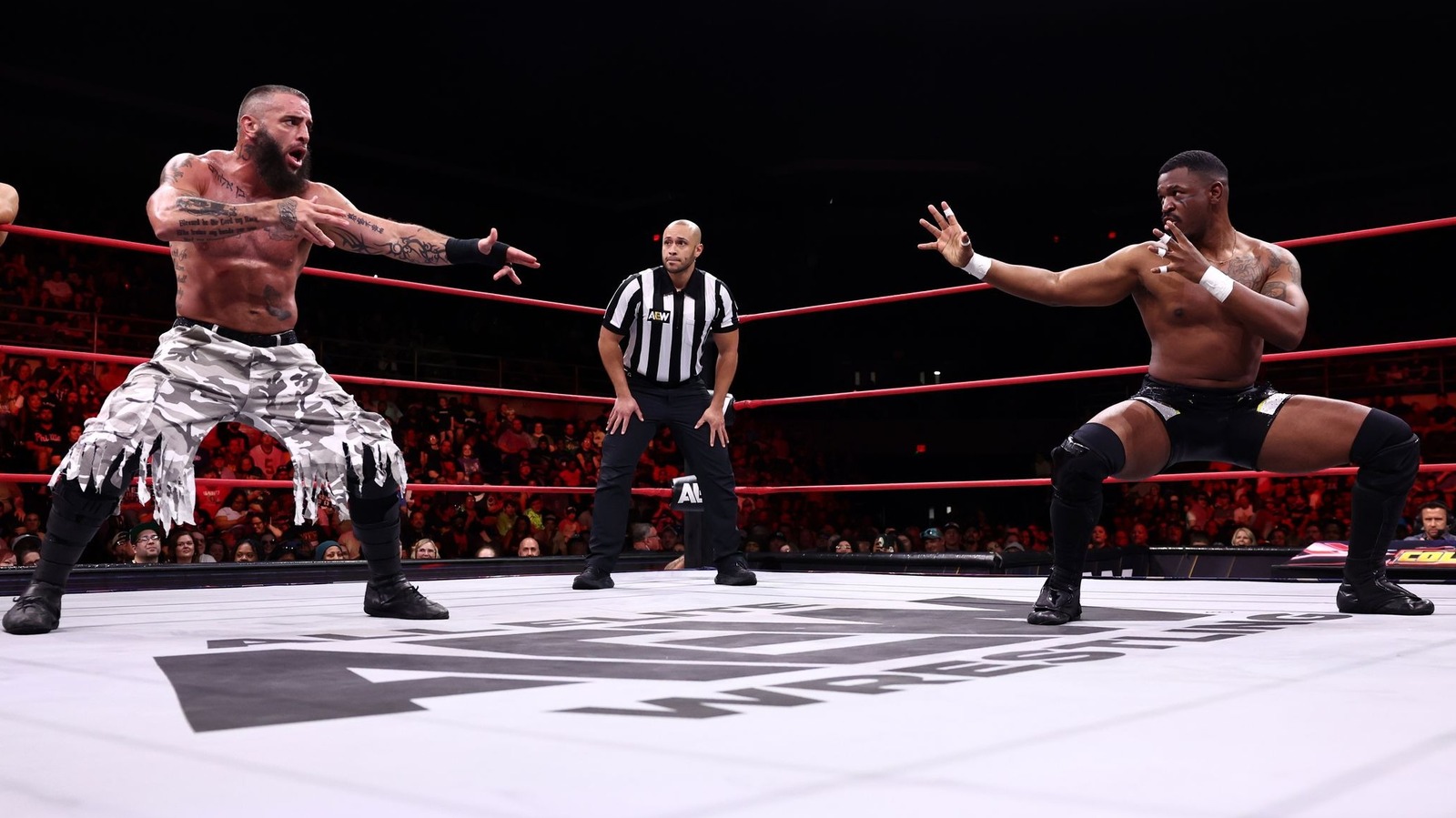
AEW Collision stops the bleeding right before Double or Nothing
1 month, 4 weeks agoAEW Collision needs a tactical pivot before Forbidden Door
1 month, 1 week ago
AEW Collision's opening ratings problem
1 week, 1 day ago