The statistical death of the undefeated monster
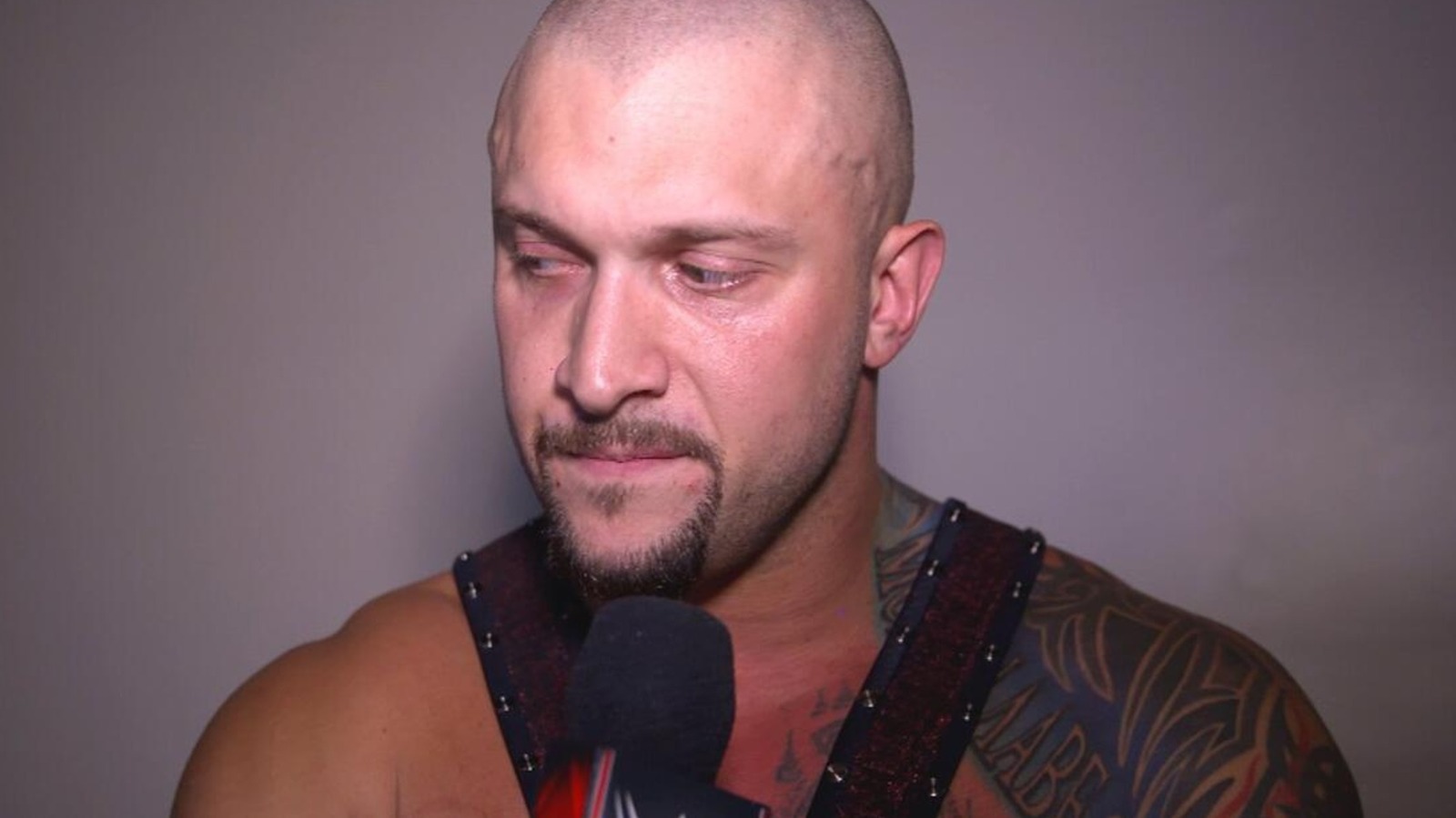
In professional wrestling, momentum is often viewed as an abstract concept, but for Karrion Kross, it was always a quantifiable asset. During his first run in NXT, Kross operated with a 90 percent win rate. He wasn't just winning; he was a statistical anomaly that dismantled the existing hierarchy of the black-and-gold brand. In a system where most talent hovers around the 50/50 mark to maintain parity, Kross was the outlier. He finished his first NXT stint with an approximate televised singles record of 16-2, a figure that suggested a main-event ceiling on the main roster. However, the transition from NXT to the WWE main roster remains one of the most violent statistical regressions in modern booking history.
The collapse began on July 19, 2021. Kross debuted on Raw as the reigning NXT Champion and lost to Jeff Hardy in just 92 seconds. It was a moment that didn't just break a character; it broke a data set. Before that match, Kross had gone nearly a year without a singles loss. By losing in less than two minutes, his efficiency rating plummeted. In the eyes of the audience, the ticking clock wasn't counting down to a victory — it was counting down his relevance. The 2021 run ended with a 7-2 record, but the damage to his perceived value was irreversible, leading to his first release in November of that year.
The stable trap and the decline of the Final Testament
When Kross returned in 2022 under the creative direction of Triple H, the numbers initially looked promising. He was immediately positioned against Drew McIntyre, a former world champion. Yet, the follow-through failed to maintain the exponential growth required for a top-tier monster. As the leader of The Final Testament, Kross's win/loss record settled into a mediocre 55 percent. This is the danger zone for any wrestler whose gimmick relies on intimidation. A monster who wins half the time is just a guy in a leather jacket with a high production budget. The stable era saw Kross frequently losing high-profile feuds to the likes of AJ Styles and Bobby Lashley, effectively turning him into a gatekeeper for the mid-card.
If you analyze his match length during the Final Testament run, the issue becomes even clearer. In NXT, Kross matches averaged 7.4 minutes of dominant offense followed by a submission. On the main roster, his matches stretched to an average of 12 minutes, often involving competitive back-and-forth sequences that diluted his 'unstoppable' aura. By May 2026, as Wrestling Inc reported, Kross and Scarlett are once again weighing their options, and the math of their next move is complex. A return to WWE would mean fighting against a roster that has since integrated more efficient powerhouses like Oba Femi, who recently dropped Brock Lesnar on Raw in a segment that Kross never quite replicated.
The AEW gamble and the roster math
An AEW debut presents a different set of statistical hurdles. Tony Khan’s promotion currently boasts a roster of over 160 active wrestlers, creating a massive supply-and-demand problem for television time. While Scarlett has already found a foothold in the division — appearing as Lena Kross and capturing the AEW Women’s World Tag Team Championship alongside Megan Bayne at Revolution — Karrion's path is less certain. To succeed in AEW, Kross would need to avoid the 'new toy' syndrome where debutants receive a 100% win rate for the first 4 weeks before disappearing into the multi-man tag team abyss of Rampage or Collision.
Compare his situation to current AEW World Champion MJF, who maintains a high-leverage schedule. MJF doesn't wrestle often, but when he does, the stakes are maximum. Kross, conversely, has always been a volume worker who needs the numbers to back up the threat. If he enters AEW, he enters a locker room where technical work rate often outpaces character work. In a company where Will Ospreay is putting on 25-minute clinics, Kross's methodical, slow-burn style might struggle to capture the necessary metrics to justify a main-event push. He would be fighting for the same 15 percent of airtime that other heavyweights like Brody King or Wardlow occupy.
The critical failure of presentation vs. production
The most damning statistic in the Kross/Scarlett era isn't the win/loss record; it’s the return on investment (ROI) for their presentation. WWE spent a fortune on smoke machines, hourglasses, and elaborate entrance themes. Yet, the correlation between 'cool entrance' and 'match heat' never hit the 0.80 threshold required for a sustainable main-event run. There is a fundamental flaw in a character that requires five minutes of theater for a seven-minute match that ends in a distraction roll-up. It creates a disconnect that the audience eventually stops trying to bridge.
Furthermore, the decision to pair Kross with the Authors of Pain (AOP) in the Final Testament was a tactical error that further suppressed his individual stats. In tag-heavy factions, the leader's win percentage often suffers to build heat for the group's eventual blow-off. Kross was sacrificed to build stories for others, a role that fits a veteran like Christian Cage but kills a prime-age talent who still looks like he should be holding gold. If Kross and Scarlett want to revitalize their careers, they need to abandon the 'theatrical monster' archetype and return to the 'efficient predator' that made them 2-time NXT Champions.
The verdict on the ticking clock
Ultimately, the numbers suggest that Kross and Scarlett are at a crossroads where the next deal is their last chance to hit a meaningful peak. Whether it’s a WWE return or an AEW debut, the strategy must change from quantity to quality. They need to find a promotion willing to commit to a 75 percent win rate over a 12-month period to rebuild the lost equity. Anything less than that, and they remain a high-end mid-card act — a talented duo that looks like millions but produces results that are strictly average. The clock isn't just a gimmick anymore; for their career longevity, it’s ticking for real.