WWE's Veteran Problem: What Happens When The Revolutionaries Become Relics?
The Ghost in the Performance Center
This past week, Bayley walked back into an NXT house show for the first time in a decade. Ten years. An eternity in wrestling. She wasn't just a visiting main-roster star lending some shine to the developmental brand; she was a ghost from a past life, a foundational architect returning to a city whose skyline she helped draw.
Her observation after the visit was polite but telling. The talent today, she admitted, is just 'different'. As she noted to the live crowd, the environment she once dominated with Sasha Banks, Becky Lynch, and Charlotte Flair has been completely terraformed. The revolution they started is now the established government. Women's wrestling isn't fighting for a spot on the card anymore; it often is the card.
But this raises a difficult, almost uncomfortable question for WWE's established guard. What is the role of the revolutionary when the war is won? For Bayley, Asuka, and Natalya—pioneers of the modern era—they risk becoming decorated relics in their own museum, celebrated for past achievements but increasingly unmoored from the present.
The Heavy Heart of an Empress
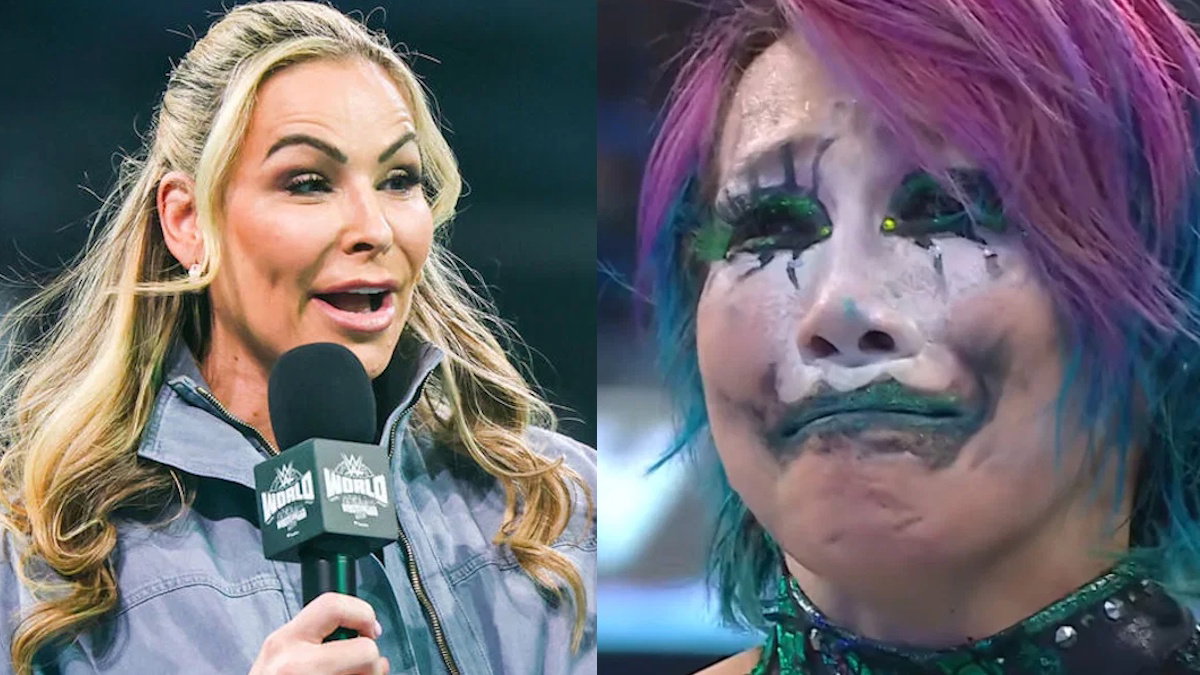
Nowhere is this veteran's inertia more apparent than with Asuka. According to her peer and frequent opponent, Natalya Neidhart, the Empress of Tomorrow has been carrying a significant emotional weight. “I felt like she had something weighing heavily on her heart,” Nattie recently shared, reflecting on their interactions.
It’s not hard to see why. We are talking about a performer who held the NXT Women's Championship for 510 days, an undefeated streak that was treated with the same reverence as Goldberg's. Her main roster arrival was heralded as a seismic event. She won the first-ever Women's Royal Rumble. She holds championships and accolades that place her in the highest echelon of performers, male or female.
And yet, what is her role in 2026? She is a vital cog in Damage CTRL, a supremely talented hand who can be trusted to have a great match with anyone at any time. But the killer instinct, the aura of invincibility that once defined her, has been systematically chipped away. She is no longer the final boss; she is a challenging but ultimately beatable sub-quest.
The “heavy heart” speaks to the likely frustration of a generational talent who knows her own capabilities. She is trapped in a creative holding pattern: too legendary to be released, too respected to be jobbed out, but not currently trusted with the narrative weight her character once commanded. The result is a slow, silent erosion of a superstar, a process visible to fans and, evidently, to her colleagues in the locker room.
The Gatekeeper's Gilded Cage
Natalya's insight into Asuka is telling, but it also reflects her own career. For the better part of fifteen years, Nattie has been WWE's ultimate gatekeeper. She is the standard-bearer, the technically proficient veteran against whom all new talent is measured. If you can have a good match with Natalya, you are ready for the main roster. It was her who gave Ronda Rousey her first truly credible singles match. It is she who can guide a less experienced performer through a 15-minute Raw match.
This is, without question, a vital role. But it is also a gilded cage. The gatekeeper rarely gets to own the kingdom. Her purpose is to affirm the greatness of others, often at the expense of her own. While she has had title reigns, her primary function has been to serve the story, not to be the story.
This creates a paradox. Her longevity and skill are celebrated, but that same reliability makes her too useful in a supporting role to risk elevating her to a sustained, dominant main event position. She is the perpetual motion machine of the women's division, a testament to durability in a business that prizes novelty. But perpetual motion can feel a lot like running in place.
The Arn Anderson Corollary
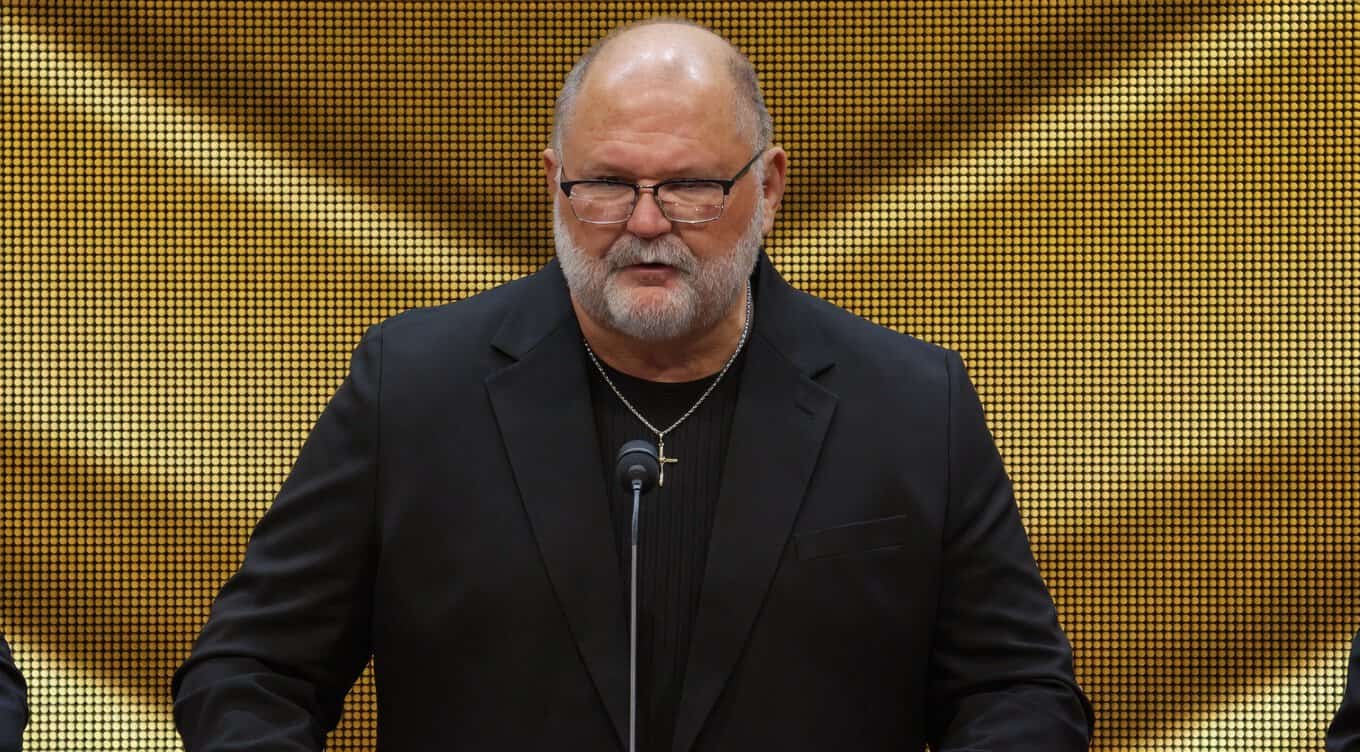
This crisis of value for foundational talent is not a new WWE phenomenon, nor is it exclusive to the women's division. It's a systemic issue. Look no further than the recent reflections of Arn Anderson, one of the most respected in-ring technicians and wrestling minds of all time.
Speaking about his A&E Biography, Arn confessed that it was the first time in his entire career he truly felt like a 'top guy'. This is a staggering admission from a WWE Hall of Famer and a founding member of The Four Horsemen. Anderson was never the world champion, but he was the enforcer, the strategist, the glue that held everything together. His value was immense, but it was the kind of value that doesn't always come with a fancy gold plate on the front of your belt. It was value that, in his own mind, wasn't fully acknowledged by the company until a documentary crew showed up decades later.
This is the danger facing WWE's veteran women. Bayley, Asuka, and Natalya are the Arn Andersons of their division. They provide credibility, structure, and high-level performance week in and week out. But does the company's booking reflect that value? Or are they, too, destined to feel like supporting characters until a biography special tells them they were stars all along?
When a performer’s primary role becomes making others look good, it is incumbent upon the promotion to find other ways to affirm their status. This could be through character-defining storylines, special non-title feuds, or simply letting them win significant matches that don't involve a championship. Without that, you breed a locker room of workers who feel like cogs, not stars.
A Different Future, A Difficult Present
When Bayley says the new NXT talent is 'different,' she's pointing to a fundamental shift in perspective. The women arriving in the Performance Center today grew up watching Bayley and Sasha Banks main event TakeOver: Brooklyn. They saw Becky Lynch become 'The Man' and close WrestleMania. For them, a powerful women's division is not a goal to be achieved; it's the baseline expectation.
They haven't had to fight the same battles. They are, in a sense, native speakers of a language the previous generation had to learn fluently. This is not a criticism; it is the very definition of progress. But it does create a chasm between the veterans and the newcomers. The veterans' greatest triumphs are now historical facts, while the new generation is focused on making their own history.
WWE's creative challenge is to bridge this gap. The current solution seems to be to position the veterans as mentors or gatekeepers, but this is a finite role with diminishing returns. It reduces complex, decorated characters to a single function. Bayley is more than a nostalgic pop. Asuka is more than a spooky mask and a cloud of mist. Natalya is more than a Sharpshooter and a veteran presence.
The company needs to invest in the next chapter of these wrestlers' careers. Give them stories that honor their past without being chained to it. Let a veteran Bayley, jaded by a world she helped create, have a defining run based on cunning and experience. Let Asuka find her killer instinct again, perhaps outside the confines of a stable. Let Natalya have one more chase for the title where her role as the division's conscience is the central theme. Anything is better than the slow, respectable fade into the background that currently seems to be their shared fate.
WWE Cody Rhodes Signature "American Nightmare" Weight Belt Replica
The ultimate fan accessory to complete your American Nightmare look.
Frequently Asked Questions
What is Bayley's current role in WWE compared to her past?
Why did Natalya mention Asuka having a heavy heart?
How has Asuka's status in WWE changed over the years?
What is Natalya's primary role in the women's division?
What challenges do foundational women's wrestling stars face today?
More Coverage
Ricochet to AEW rumors gather steam ahead of major TV pivots
14 minutes agoNWA Powerrr is trapped in a creative time warp
14 minutes ago
Creative shifts and the Triple H era: A post-McMahon reality check
29 minutes ago
Why Triple H checked out on Reggie before sending him to NXT
29 minutes ago
Could a former WWE star return to the main stage under Triple H?
30 minutes ago
Triple H's creative autonomy faces a real test at SummerSlam
30 minutes agoMore Analysis
Jaida Parker is about to retire Nattie's relevance in NXT
1 month agoNXT is betting big on the wrong power dynamic
1 month ago
Natalya is playing the long game while the division gets younger
1 month, 3 weeks ago
WWE's post-Backlash identity crisis is just getting started
2 months, 1 week ago
WWE’s nostalgia loop is masking a deeper booking fatigue
6 days, 23 hours ago