The Smell of Popcorn and Discontent
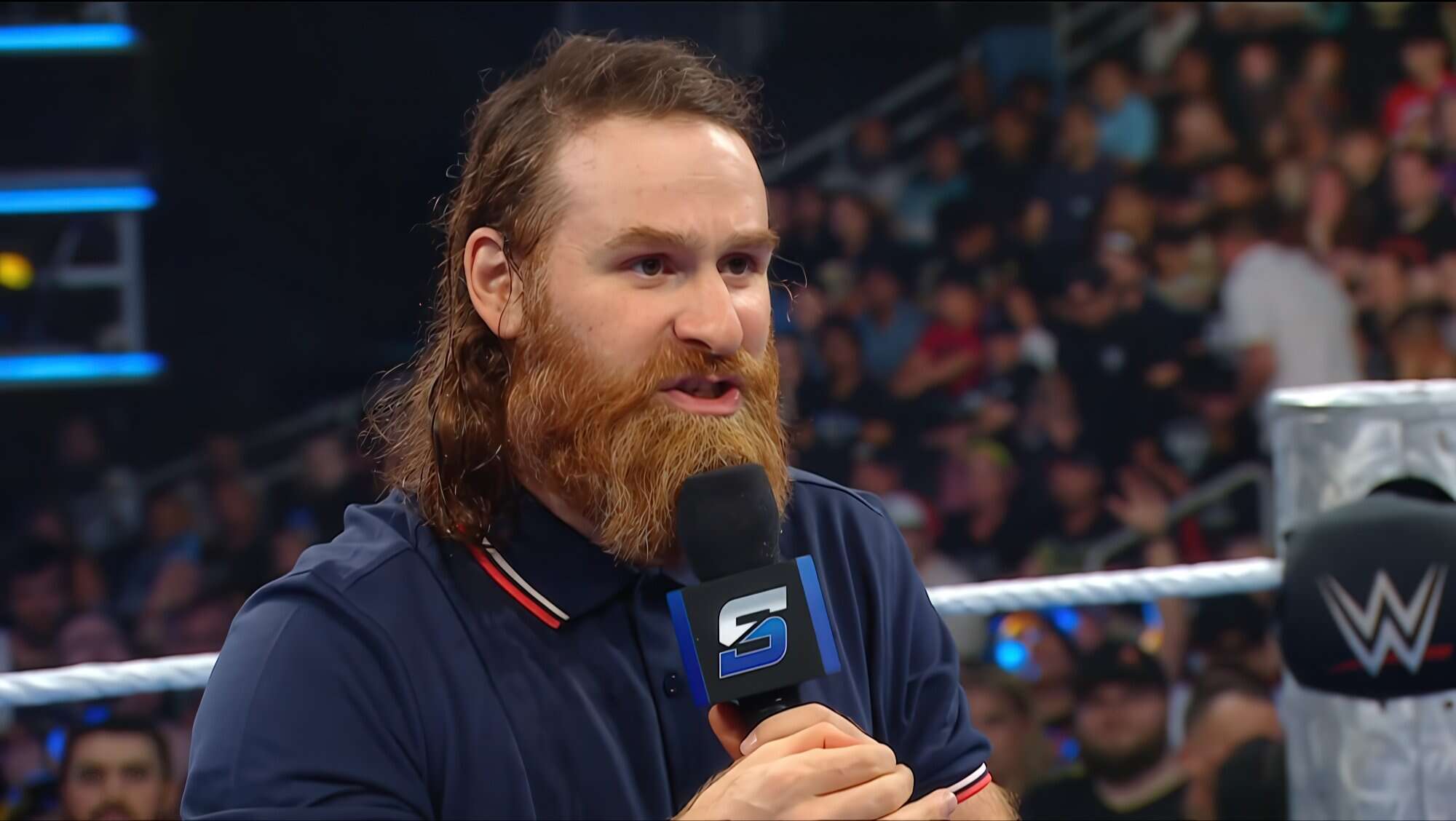
There’s a certain feeling you only get at a house show. A non-televised, middle-of-nowhere, Wednesday night WWE live event. It’s the proving ground. It’s where the real work gets done, far from the pyro and the hard cams of Raw or SmackDown. It’s where wrestlers learn how to truly work a crowd, how to call a match on the fly, and how to build a story in twenty minutes with nothing but a ring and a few thousand die-hards. And according to Sami Zayn, a guy who might be the modern poster boy for this ethos, it’s also the front line of a generational war brewing within WWE.
Zayn, a performer who clawed his way to the main event through sheer talent and an almost supernatural connection with the audience, reportedly sees a divide. A tension between the old guard who treat every match like it’s the main event of WrestleMania, and a newer school of thought that’s more concerned with the viral moment than the match itself. He’s not wrong. And this isn’t just some minor locker-room grumbling. This is the central conflict for the soul of WWE in the Triple H era.
The Art of Working a Room When the Cameras Are Off
Let’s get one thing straight: the house show circuit is the engine room of WWE. It’s the meat and potatoes. Without it, the entire enterprise would starve. The guys who grind it out on these loops are the ones who carry the company from Monday to Friday. We’re talking about the Sheamuses, the Drew McIntyres, the GUNTHERs of the world. These are men who can give you a 4.5-star classic in front of 4,000 people in Peoria and make it feel like the most important match of the year.
Sami Zayn is the patron saint of this philosophy. This is a guy who spent over a decade on the indie scene as El Generico, wrestling in front of 50 people in a VFW hall. He understands, on a cellular level, that the connection with a live audience is the most valuable currency in this business. His run with The Bloodline wasn't just great television; it was a masterclass in crowd manipulation that he learned over thousands of matches in tiny venues. He can give you comedy, he can give you pathos, and he can go in that ring for 30 minutes and tear the house down. That’s the gospel of the grinder.
These are the performers who ensure the live audience feels like they got their money’s worth. They’re the ones who build the loyal fanbase that sticks with the product through thick and thin. They are, in short, the foundation upon which the entire glittering palace is built.
Who Needs Reps When You've Got Reach?
Then you have the other side of the coin. The new school. The social media savants. The viral moment chasers. And their king is, without a doubt, Logan Paul. Let's be fair: the guy is an athletic freak and has taken to pro wrestling faster than almost anyone in history. But his approach is fundamentally different. He’s not training for a 25-minute wrestling match; he’s training for three or four insane spots that will be clipped, GIF’d, and blasted across every social media platform on the planet.
His matches are less wrestling contests and more like a Hollywood stunt reel. The Frog Splash from the top rope to the announce table? The Buckshot Lariat? These are designed for maximum viral impact. He’s not working a body part or selling a long-term injury. He’s creating a portfolio of moments. And you know what? It works. He brings in eyeballs that would never otherwise watch WWE. He’s an attraction in the truest sense of the word, a modern-day Andy Kaufman with a camera crew and a YouTube channel.
But here’s the critical part, the observation that gives Zayn’s supposed comments their teeth: you can’t build a wrestling company entirely out of Logan Pauls. If everyone is just chasing the next viral clip, the actual product, the wrestling part of wrestling, becomes hollow. It becomes a series of disjointed spots with no connective tissue. It’s like a movie trailer with no movie. The house show loops would be unwatchable, and the TV shows would feel like a series of commercials for a product that doesn't exist.
Triple H is Refereeing a Generational Riot
This brings us to the man in the middle of it all: Paul “Triple H” Levesque. There is nobody on earth better suited to manage this conflict, because he has literally been both guys. He was the workhorse in the mid-90s, the “Connecticut Blueblood” having technically sound matches. Then he became “The Game,” a larger-than-life superstar, a main-event attraction whose entrances were sometimes longer than the matches. He gets it. He understands the value of both the grinder and the spectacle.
This is a tale as old as wrestling itself. It’s the same tension that existed between the ultimate workhorse, Bret Hart, and the ultimate attraction, Hulk Hogan. Bret felt he was carrying the company with his in-ring prowess while Hogan swooped in to take the glory spots. The difference is, now both archetypes exist on the same roster, at the same time, under the same creative chief. Triple H is booking Logan Paul like a special event while simultaneously building his new NXT around long-term stories and in-ring work.
He's trying to have his cake and eat it too. The challenge of his tenure as head of creative won’t be choosing a side. It will be successfully integrating them. It’s about using the Logan Pauls of the world to get people in the door, and then using the Sami Zayns of the world to make them stay. If he can pull it off, he’ll create the most dynamic and resilient version of WWE we’ve ever seen. If he fails, the whole thing could feel disjointed and cheap.
The Battle for WWE's Future
Sami Zayn isn't a disgruntled employee stirring the pot. He's the canary in the coal mine. He sees the tectonic plates of pro wrestling shifting beneath his feet. The old way and the new way are on a collision course. The beauty of it is, this tension isn’t a bug; it’s a feature. It’s the creative friction that powers the industry. It’s what separates the legends from the forgotten.
The war for the soul of WWE is on. It’s not a battle of good versus evil, but a struggle between two valid, yet competing, philosophies of what it means to be a professional wrestler in 2026. And for fans, there’s nothing more compelling than watching it all play out, one house show, one viral clip, one epic match at a time.