The Content Farm Pipeline
The base model of a professional wrestler has fundamentally changed over the last decade, and I am highly skeptical that the updated weights are an improvement.
It used to be that a guy got over by cutting a visceral, unhinged promo that made you genuinely believe he wanted to end his opponent's career. The ultimate win condition was a world title run. Now? The win condition isn't a belt. It is a walk-on cameo as a background alien in a Disney property.
This morning, PWInsider dropped a brief but telling report that several WWE stars were in attendance at the latest Star Wars film premiere. Of course they were. This is the exact output you expect from the current system.
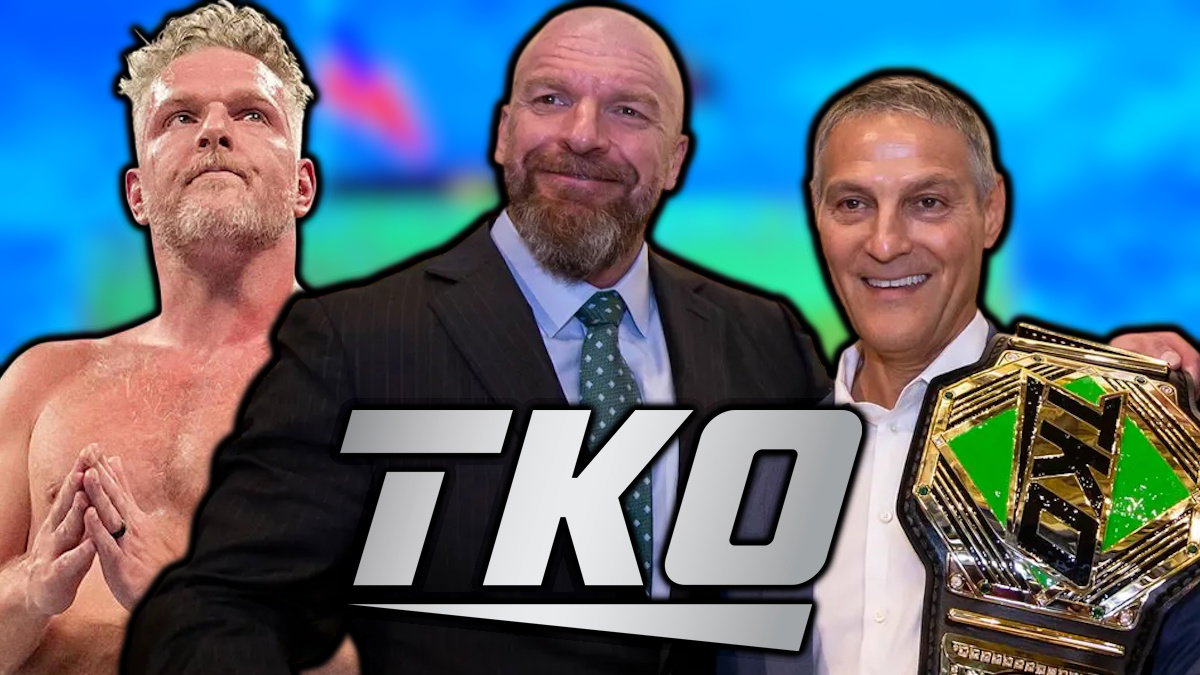
The Endeavor era of WWE, operating under the massive TKO umbrella, is clearly less about building generational wrestling talent and more about optimizing a cross-promotional pipeline. It is corporate crossover strategy brute-forced into existence.
We are just days away from AEW Double or Nothing, and the contrast could not be starker. While Tony Khan is booking actual wrestling matches and focusing on the in-ring product, WWE management is treating their featured roster like they are on a permanent Hollywood press junket.
Look, the architecture for this transition was laid out a long time ago. The Rock built the initial framework. John Cena optimized the parameters. Dave Bautista perfected the final output. But those guys were generational anomalies.
Now we have upper-mid-carders acting like they are one decent audition away from joining the Marvel Cinematic Universe. They walk the red carpet, smile for the cameras, and try to blend in with the real movie stars.
Why are we sending active, heavily featured performers out to do Disney PR hits when the weekly television product still has massive creative gaps? The weekly episodes of Raw and Smackdown often feel like first-draft scripts generated by an under-parameterized model.
The In-Ring Sacrifice
Let's talk about the actual impact this has on the locker room and the matches we see every week. When the top guys are constantly looking past the squared circle toward a potential streaming series contract, the matches inevitably suffer.
The intensity drops. The stiffness of the strikes is dialed back. You simply do not want to risk a black eye, a busted lip, or taking a stiff running knee to the face when you have a high-profile casting call on a Thursday afternoon in Los Angeles.
This is the glaring problem with the current TKO management style. They are actively treating WWE as a massive content farm to feed the larger entertainment machine. It barely feels like a wrestling company anymore.
It acts more like an IP holding company trying to force its talent into mainstream relevance at the expense of the core product. And let's be honest with ourselves, the track record for wrestlers in Hollywood is mostly terrible.
For every Bautista getting rave reviews for playing Drax or showing up in Dune, there are fifty guys doing straight-to-streaming action garbage that looks like it was rendered on a severely overheating GPU.
The sheer desperation for mainstream validation is exhausting to watch. The wrestling business has always suffered from a massive inferiority complex regarding real sports and traditional Hollywood.
But this current era is taking that insecurity to ridiculous new extremes. WrestleMania 41 in Las Vegas is supposed to be the culmination of a massive, industry-defining year.
We have John Cena's massive farewell tour looming over everything. We have CM Punk finally back in the main event mix, looking to close out his career on his own terms.
But instead of focusing entirely on building that internal narrative, the talent is distracted. They are doing media scrums about lightsabers and Force powers instead of selling their upcoming pay-per-view matches.
I do not blame the wrestlers themselves. If someone offered me a massive paycheck to stand in front of a green screen for three days, I would take the money and run.
The failure here is completely systemic. The corporate incentives are fundamentally misaligned. When a wrestler gets more internal praise from the front office for attending a movie premiere than for tearing the house down in a 20-minute television match, the culture is broken.
You are training your talent to prioritize the absolute wrong metrics. You are optimizing for Instagram engagement instead of match quality.
Netflix and the Algorithm
Let's talk about the impending Netflix transition. WWE is about to move its flagship programming to the biggest streaming platform on the planet.
This is a monumental shift, and it completely alters the incentive structure for everyone involved in the production. Netflix isn't just looking for a wrestling show; they are looking for sticky IP that keeps users engaged on their platform.
They want global stars. They want faces that look good on a thumbnail. When the algorithm dictates your booking decisions, the actual wrestling is going to suffer.
We are going to see even more of these forced crossover events. The Star Wars premiere is just a tiny preview of the nightmare we are walking into.
Imagine a world where the main event of Monday Night Raw is interrupted so the stars of the newest Netflix original teen drama can get some cheap heat. It sounds absurd, but under the TKO banner, it is a highly probable outcome.
The obsession with being brand-safe has completely neutered the danger that used to make professional wrestling so incredibly captivating. You used to tune in because you legitimately did not know what was going to happen.
The broadcasts felt chaotic. The wrestlers felt like unstable athletes who could snap at any moment. Now? Everyone hits their precise marks, recites their heavily memorized lines, and makes sure not to say anything that might upset a potential brand partner.
It is a beautifully choreographed, incredibly athletic routine, but it severely lacks the raw, unpolished grit of the eras that actually built this company's massive foundation.
Even the movesets are starting to feel sanitized. Everyone works the exact same fast-paced, low-impact style to ensure nobody gets seriously injured before their next press junket. Instead of focusing on how to properly transition from a standard wristlock into a devastating Kimura, they are taking acting classes.
We are losing the psychology of the sport in favor of creating easily clippable moments for social media.
A 30-second clip on TikTok of a crazy flip might do huge numbers for the digital media team, but it does absolutely nothing to draw a paying crowd to a live event. It is empty-calorie engagement.
The TKO Crossroads
If WWE wants to maintain its absolute dominance in this space, they have to remember what actually made them a global phenomenon in the first place. It wasn't red carpets. It wasn't movie premieres.
It was compelling, gritty, and deeply personal storytelling. So while the top stars are out there mingling with Hollywood directors and trying to secure their post-wrestling retirement plans, the actual fans are sitting at home, watching a diluted product, and wondering where the fire went.
The contrast with the upcoming AEW Double or Nothing card is genuinely striking. For all of Tony Khan's many faults as a booker—and we all know there are plenty—he actually books wrestling shows.
He puts on brutal, uncompromising matches. He doesn't seem to care if his champions get invited to movie premieres or if they look pretty for the paparazzi.
He cares if they can go thirty minutes in the ring and make the crowd believe in the violence. That used to be the baseline requirement for this entire industry.
You had to be a believable fighter first and an entertainer second. Now, it feels like the ratios have completely flipped.
WWE needs a serious hard reset before this gets out of hand. They need to stop chasing Hollywood clout and start focusing entirely on their own universe.
They need to realize that their core, paying audience does not give a single damn about who walked the red carpet at a Star Wars premiere. We care about the blood feuds.
We care about the unscripted promos. We care about the in-ring storytelling. We care about seeing two people go to war over a championship.
Everything else is just corporate noise designed to inflate the stock price. If they do not correct course soon, they are going to find themselves in a very dangerous spot.
The massive television ratings might hold up for a while, coasting entirely on historical momentum and the Netflix deal hype. But the actual passion of the hardcore fanbase will slowly erode.
You cannot fake that kind of passion. You cannot simulate it with a massive marketing budget. And you certainly cannot build it by sending your hardest-hitting roster members to go take smiling selfies with C-3PO while the mid-card burns to the ground.
The industry is standing at a very weird crossroads right now. The corporate decisions made in the next few months heading into the build for WrestleMania 41 will likely dictate the entire direction of professional wrestling for the next decade.
I just hope someone in the TKO management structure wakes up and realizes that a brutal, five-star, twenty-minute wrestling match is worth infinitely more to the legacy of this business than a five-second background cameo in a movie.