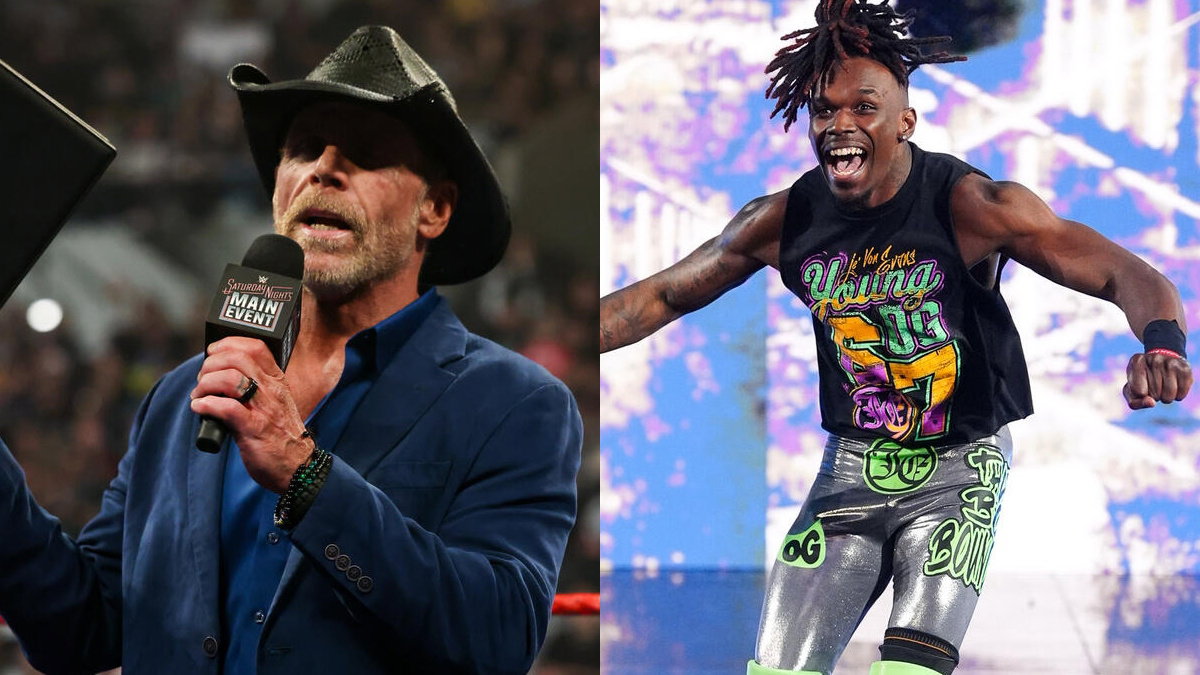
WWE's Andre the Giant battle royal has become a Friday night afterthought
The reality of the pre-Mania Friday
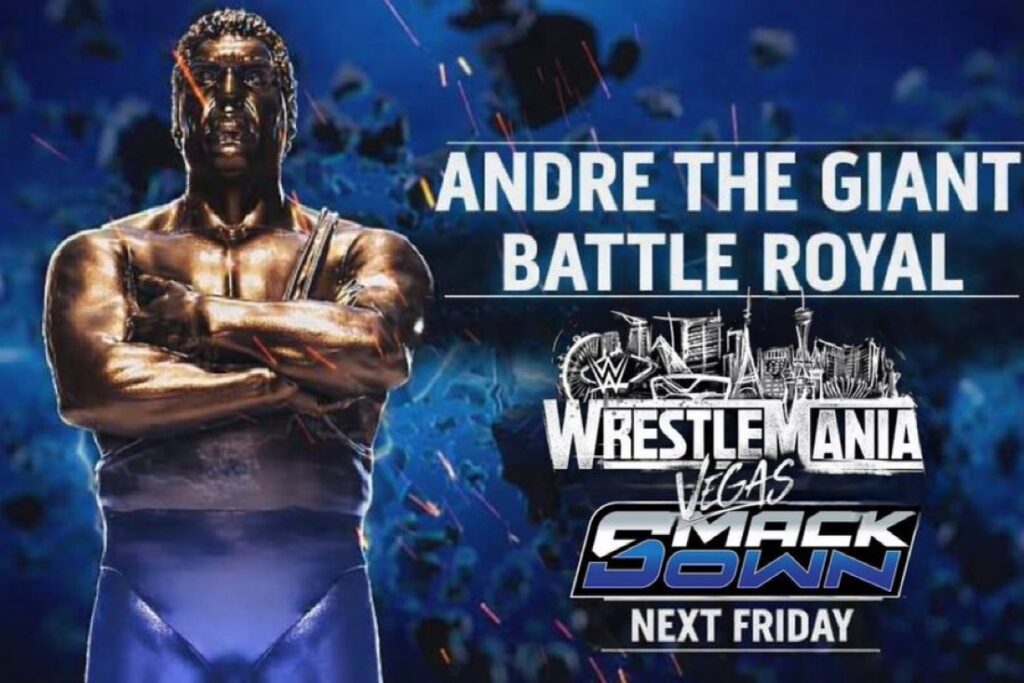
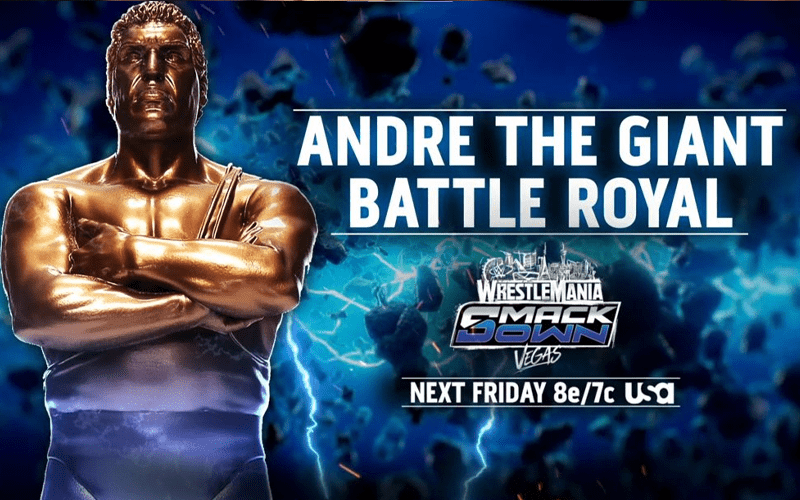
WWE officially confirmed the Andre the Giant Memorial Battle Royal will take place on next week's SmackDown. As reported by BodySlam.net, the match continues its recent tradition of serving as the main event for the WrestleMania go-home television broadcast. This shift began back in 2021. It moved a bloated, multi-man exhibition off the premium live event and onto cable television.
The rationale was simple enough. WWE needed a hook to pop a television rating on a Friday night when most traveling fans were already out drinking in the host city. It makes sense from a broadcast management perspective. You have a two-hour block of television to fill just hours before the biggest weekend of the year. You cannot risk your main event talent suffering an anomalous injury.
You also cannot advance major storylines because the pay-per-view card is already locked in stone. The solution is throwing twenty-plus midcarders into the ring at once. It eats up twenty minutes of screen time. It gives the live crowd a reason to stand up and chant.
But we have to look at what this match actually represents in modern professional wrestling. When Cesaro scoop-slammed Big Show over the top rope at WrestleMania XXX in 2014, the building shook. The visual callback to Hulk Hogan slamming Andre at WrestleMania III was brilliant tactical booking. It felt like a definitive star-making sequence. It felt like the trophy meant something tangible for the winner's career trajectory.
That illusion died very quickly. The follow-up for Cesaro was a confusing pairing with Paul Heyman that stripped away his organic babyface momentum. The battle royal is no longer a launching pad. It is a holding pen. It is a way to ensure the guys working house shows in Kalamazoo on a Tuesday get a decent payday during WrestleMania week.
It is a participation ribbon cast in bronze.
The geometry of a modern battle royal
If you sit ringside and watch a standard WWE battle royal, you notice the distinct tactical phases. The bell rings. The ring is immediately too crowded to execute actual wrestling sequences. The first four minutes are always identical.
Wrestlers pair off in the corners. They throw working punches. They lean against the turnbuckles while pretending to push someone over the top rope.
You will see a lot of uninspired clubbing blows to the back. It is a stalling tactic disguised as combat. This is the congestion phase. It makes for terrible television.
The camera crew struggles to find a focal point. You might have a heated midcard rivalry playing out on the apron, but the director cuts to a generic collar-and-elbow tie-up in the opposite corner. The spatial limitations of a standard twenty-by-twenty ring mean that any athletic move is severely restricted.
You cannot hit a springboard moonsault when six guys are lying on the canvas recovering from chops. The match only begins to breathe after the first eight eliminations. Once the ring clears out, the geometry changes.
You finally get space for high spots. The workers can actually hit the ropes without tripping over a tag team specialist who is taking a breather on the canvas. The pacing accelerates. The crowd wakes up from their collective stupor.
Watch how the veterans navigate the early stages of a battle royal. A seasoned worker like The Miz or Rey Mysterio will immediately roll under the bottom rope to preserve energy. They know that the first ten minutes are just chaotic bumps.
It is a smart survival strategy within the context of the match, but it exposes the inherent flaw of the gimmick. If the smartest tactical move is to literally avoid participating in the match, the match structure is broken.
Look at the historical tape. The only memorable sequences in the 11-year history of the Andre the Giant Memorial Battle Royal happen in the final three minutes. You need it down to four guys. You need the classic setup: the resilient babyface, the dominant monster, the opportunistic heel, and the wild card.
Until you reach that configuration, the match is just bodies bumping into each other without structural purpose.
A legacy of stalled momentum
The real issue with the Andre the Giant Battle Royal is the lack of follow-through. Look at 2015. Big Show won the second iteration in Santa Clara. He eliminated Damien Mizdow in the final sequence. Mizdow was arguably the most organically over midcarder on the entire roster at that exact moment.
The crowd was desperate for him to secure the victory. Instead, the booking committee went with the established veteran. It was a massive deflation of crowd energy. It proved early on that the match was not designed to elevate rising talent.
Let's look at the numbers. Out of the ten winners crowned between 2014 and 2024, exactly zero used the victory as a direct springboard to a world championship within the same calendar year. Baron Corbin won in 2016. He was a surprise entrant from NXT. It worked for a single night.
Mojo Rawley won in 2017 because Rob Gronkowski hopped the barricade. That was a PR stunt designed strictly for ESPN morning shows. It generated mainstream headlines, but it did nothing for Mojo's long-term standing on the roster.
The trend continued for years. We saw the trophy handed to flavor-of-the-month acts who lacked long-term creative backing. It was treated as a substitute for actual storytelling. Instead of writing a compelling television arc for a rising midcarder, the writers simply booked them to win the ARMBAR.
It is a lazy shortcut. It assumes the audience will accept a giant piece of hardware as a legitimate measure of momentum. Matt Hardy won in 2018. Braun Strowman won in 2019. Jey Uso won the 2021 edition. That was the first year it moved to SmackDown.
Jey was already heavily involved in the Bloodline storyline. Winning the trophy was just a prop to add to Roman Reigns' aesthetic background. Madcap Moss took the win in 2022. Bobby Lashley won it in 2023. These are talented performers, but the victory felt entirely disconnected from their primary narrative arcs.
Let's examine the most recent historical data. Bronson Reed secured the victory in 2024. He is a phenomenal athlete. He is a super-heavyweight who moves like a cruiserweight. His Tsunami splash looks devastating.
Winning the battle royal should have been the catalyst for a dominant summer run. Instead, he floated in the midcard. He had good matches, but the trophy did nothing to elevate his card placement. The victory was a momentary pop, not a sustained push.
The booking committee simply checked a box and moved on to the next segment. Even the physical design of the trophy works against the winner. The original statue was magnificent, but its sheer scale makes it impossible to integrate into a daily wrestling persona.
You cannot carry it down an airport concourse. You cannot bring it to a local media hit. Compare it to the Money in the Bank briefcase. The briefcase is a portable, constant visual reminder of a wrestler's threat level.
The Andre trophy is a stationary prop that requires a stagehand to roll it down the ramp. Once the logistics become annoying, WWE simply writes it off television. By July, the win is completely forgotten. It becomes a trivia question rather than a resume builder.
The 2021 television shift
Moving the match to SmackDown was a tacit admission of defeat by WWE creative. WrestleMania cards are notoriously long. Even split across two nights, you are looking at eight hours of wrestling. Pacing is vital. You cannot exhaust the crowd with a twenty-minute cluster of midcarders right before a heavily anticipated championship bout.
The fans only have so much energy to expend. The Friday night placement solves multiple logistical problems. It gives SmackDown a promised main event. It clears time on the premium live event. It allows the production crew to rehearse camera angles for the stadium setup without blowing a major angle.
From a purely operational standpoint, it is a smart decision. But it strips the match of its supposed prestige. You cannot tell the audience that this is a career-defining achievement while simultaneously refusing to put it on the actual WrestleMania card. The fans are smart. They understand the hierarchy of the show. If you are wrestling on Friday night, you are not a priority for the weekend. You are the appetizer.
A critical look at the booking mechanics
This is where the tactical analysis gets frustrating. Battle royals offer a unique opportunity to build layered narratives. You can have a cowardly heel hide under the bottom rope for 15 minutes. You can have a tag team dominate the early stages before inevitably turning on each other.
You can execute complex elimination spots that require perfect timing. I want to see someone use the ropes to slingshot an opponent to the floor. I want to see a rolling elbow into a Code Red that forces a wrestler over the top rope. Instead, WWE usually defaults to the most basic tropes.
The big man stands in the middle of the ring and tosses out three smaller wrestlers in rapid succession. Then the entire remaining field teams up to eliminate the big man. We have seen this exact sequence in almost every battle royal since 1993.
It is lazy booking. It requires zero creative effort. It wastes the athletic potential of the roster. When you have a ring full of talented workers, you should use them. Setup multi-man suplexes. Have someone skin the cat to avoid elimination, only to get caught with a springboard dropkick.
Use the apron as a dangerous tactical zone. In promotions like New Japan Pro-Wrestling, an apron battle is a terrifying sequence of strike exchanges where one misstep ends the match. In WWE, it usually involves someone taking a gentle forearm to the chest and falling safely to the padded floor below.
The lack of physical jeopardy makes the eliminations feel hollow. The lack of innovation is staggering. You have guys in the back doing incredible things on Monday nights, but the moment they step into a battle royal, they revert to 1980s brawling fundamentals. It makes the match feel archaic. It feels like a relic from an era where ring psychology was limited to body slams and eye gouges.
The value of a roster payday
Despite the creative shortcomings, I will never advocate for scrapping the match entirely. Professional wrestling is a brutal industry. The men and women who bump 200 days a year deserve a spot during WrestleMania week. The battle royal is an efficient way to get everyone on the card.
It generates a bonus check for guys who are eating pins on Main Event. The economics of the business demand that you reward the lower card workers. That financial reality matters. It keeps the locker room morale stable.
When you have a roster of nearly a hundred active competitors, only twenty are going to get meaningful singles matches at WrestleMania. The rest need something to do. The Andre the Giant Memorial Battle Royal serves that exact purpose. It is a necessary evil of the modern wrestling calendar.
We just need to adjust our expectations. Stop treating the announcement like a major shift in the wrestling calendar. Stop fantasy booking midcarders to win it as a path to the Intercontinental Championship. It is a television main event. It is a functional piece of weekly programming.
It is not the Royal Rumble. It is not Money in the Bank. It is exactly what it appears to be: a loud, chaotic, twenty-minute filler segment.
What to expect next week
When SmackDown rolls around next week, the formula will remain unchanged. The ring will fill up during a commercial break. A few lower-tier guys will get their televised entrances. The bell will ring. Chaos will ensue for five minutes.
The commentators will pretend that thirty men have a legitimate chance to win. The production truck will miss at least two eliminations because they were focused on a headlock in the corner. Someone will do a comedy spot. A big man will roar.
Eventually, we will get down to the final four. The ring geometry will finally normalize. Those last three minutes might actually feature some decent wrestling. A crisp clothesline over the top. A well-timed counter into a suplex.
The crowd will count down the final elimination. A winner will be crowned. They will pose next to the giant golden statue of Andre. The pyrotechnics will go off. The broadcast will fade to black.
And then, by Monday Night Raw, we will all move on. The winner will carry the trophy down the ramp once, maybe twice, before it is quietly retired to a storage facility in Stamford. That is the true legacy of the Andre the Giant Memorial Battle Royal.
It is a brief flash of noise on a Friday night, quickly swallowed by the spectacle of the weekend that follows. It serves a functional purpose, but it rarely serves a career.
WWE 2K24 - PlayStation 5
The definitive wrestling simulator that lets you finish your story.
Frequently Asked Questions
When is the Andre the Giant Memorial Battle Royal taking place?
Why was the Andre the Giant battle royal moved to SmackDown?
Who won the first Andre the Giant battle royal in 2014?
What happens during the first few minutes of a WWE battle royal?
How does the Andre the Giant battle royal benefit WWE wrestlers?
More Coverage
WWE's injury bug is stalling the momentum of its biggest stars
4 hours ago
Saturday Night’s Main Event brought the noise but left us with questions
4 hours ago
WWE wants your 99 dollars and they aren't hiding it
6 hours ago
Tiffany Stratton's booking reveals a structural flaw in WWE's mid-card
7 hours ago
Top 10: The Most Impactful Modern Moments in WWE
10 hours ago
Why Gangrel is right about the lost art of wrestling psychology
12 hours agoMore Analysis
WWE is burying the Andre Battle Royal on SmackDown again and we need to talk
3 months, 1 week ago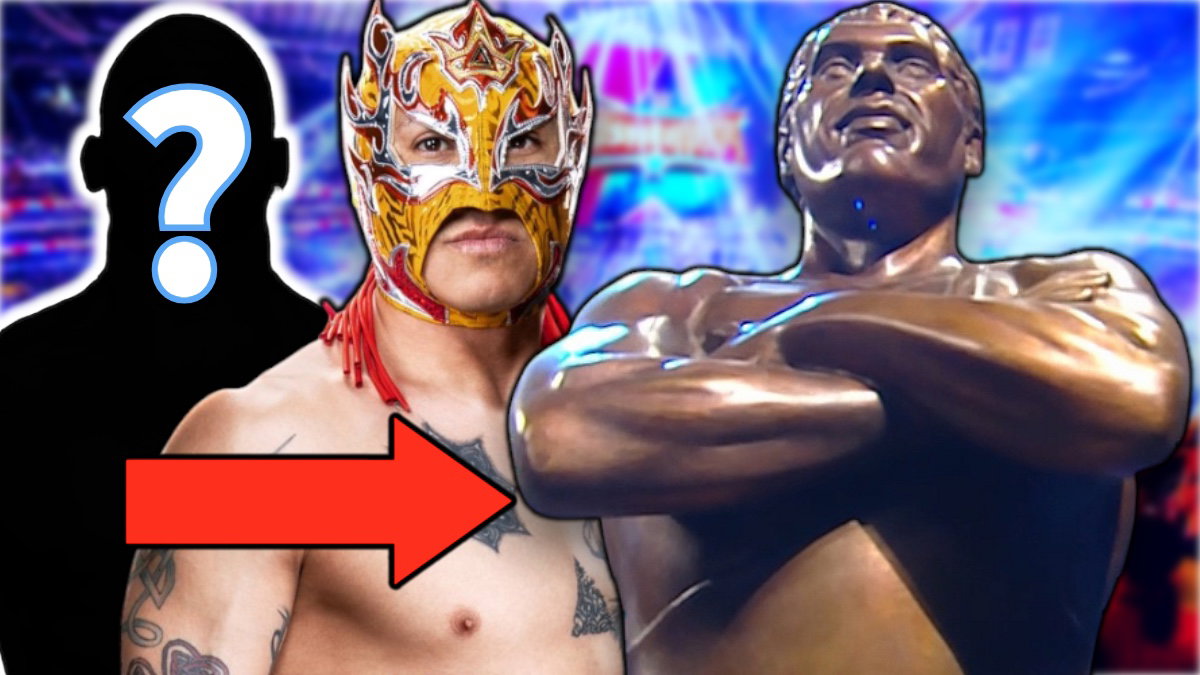
Predicting the 2026 Andre The Giant Memorial Battle Royal: The math of the midcard
3 months, 3 weeks ago
Carmelo Hayes and the ghost of the Andre Battle Royal
3 months ago
The Andre the Giant Battle Royal has only one logical winner
3 months, 1 week ago
WrestleMania 41 is a high-stakes gamble on momentum
3 months ago