WWE rejected Mackenzie Mitchell's book, and it exposes their biggest flaw
The corporate fear of independent success
WWE hates what it cannot control. It is the oldest rule in the Stamford playbook. If an idea originates outside the sanitized walls of a corporate boardroom, it is viewed with suspicion.
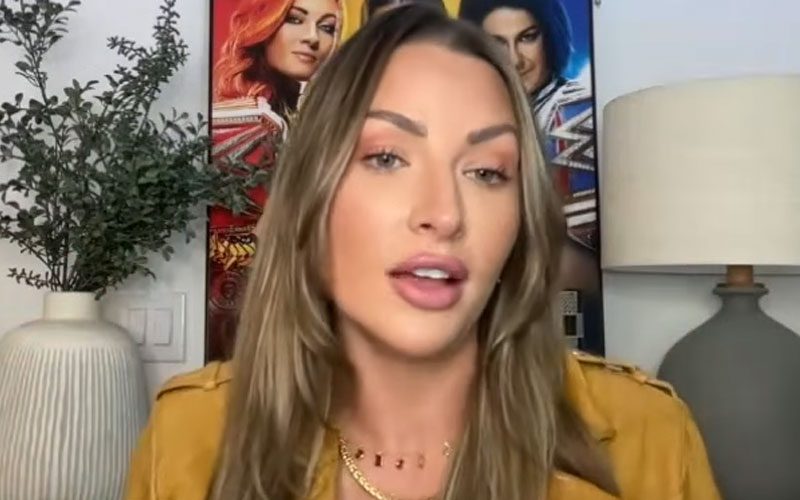
Mackenzie Mitchell recently revealed a story that perfectly illustrates this dynamic. Early in her career, she pitched a concept to WWE management that she deeply believed in. The company passed on it, assuming that would be the end of the discussion.
Mitchell didn't let the rejection kill the concept. She eventually took the idea outside the corporate umbrella and got it published as a book. This is a familiar cycle for anyone who has followed WWE's corporate maneuverings over the last two decades.
The company loves the concept of independent contractors when it comes time to pay health insurance. But they demand the absolute loyalty of a salaried employee when it comes to intellectual property. They want to own every thought that crosses a performer's mind.
Mitchell’s situation is frustrating because of the obvious missed opportunity. She is a known broadcast entity with a built-in audience. A publishing deal should have been a layup for the licensing department.
Instead, the company looked at an original idea and decided it carried too much risk. They defaulted to rejection because they didn't generate the idea themselves.
The third-party ban trauma still lingers
To understand why WWE passed on Mitchell’s book, you have to look at their historical relationship with talent side projects. The corporate culture is still deeply scarred by the third-party platform bans of late 2020. Management panicked when they realized wrestlers were building massive audiences on Twitch and Cameo.
AJ Styles, Mia Yim, and Cesaro were forced to abandon lucrative streaming channels overnight. Zelina Vega was temporarily fired simply for refusing to give up her independent online presence. The message was clear: your audience belongs to us, and you only speak to them through approved channels.
While the TKO merger has supposedly ushered in a more collaborative era under Paul Levesque, the bureaucratic instincts remain identical. Mitchell pitching a book was essentially asking the machine to validate her outside ambition.
A book requires marketing, legal review, and a splitting of royalties. WWE executives would rather leave money on the table than share a meaningful percentage of it with the talent who generated the idea. It is a stunningly short-sighted approach to media management.
Why WWE Books lost its edge
There was a time when WWE embraced the publishing world. In the late 1990s, Mick Foley’s "Have a Nice Day" spent 26 weeks on the New York Times bestseller list. It proved that wrestling fans would consume long-form written content if it felt authentic.
The company capitalized on that momentum, churning out autobiographies from The Rock, Chyna, and Kurt Angle. But over the last decade, the WWE Books imprint has become remarkably sterile. They stopped taking chances on unique formats or outside-the-box concepts.
The current publishing strategy relies heavily on generic photo books, sanitized career retrospectives, and dry encyclopedias. If Mitchell pitched something that deviated from the standard "my journey to the ring" template, it probably short-circuited the licensing department.
They don't know how to sell a concept that doesn't fit neatly into a pre-existing merchandise category. Originality requires a custom marketing plan. WWE prefers plug-and-play revenue streams.
This risk aversion pushes creative talent out the door. Chris Jericho famously published "A Lion's Tale" outside of the WWE system in 2007 because he wanted editorial control. Jon Moxley did the same with "MOX" in 2021.
Both books were massive critical and commercial successes. WWE received exactly zero dollars from either of them because they refused to play ball.
The reality of the TKO era
We are constantly told that the modern WWE is a completely different animal. The television product heading into Backlash next month is arguably the best it has been in two decades. The match quality is up, the storylines make logical sense, and the production values are stellar.
But behind the curtain, the corporate machinery is still incredibly rigid. Mitchell's book rejection is a massive red flag for anyone looking to sign with the company in 2026. It proves that the independent contractor status is still a one-way street.
If you bring a profitable idea to management, they will only greenlight it if they can take the lion's share of the credit and the cash. If they can't figure out how to completely control the narrative, they will just tell you to drop it.
She took her idea to a real publisher and got it printed. Every time that book sells a copy, it serves as a tiny indictment of WWE’s talent management strategy. They had the right of first refusal, and they flatly refused.
The battle for intellectual property
The core issue always comes down to trademark law. When you sign a WWE contract, you are essentially leasing your name and likeness to the company. They own the merchandising rights, the broadcast rights, and the right to dictate how your character is perceived by the public.
If Mackenzie Mitchell had published her book through WWE, she likely would have surrendered the copyright. The company would own the text, the cover art, and the specific formatting of her ideas. If she ever decided to leave the promotion, the book would stay behind in Stamford, locked in a corporate vault.
By taking the idea to an outside publisher, Mitchell retained her intellectual property. That is a massive victory in an industry designed to strip talent of their individual ownership. It also explains exactly why WWE passed.
If they can’t own the trademark in perpetuity, they have absolutely zero interest in financing the project. This obsession with ownership has cost the company millions in potential revenue.
Look at Cody Rhodes. When he left the company in 2016, he had to fight a ridiculous legal battle just to use his own family name on the independent circuit. WWE claimed they owned the rights to "Cody Rhodes" because they had trademarked it for television.
It was a petty, spiteful move designed to cripple his earning potential outside their walls. Rhodes eventually won that battle, built himself into a massive star, and forced WWE to bring him back on his own terms. Mitchell’s book situation is a smaller scale version of the exact same corporate arrogance.
Ignoring the digital reality
You would think a company valued in the billions would understand modern media distribution. But WWE repeatedly proves they are stuck in a 1990s television mindset. They view outside projects as a distraction from the weekly television product.
This mentality nearly destroyed UpUpDownDown. Xavier Woods built that gaming channel from scratch, using his own equipment and his own personal connections in the video game industry. It became a massive hit, drawing millions of subscribers and giving fans a rare glimpse behind the curtain.
How did WWE react? They eventually brought it under the corporate umbrella, restricted who could appear on the channel, and took a massive cut of the ad revenue. Woods did all the heavy lifting, and the executives swooped in to collect the check.
Mitchell likely looked at that exact scenario and realized a WWE publishing deal was a trap. Why do the agonizing work of writing a book just to hand the profits to a billionaire? The rejection was probably the best thing that could have ever happened to her career.
Leaving money on the table
The financial incompetence of the decision is staggering. Publishing is a low-overhead business compared to live television production. Printing a book requires a minimal upfront investment.
If it flops, the loss is negligible. If it hits, it generates passive income for years. WWE chose to pass on a project from a known television personality to save what amounts to rounding error in their quarterly budget.
They reported operating income of over $200 million last quarter. They could have funded Mitchell's book with the catering budget for WrestleMania.
They didn't pass because of the money. They passed because of the precedent. Approving Mitchell's book would mean acknowledging that talent can have good ideas that don't involve a steel chair or a championship belt.
It would mean admitting that the corporate machine isn't the sole source of brilliance in the wrestling industry. That is an admission the current regime is still entirely unwilling to make.
The contrast with the competition
You only have to look across the aisle to see how archaic WWE's policy truly is. All Elite Wrestling has its flaws, but they fundamentally understand the value of letting talent breathe. When The Young Bucks released "Killing the Business" in 2020, AEW didn't try to seize the copyright or demand a massive cut of the profits.
Tony Khan allowed his talent to use their television exposure to sell a book, knowing that a successful outside project only makes the wrestler more valuable to the promotion. It is a symbiotic relationship. WWE’s approach is entirely parasitic.
AEW wrestlers are regularly allowed to take outside bookings, star in independent movies, and run their own merchandise stores. The promotion understands that a rising tide lifts all boats. If a wrestler gets over on a massive YouTube channel, that audience will eventually follow them to Wednesday night television.
WWE views any outside success as a direct threat to their monopoly on the viewer's attention. They operate from a position of profound insecurity. They are terrified that if a performer realizes they can make money without the corporate machine, the performer will simply walk away.
A blueprint for future talent
Mackenzie Mitchell has inadvertently provided a roadmap for the rest of the roster. Her story is a warning beacon for anyone coming up through the NXT developmental system. The company will use you for television time, but they will not help you build a brand that you can take with you when you leave.
If you have a podcast idea, launch it independently. If you want to start a Twitch stream, use a pseudonym and never mention the company. If you want to write a book, go straight to a real literary agent and bypass the WWE licensing department entirely.
The independent contractor label is a weapon the company uses to avoid paying benefits. But talent needs to start using that same label to protect their intellectual property. You are a contractor, so you need to act like one and build your own portfolio.
Mitchell’s book is currently sitting on store shelves, generating revenue and building her personal brand. WWE has absolutely nothing to do with it. That fact alone probably drives a few executives absolutely crazy.
And honestly, that is exactly what they deserve for being so remarkably short-sighted. The next time a young talent pitches an idea and hears a "no" from the licensing department, they won't just accept it. They will take their idea, walk out the door, and build it themselves.
Cody Rhodes "American Nightmare" Adult Weight Belt
The ultimate signature accessory for the American Nightmare's biggest fans.
Frequently Asked Questions
Why did WWE reject Mackenzie Mitchell's book pitch?
What did Mackenzie Mitchell do after WWE rejected her book?
How does WWE handle their wrestlers' independent projects?
Who was affected by WWE's third-party platform ban in 2020?
When did WWE Books have its biggest success?
More Coverage
Logan Paul's 2026 engagement numbers show the diminishing returns of celebrity crossovers
2 days ago
Sheamus and the reality of WWE contract leverage
2 days, 21 hours ago
TNA is cleaning house while AEW struggles in Mexico
2 days, 22 hours ago
Big Cass and the shifting math of the WWE roster
5 days, 18 hours ago
TNA is shifting the Lockdown start time and I have questions
1 week, 1 day ago
Maple Leaf Pro hitting MyAEW is a calculated play for regional relevance
1 week, 2 days agoMore Analysis
Adam Pearce and Dakota Kai are exposing the reality of WWE backstage life
2 months, 2 weeks ago
The weird glass ceiling in Triple H's WWE kitchen
1 month, 1 week agoWWE Backlash 2026 is already booked for disaster
3 months, 2 weeks ago
When the boss says no, you don't keep asking
1 month, 2 weeks ago
WWE’s current roster churn is a massive scouting failure
4 weeks, 1 day ago