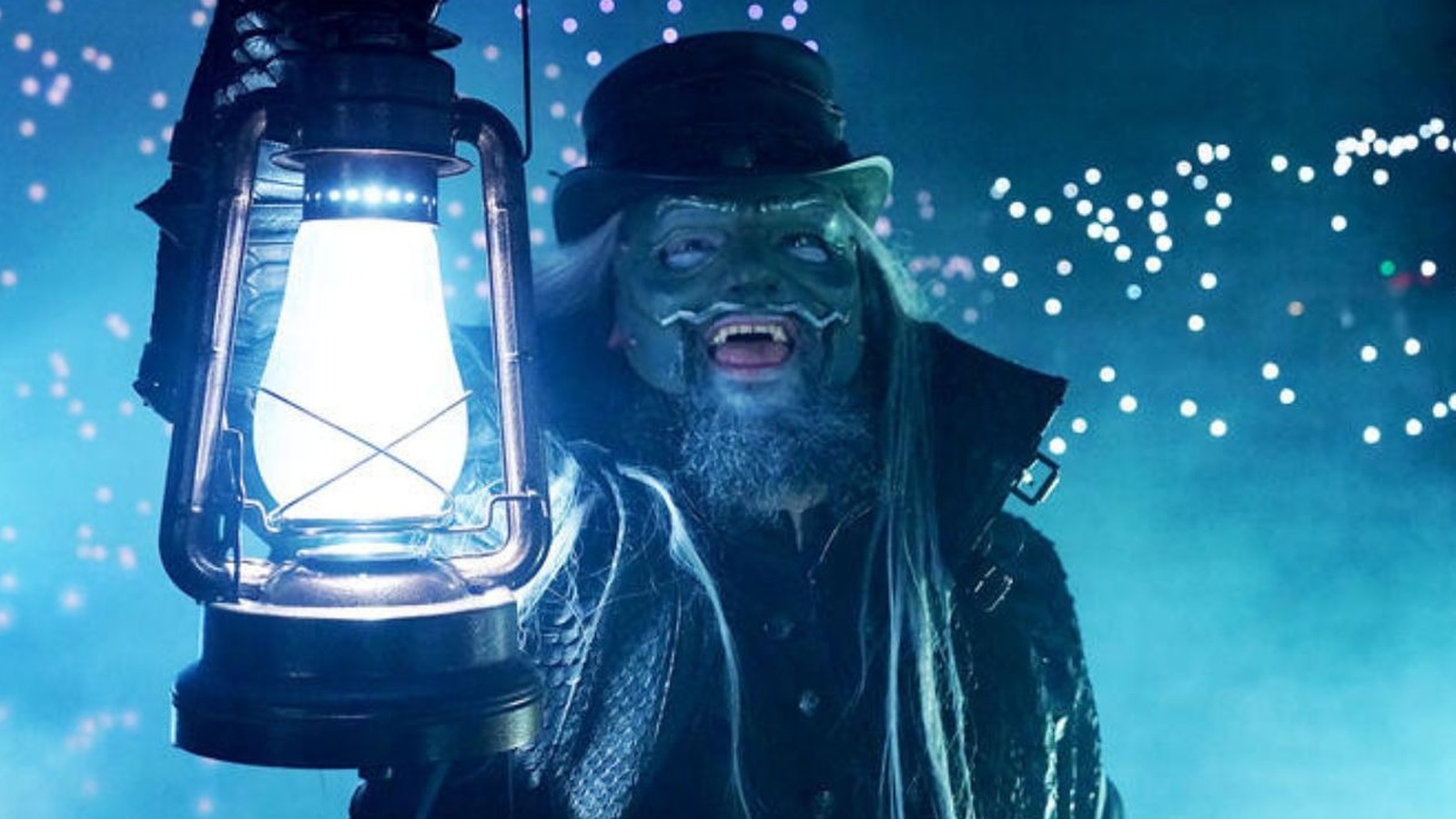
Why WWE's new Backlash superstore in Tampa is a brilliant, exhausting move

The quiet death of the concourse merch stand
For decades, buying a wrestling shirt was an exercise in mild frustration. You walked into the local arena, bypassed the overpriced beer, and immediately sought out the longest, most disorganized line in the concourse. You pointed at a blurry grid of designs taped haphazardly to a concrete wall.
You asked for a large. They only had small or triple XL. You bought the triple XL anyway. You draped it over your shoulder like a prized pelt and watched the rest of the show.
That specific era of wrestling consumption is completely dead. The announcement that WWE is opening a dedicated Backlash Store in Tampa ahead of next weekend's premium live event is the final nail in the coffin. It represents a fundamental shift in how the company extracts value from its audience.
We are exactly 7 days away from Backlash. Historically, this is the sleepiest period on the wrestling calendar. It is the immediate hangover following WrestleMania 41. The storylines are reheated leftovers, and the matches are mostly safe rematches from the massive stadium shows in Las Vegas.
Yet WWE is treating this secondary show in Florida like a major international festival. They are securing off-site retail space in Tampa, stocking it with exclusive items, and demanding fans make a separate, distinct trip just to spend their money. It is a flex of corporate muscle disguised as fan service.
Copying the combat sports playbook
To understand why a pop-up shop in Tampa actually matters, you have to look at the parent company. Endeavor did not purchase WWE for billions of dollars just to run wrestling shows. They bought the promotion to run traveling weekend festivals that local governments bid on heavily.
When the UFC rolls into a city for a numbered pay-per-view, they bring a massive footprint. They schedule fan fests, open workouts, press conferences, and sprawling retail installations. They monetize the entire zip code, not just the seats inside the arena. WWE is now fully locked into this exact pattern.
Tampa is not just hosting a wrestling card; they are hosting a localized economic engine. A standalone superstore creates immediate foot traffic on Thursday and Friday. It forces fans into local restaurants, bars, and hotels before the doors even open for the actual matches on Saturday night.
It is a brilliant, ruthless extraction of capital. WWE knows that the fan who buys a ticket will probably buy a shirt during the show. But the fan who visits a superstore on a Friday afternoon will buy a shirt, a commemorative poster, a miniature title belt, and a high-margin program.
You completely remove the friction of the crowded arena concourse. You remove the pressure of missing the opening bell. You turn the act of shopping into the main event itself, making the retail transaction the focal point of the weekend.
The John Cena and Cody Rhodes retail boutiques
Look at the current roster and you quickly understand why this retail footprint is mathematically necessary. The sheer volume of top-tier merchandise movers requires actual square footage that an arena simply cannot provide.
Cody Rhodes is still defending the WWE Championship following his grueling title defense at WrestleMania 41 last month. His merchandise alone could fill a medium-sized boutique. The custom weight belts, the intricate Nightmare Family jackets, the specialized event t-shirts — it takes up far too much physical space for a traditional folding table.
Then you have the looming shadow of John Cena. His massive farewell at WrestleMania 41 in Vegas was an emotional, generation-defining moment. Even if Cena is entirely absent from the Backlash card, his merchandise will dominate the racks in Tampa.
Fans will buy retro towels and retrospective t-shirts purely out of nostalgia. WWE is extending the financial tail of Cena's retirement by keeping his gear front and center at these regional superstores. He remains their most reliable cash crop.
Add in the sprawling Bloodline faction. Between Roman Reigns and the various iterations of tribal apparel, the Bloodline requires an entire wing of the store. You simply cannot display this volume of product inside a standard arena without causing fire code violations in the tight hallways.
The reality of the post-WrestleMania slump
Here is where the aggressive retail strategy hits a very real, mathematical speed bump. We are barely weeks removed from WrestleMania 41. The hardcore traveling fanbase just violently emptied their bank accounts in Nevada.
They paid exorbitant hotel rates near Allegiant Stadium. They paid heavily inflated Las Vegas drink prices. They spent thousands of dollars to witness CM Punk's major match and the latest Bloodline implosion.
Now, WWE is asking the Florida market and those same exhausted traveling fans to open their wallets yet again. Is there enough discretionary income left to justify a massive retail footprint for a notoriously secondary show?
Let's be honest about what Backlash usually is. The cards are historically thin. They are the definition of a creative holding pattern. We usually get the matches that failed to generate enough heat for WrestleMania, or the immediate, repetitive rematches that nobody really asked to see twice.
The booking is rarely adventurous in early May. You get safe, heavily formatted finishes designed to protect the status quo until the buildup for SummerSlam finally begins. If the actual wrestling isn't driving immense hype, can a shiny retail store carry the entire weekend?
This is a glaring negative in the current era of televised wrestling. The business metrics are becoming completely divorced from the creative output. WWE can book a thoroughly mediocre three-hour show, but if the Tampa superstore moves enough replica belts, the weekend is logged internally as a massive triumph.
The homogenization of wrestling fandom
There is another layer to this Tampa superstore that deserves heavy, skeptical scrutiny. Since WWE handed a massive portion of their retail operations over to Fanatics, the actual merchandise has lost a significant amount of its gritty soul.
The designs are notably safer. The graphic templates are painfully obvious. We are constantly seeing the same block text and generic layouts slapped across entirely different wrestlers. It feels heavily automated and totally lifeless.
When you walk into a modern WWE superstore, it feels less like a dangerous merch table and more like a sterile, brightly lit NFL pro shop. It is efficient, heavily optimized, and entirely devoid of the rebellious energy that built the industry.
A standalone store in Tampa will be packed with high-margin, low-effort designs. It will feature the mandatory event-specific t-shirt containing the Backlash logo superimposed over a generic Florida palm tree graphic. It will offer heavily overpriced, commemorative plaques containing tiny, indistinguishable pieces of ring canvas.
This is the ultimate homogenization of wrestling fandom. Everything is heavily packaged, optimized for maximum profit margins, and presented with chilling corporate precision. Fans are essentially paying premium prices to become walking billboards.
Why Tampa is the perfect test subject
If you are going to test the absolute limits of your audience's spending power, Tampa is the mathematically perfect city to do it. This region is permanently built into the structural DNA of the professional wrestling industry.
It was the historical home of Championship Wrestling from Florida. It served as the developmental incubator for FCW and the launching pad for the universally beloved black-and-gold era of NXT. The market is completely saturated with diehard, educated, multi-generational fans.
Furthermore, Tampa got completely shortchanged by WrestleMania 37. They hosted the massive event in 2021 under strict, depressing pandemic restrictions. Raymond James Stadium was heavily restricted by absolute necessity. There were no sprawling fan fests or massive retail takeovers.
Bringing a sprawling superstore to Tampa for Backlash is WWE's calculated way of extracting that lost capital. They know the local fans are starved for the full, unrestricted mega-event experience. They are betting that local enthusiasm will easily override the wallet fatigue left over from Vegas.
It also provides a localized hub for the massive roster of talent that actually resides in the Tampa area. Do not be surprised to see sudden, unannounced autograph signings to drive afternoon foot traffic. It is a cheap, incredibly effective way to generate a line around the block without booking a single match.
The disconnect between spectacle and substance
There is a profound irony in hyping a retail store for an event like Backlash. When you strip away the branding and the exclusive merchandise, the actual in-ring product during this time of year is deeply predictable. The tactical shifts that define major WrestleMania matches vanish entirely by May.
Look at how WWE structures their post-WrestleMania main events. They abandon complex, multi-layered storytelling for basic, risk-averse booking. The intricate counter-wrestling and dramatic false finishes of April are quickly replaced by rudimentary rest holds and cheap disqualification angles.
We are looking at a card that will likely feature slow, grinding rematches. The overall work rate severely drops. The pacing slows down to a crawl. A twenty-minute main event at Backlash usually features about eight minutes of actual offensive transition, heavily padded by outside interference and ringside posturing.
If Cody Rhodes is defending the title, the match will follow a rigid, overly familiar formula. We will see the early shine, the prolonged heat segment dictated by a ringside distraction, and the entirely predictable explosive comeback sequence. It is structurally sound, but it lacks the dangerous edge of a genuine feud.
We know the massive, physically taxing feuds are being saved for SummerSlam in August. Backlash is simply a transitional bridge. The performers are rightfully protecting their bodies, and the agents are protecting the major finishing moves. Nobody is taking a high-angle suplex on the ring apron in May.
Yet, the corporate marketing machine treats it as a mandatory, historic spectacle. The physical retail presence is doing the heavy lifting for the creatively exhausted writing department. It creates a strange dynamic where the most exciting part of the weekend might be acquiring a limited-edition jacket rather than watching a twenty-minute headlock in the main event.
The new normal for every Saturday event
Backlash 2026 is just the beginning of this aggressive strategy. The Tampa store is merely a lucrative proof of concept for the rest of the calendar year. If this generates the expected revenue, the model will be ruthlessly applied to every single premium live event.
Expect a dedicated retail space for Money in the Bank. Expect a week-long pop-up experience for Survivor Series. The explicit goal is to make every Saturday show feel like a massive, unavoidable destination, even if the actual televised product is actively stalling.
We will see more forced weekend packages and VIP retail access tiers. The simple days of a Friday night television taping followed by a Saturday premium live event are effectively over. The weekend now officially starts on Thursday afternoon with the grand ribbon-cutting of the merch store.
It is impossible to blame the executives for maximizing their revenue streams. They are running a massive global operation, and they are exceptionally good at finding new ways to separate fans from their money. But as a viewer, it is profoundly exhausting.
The constant, unrelenting demand for your attention, and more importantly, your credit card, simply never stops. The Tampa superstore is a shiny, brightly lit monument to this endless corporate extraction.
Next weekend, the glass doors will open. The long lines will immediately form in the humid Florida heat. The cash registers will ring continuously for three days straight. Whether the matches inside Amalie Arena are actually worth remembering is entirely beside the point.
Read Next
- Gunther just ended Cody Rhodes’ honeymoon phase in the most brutal way possible
- Ricky Saints just crashed Cody Rhodes' return and completely altered Backlash
- TKO is stripping the magic away from WWE before Backlash
- WWE just quietly fired a 25-year production veteran and nobody noticed
- 💥 WWE Backlash 2026 — Full Coverage Hub
Under the Black Hat: My Life in the WWE and Beyond
Good ol' JR takes us behind the scenes of the legendary Attitude Era.
Frequently Asked Questions
Where is the WWE Backlash superstore located?
Why is WWE opening a standalone merchandise store?
How does Endeavor influence WWE's retail strategy?
When does WWE Backlash 2026 take place?
What items are sold at the Backlash superstore?
More Coverage
WWE’s SummerSlam kickoff hype is drowning in a sea of corporate polish
an hour agoOn This Day in Wrestling: July 20
2 hours ago
John Cena’s final act is becoming a masterclass in nostalgia
3 hours ago
Is Tommaso Ciampa eyeing an AEW jump after the Jericho feud?
3 hours agoSummerSlam's digital buildup misses the physical mark
3 hours ago
Why WWE's corporate booking machine keeps fumbling its best faction ideas
4 hours agoMore Analysis
WWE Backlash is begging for a reality check in Tampa
2 months, 3 weeks agoWWE Backlash 2026 is already booked for disaster
3 months, 2 weeks ago
WWE Backlash is stalling while the merch room is booming
2 months, 3 weeks ago
TKO's corporate greed is ruining the road to WWE Backlash
2 months, 3 weeks ago
Cody Rhodes and the expensive myth of the injury angle
2 months, 3 weeks ago