The Media Trail Points Back to Nashville
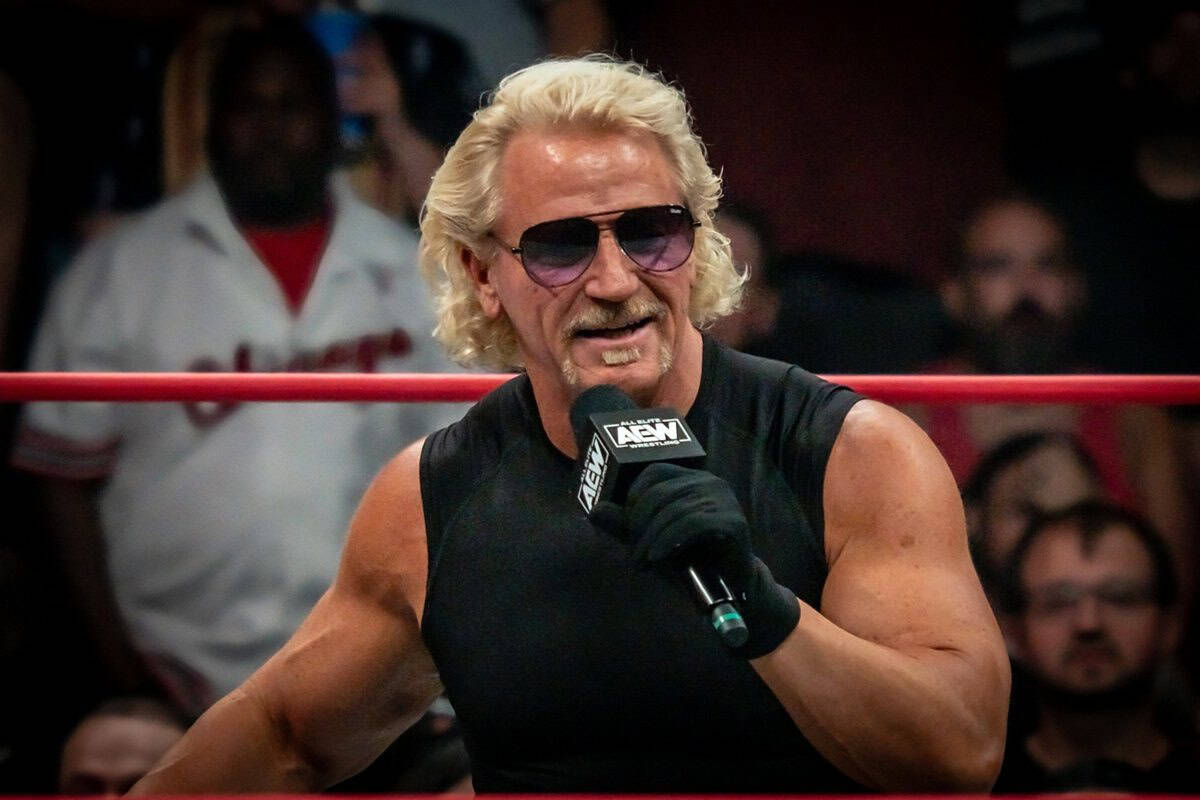
Jeff Jarrett has spent the first half of 2026 doing something very specific. He is not currently booking AEW television, nor is he actively wrestling on a weekly basis. Instead, he has gone on a massive media tour, dissecting the business with the precision of a tenured professor.
But look closely at the details of his interviews. This is not a standard retro podcast run. Jarrett is systematically building a case for his own legacy while highlighting the exact mistakes that ruined the company he founded in 2002.
The timing is not accidental. As PWInsider reported, a clip from the upcoming season of Dark Side of the Ring has already surfaced. In it, Karen Jarrett addresses their relationship.
This release will inevitably drag old TNA drama back into the spotlight. Jarrett is using this media window to reframe his exit from the company he created. He wants to ensure his side of history is firmly established before the episode airs.
His messaging is clear, calculated, and directed at TNA's current administration. Furthermore, in a recent interview reported by Wrestling Inc, Jarrett described his current relationship with Dixie Carter as "strained." That is a deliberate choice of words.
It shows that the wounds of the 2010 corporate power struggle have not healed, even after all this time. By keeping the friction alive in the press, Jarrett keeps his name tied to the creative identity of TNA.
He wants the wrestling world to remember that he was the architect. Those who took over after him were simply the vandals.
Deconstructing the Mistakes of Dixie and Hogan
Jarrett has not held back when discussing the downfall of his former promotion. He recently pointed directly to Hulk Hogan and Dixie Carter as the catalysts for the promotion's decline. As Ringside News detailed, Jarrett believes removing the six-sided ring in 2010 started destroying the TNA brand.
That ring was a visual indicator of difference. It told the viewer, instantly, that this was not a WWE clone. By removing it, Hogan and Carter attempted to make TNA a standard WWE copycat, stripping away its unique identity.
Jarrett argued that TNA was built out of an opportunity, not desperation. The opportunity was to provide a distinct alternative to the sports entertainment monopoly of the early 2000s. Hogan and Carter threw that alternative away to chase WWE's table scraps.
This decision led to a massive decline in PPV buys and damaged fan trust. Today, TNA is repeating those mistakes. They are locked in a developmental partnership with WWE's NXT brand.
While appearances by Joe Hendry and Jordynne Grace on NXT television draw social media views, they ultimately position TNA as a secondary feeder promotion. It is a booking mistake that cheapens TNA's own championship titles. Their weekly AXS TV show now feels like a developmental training ground.
The X-Division Blueprint as the Modern Standard
Jarrett's analysis of the current in-ring product is equally revealing. He recently stated that the X-Division style of wrestling has become the main event style of wrestling today. He is absolutely correct.
Look at the main events of any major promotion. The heavy, slow, methodical style of the 1980s is dead. Today's main eventers are smaller, faster, and rely on high-risk maneuvers.
These are the exact styles that were once restricted to the opening matches of TNA PPVs in 2004. Jarrett was ahead of his time, and he knows it. He is reminding everyone that he pioneered the template for modern main event wrestling.
Even when looking at WWE, Jarrett is analytical. He noted that if you take Sami Zayn out of the Bloodline story, you do not have anything. That is a sharp tactical observation about the necessity of babyface sympathy in a heel-dominated story.
Zayn's work was the emotional core of that entire narrative. Without that emotional anchor, the endless run-ins and finger-pointing become tedious television. Jarrett knows that wrestling requires characters, not just moves.
Jarrett also praised AEW's pay-per-view model, stating that nobody does pay-per-view like AEW. He watches the product with a critical eye, praising the storytelling in the 2026 Women's Owen Hart Cup Tournament. He called the tournament final between Mercedes Mone and Mariah May authentic.
This praise shows he still values character-driven narratives over empty work-rate. He wants to balance high-flying athletics with deep, resonant drama. It is a philosophy he intends to bring back to Nashville.
The Prediction: Double J Reclaims His Kingdom
This brings us to the ultimate prediction. Jeff Jarrett is not content being an elder statesman on the AEW roster. He is laying the groundwork to return to TNA in a senior executive or creative role by the end of 2026.
The media tour, the historical critiques, and the upcoming Dark Side of the Ring exposure are all designed to build momentum. He is positioning himself as the only man who can rescue TNA from its current status as a WWE junior partner. It is a classic wrestling power play, played out in the boardrooms rather than the ring.
Once back in TNA, Jarrett will make two immediate moves. First, he will terminate the NXT partnership, re-establishing TNA as an independent entity. Second, he will negotiate a new AEW-TNA working agreement, exploiting his relationship with Tony Khan to create a true inter-promotional war.
He will return TNA to its roots, bringing back the six-sided ring and centering the product on the high-speed style he helped pioneer. He knows that TNA cannot survive as NXT's backup. It must stand on its own.
The numbers back up the need for a shift. TNA's current viewership on AXS TV has plateaued, and their PPV buys remain a fraction of their mid-2000s peak when they reached over 1.5 million viewers. Jarrett knows that the NXT partnership is a temporary boost that does not build long-term value for TNA.
By returning to the founder's vision, TNA can reclaim its identity. Jeff Jarrett will be the one holding the keys before the year is out. Book it.