The heavy toll of a fast track
Professional wrestling rarely rewards impatience. When a legitimate combat sports athlete crosses over, promoters instantly get dollar signs in their eyes. They see the legitimate credentials, the built-in backstory, and the mainstream media attention. The immediate instinct is to push them straight to the top of the card and figure out the details later.
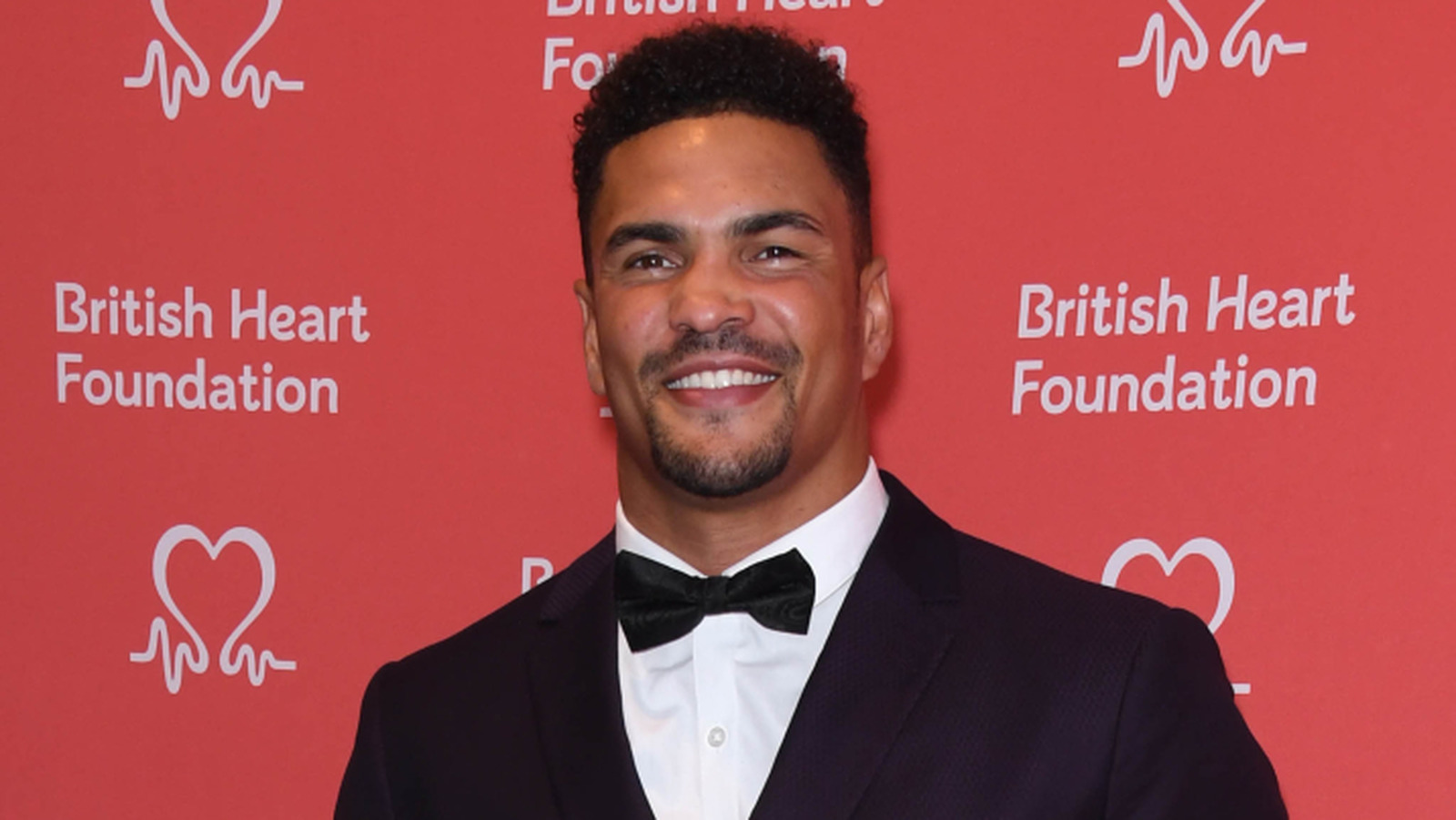
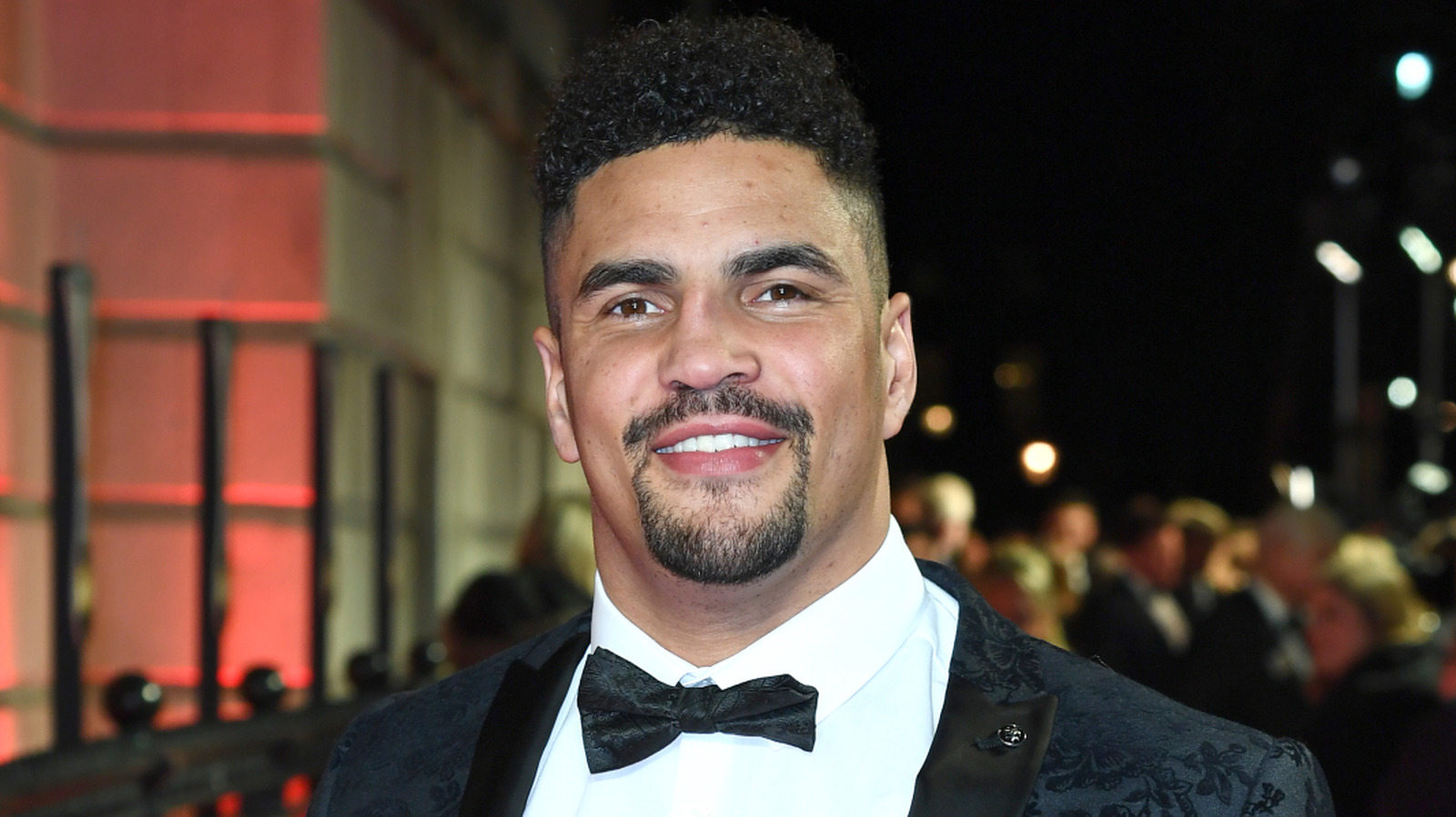
Sometimes you strike gold and secure a generational talent. You get a prodigy who absorbs the complex mechanics of the ring overnight. Far more often, you get exactly what happened to Anthony Ogogo during his initial run in All Elite Wrestling.
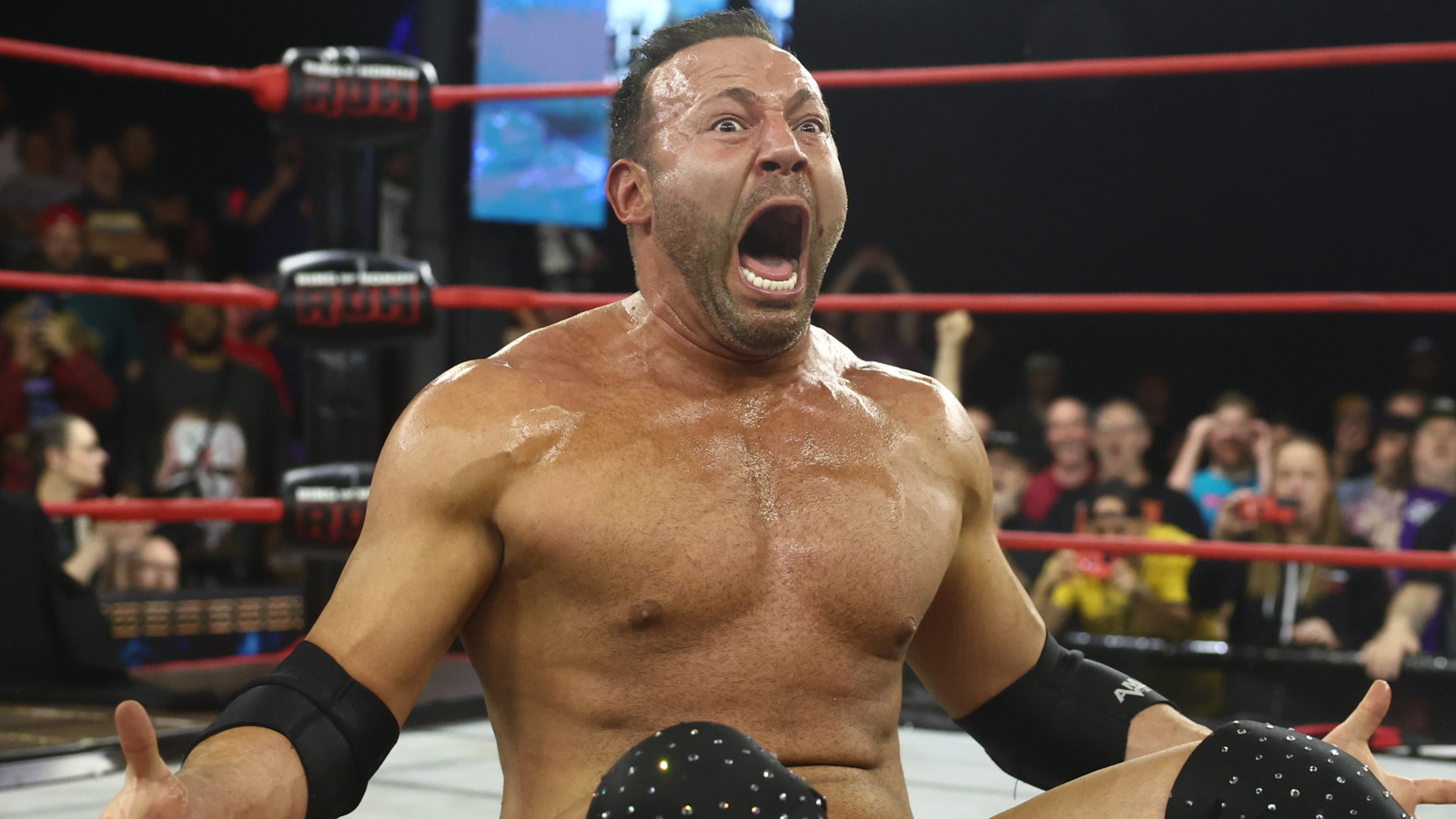
Recent comments from QT Marshall shed light on a reality that most critical observers recognized years ago. Marshall, speaking candidly about his former stablemate to Wrestling Inc, acknowledged that Ogogo was thrust into a highly difficult position entirely too early in his AEW tenure. The veteran trainer noted that the British boxer has been working relentlessly behind the scenes to earn his way back into a prominent role.
It is a remarkably honest assessment from a man who was deeply involved in Ogogo's initial on-screen presentation. It also serves as a glaring indictment of how the company handled its first major crossover prospect. They gave him the spotlight before giving him the tools to survive in it.
The ghost of Double or Nothing
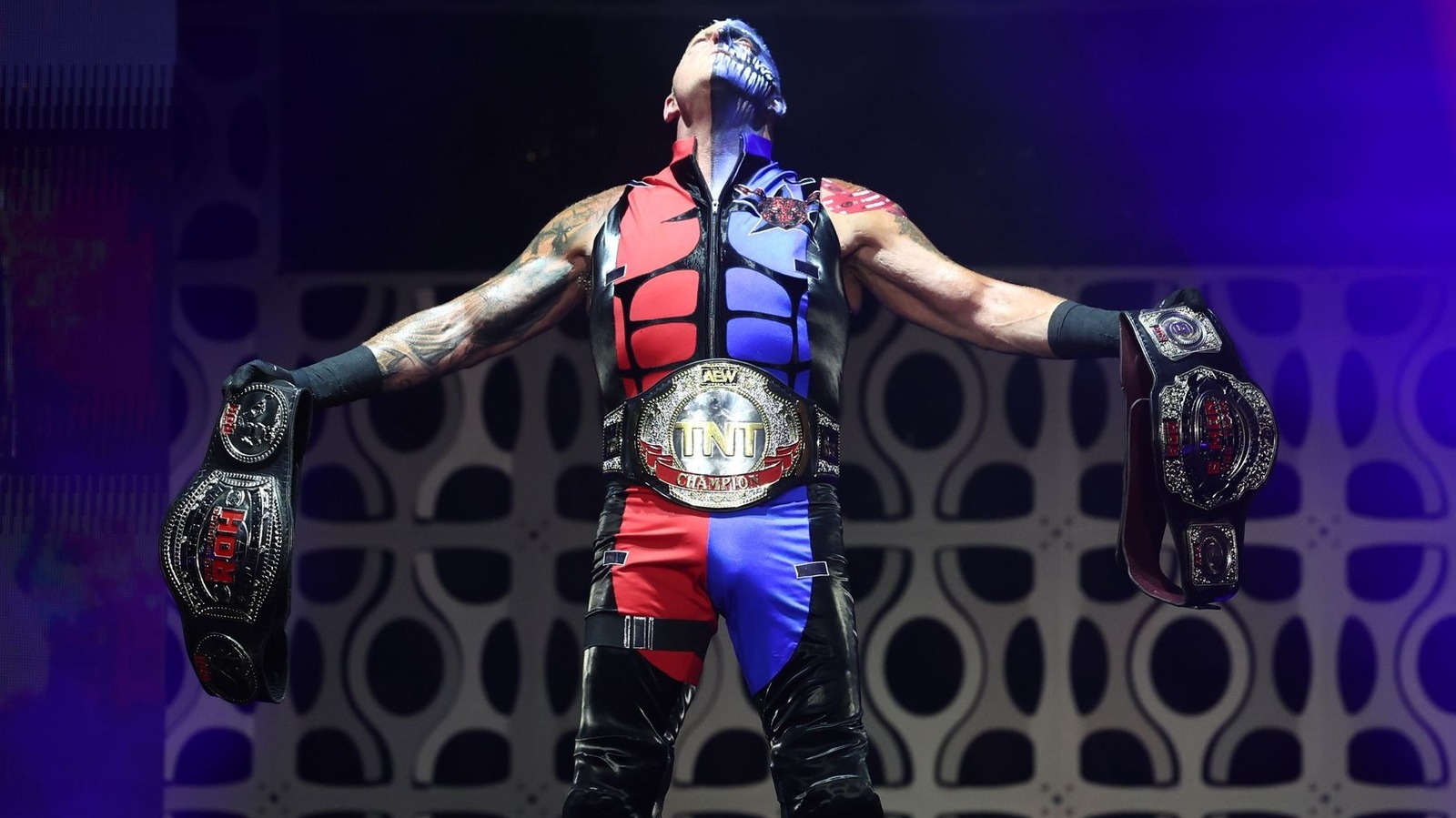
To understand where Ogogo stands today, you have to look at the wreckage of 2021. He was brought into the company with massive fanfare as a legitimate Olympic bronze medalist. Instead of putting him in low-stakes matches to learn how to work the crowd and hit the ropes properly, AEW booked him into a high-profile pay-per-view program with Cody Rhodes.
The creative build to their match at Double or Nothing was an undeniable catastrophe. It devolved into a bizarre, forced patriotic angle that felt entirely out of place in a modern, forward-thinking wrestling product. The segments dragged, particularly an infamous weigh-in angle that died a painful death in front of a live crowd. But the bigger issue was always going to be inside the ring.
Ogogo was painfully green. He had the physical presence and a great scowl, but he lacked the connective tissue that makes a professional wrestling match function. He did not know how to sequence moves, how to sell sustained damage logically, or how to feed a babyface comeback.
Rhodes tried his best to carry the rookie to a passable match, but the exposure was brutal. Ogogo was pushed into the deep end wearing lead boots. When the bell finally rang, his aura as a dangerous legitimate fighter evaporated, replaced quickly by the awkward reality of a novice trying to remember his spots.
The physical and mechanical rebuild
Things only got worse after that heavily criticized feud concluded. Severe eye injuries, the exact same issue that prematurely ended his professional boxing career, flared up once again. Ogogo required multiple complex surgeries, pulling him entirely out of the wrestling spotlight just as he desperately needed to accumulate ring time.
The transition from boxing to professional wrestling is notoriously difficult on a strict biomechanical level. Boxers spend their entire lives learning to stay light on their toes, darting in and out of the pocket to avoid taking damage. Wrestling demands the exact opposite physical approach.
A professional wrestler needs to stay flat-footed to establish a solid, safe base. When an opponent throws you into the ropes or delivers a heavy clothesline, being on your toes means you lose your balance and the move looks incredibly sloppy. Ogogo had to completely rewire decades of muscle memory while simultaneously recovering from major medical procedures.
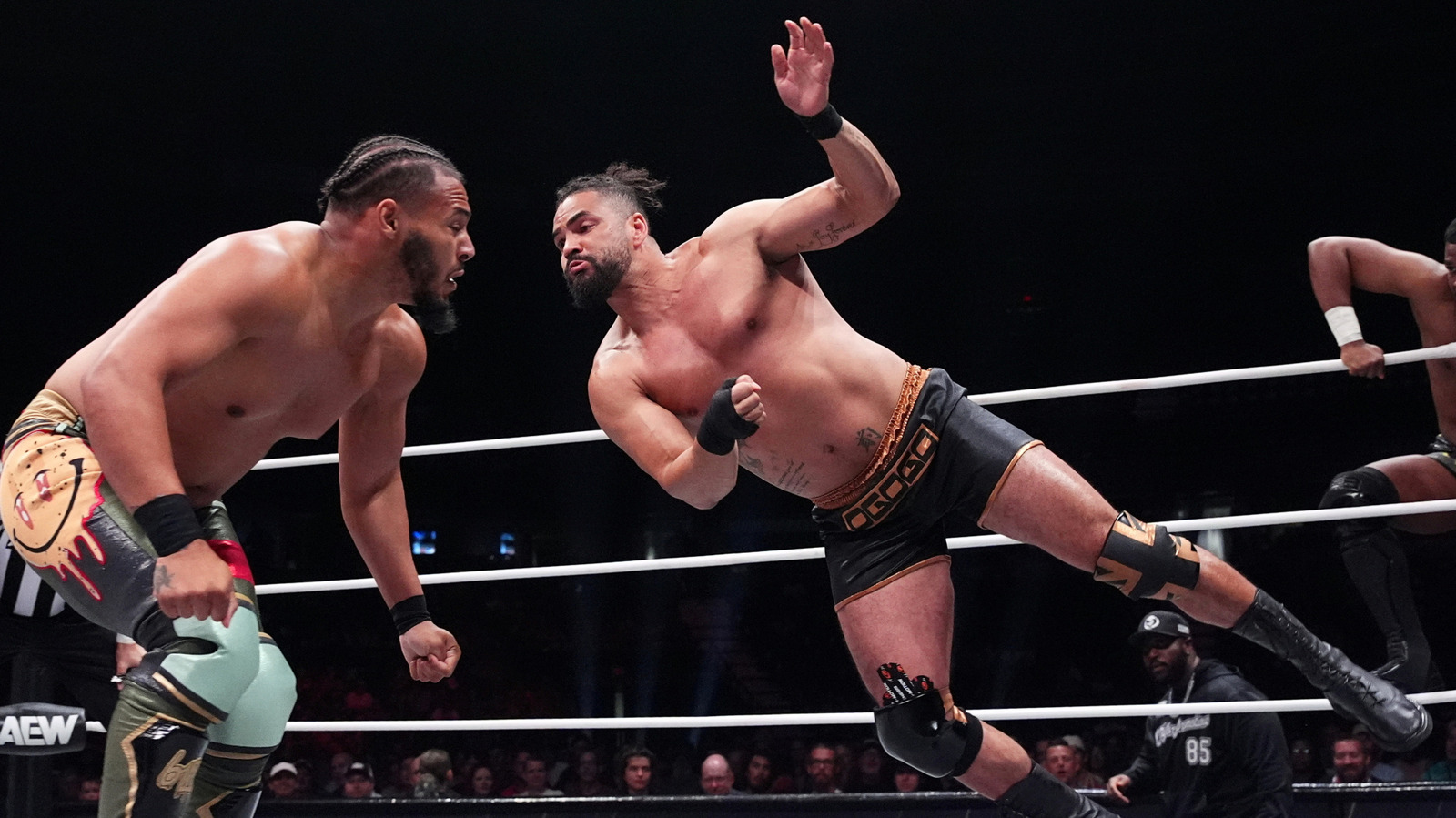
He ended up spending years languishing on AEW Dark, back when the YouTube show existed, and competing on smaller independent shows across the United Kingdom. It was the gritty developmental run he should have been booked for from day one. He was forced to learn the basic psychology of a match in front of a few hundred people instead of a national television audience on prime time cable.
A bloated roster and a shrinking window
Marshall's assertion that Ogogo is working hard is undoubtedly true. By all accounts from those within the industry, the man possesses an incredible, undeniable work ethic. But working hard in a training facility is vastly different from securing actual television time in the current, hyper-competitive iteration of All Elite Wrestling.
Look at the brutal reality of the locker room right now. We are exactly two days away from AEW Dynasty 2026 in Kansas City. The roster is historically stacked with elite, world-class in-ring workers. Main event talents are routinely struggling to find consistent minutes on Dynamite and Collision.
Where does a developing, unpolished heavyweight fit into that complex equation? The margin for error is essentially non-existent. The promotion cannot afford to give away valuable television segments to a wrestler who is still trying to figure out his timing and character motivations.
Ogogo is no longer the shiny new toy in the locker room. The initial novelty of his Olympic boxing background has completely worn off. If he is going to make any sort of impact now, it has to be based purely on his ability to perform at a high level between the ropes. He desperately needs a character that extends far beyond just being a guy who throws a decent punch.
The tactical path forward
If Ogogo is going to salvage his AEW career and reward Marshall's faith, he needs a complete stylistic overhaul. Relying solely on the Governor's Hammer as an instant-kill finisher is fine in theory, but the ten minutes leading up to that knockout punch need desperate structure.
He should heavily study the late-career work of Minoru Suzuki or the current technical run of Katsuyori Shibata. He needs to transition from a pure, one-dimensional striker into a gritty, unpleasant grappler who uses his boxing footwork strictly to cut off the ring. He needs to learn how to tie up limbs, ground high-flyers, and make his opponents physically struggle for air.
Consider the mechanics of a simple wrist-lock. A boxer's instinct when someone grabs their wrist is to pull away and reset the distance. A wrestler's instinct is to roll through the pressure and apply a counter-hold. These microscopic, split-second decisions are what separate a raw athlete from a working professional. Ogogo has to drill those counters until they replace his boxing instincts entirely.
He also desperately needs a new mouthpiece. The Factory was a spectacular failed experiment, but the core concept of putting Ogogo with a seasoned talker was correct. He needs a manager to antagonize the live crowd and generate authentic heat, ensuring that his physical offense feels like a punishment rather than a choreographed routine.
Prediction: The ceiling has lowered
The unfortunate, unavoidable reality of professional wrestling is that terrible first impressions are nearly impossible to erase. The hardcore fan base clearly remembers the disastrous Cody Rhodes feud. They remember the awkward, unnatural promos and the heavily clunky ring work.
Ogogo has likely completely missed his window to become a top-tier main event star in AEW. The company has simply outgrown him, evolving into a workrate-heavy promotion while he was away learning the absolute basics of the sport.
However, that does not mean his career is a complete write-off. The effort he is putting in, as highlighted by Marshall, still counts for something. If he can manage to stay healthy and continue to refine his aggressive brawling style, he can eventually become a highly effective mid-card enforcer.
He remains a believable physical threat who can protect a weaker heel or serve as a formidable, bruising roadblock for an upcoming babyface. But the days of pushing him directly into pay-per-view main events based purely on his past boxing accolades are permanently over. He is going to have to grind for every single minute of screen time he gets from here on out. It is a long, unforgiving road, and he is starting from the very back of the line.
Read Next
- Anthony Ogogo's faction claim exposes AEW's biggest early booking failure
- Top 10 Moments Defining the Spring 2026 Wrestling Season
- Top 10 Moments Defining the Spring 2026 Wrestling Season
- Top 10: The Most Explosive Moments Leading to WrestleMania and Dynasty
- 🏆 WrestleMania 41 — Full Coverage Hub
- 💥 WWE Backlash 2026 — Full Coverage Hub