When the bell stops ringing: The grim legacy of old-school debt
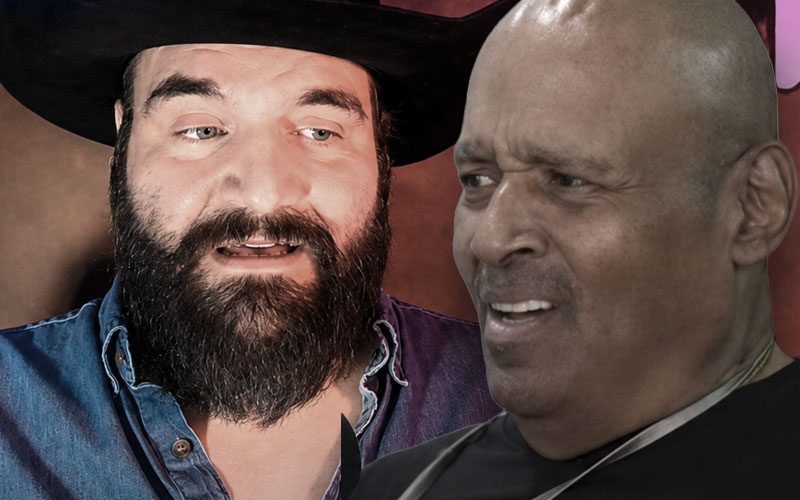
The bitter audit of a retired legend
Professional wrestling often frames itself as a mythology of giants and gods. In reality, the business is frequently a messy collision of bad contracts, handshake deals, and the cold arithmetic of civil litigation. Recently, the accusations leveled at Abdullah the Butcher regarding his financial state serve as a grotesque reminder that the curtain rarely stays closed on these internal squabbles.
Devon Nicholson, known in the space as Hannibal, has claimed in reports like this recent rundown by Ringside News that the Hall of Famer is intentionally obfuscating his assets. The core of this dispute is a long-standing judgment arising from a Hepatitis C transmission case. While the public narrative often leans into the sympathetic trope of the ailing veteran, the legal maneuvering suggests a far more calculated approach to liability.
It is difficult to view these headlines without cynicism. When a performer of Abdullah’s stature spends decades carving up opponents in front of thousands, the internal friction tends to manifest in ways far more permanent than a worked blade job. Nicholson’s assertion that the Butcher is wealthy enough to pay the judgment, yet choosing not to, highlights the reality that in this industry, the final fall is almost always about the money.
The morality of the blood match
Historians of the territory era romanticize the violence of the 1970s and 1980s. Critics, however, correctly point out the reckless lack of medical oversight that defined those years. The transmission of blood-borne pathogens via unsterilized blades was not a freak accident—it was a consistent feature of a brutal, unmonitored production style. When a debt finally comes due in court, the wrestling community often retreats into a culture of omerta.
The current impasse reveals the profound flaws in how wrestling handles its past transgressions. Rather than addressing the systemic health failures that led to these lawsuits, the focus remains fixated on the personal bankruptcy of individual icons. The financial hiding spots alleged by Nicholson imply a lack of accountability that has spanned generations of talent. If one cannot trust the integrity of a legend outside the ring, it forces a revaluation of their legacy inside it.
There is a harsh lesson here for the modern independent circuit. While current promotions utilize rigorous testing protocols, the ghosts of the past continue to haunt the balance sheets of the industry. Seeing such high-stakes legal battles play out in 2026 feels like a relic, yet it is a necessary corrective to the idea that these legends operate above the law.
The danger of ignoring consequence
Whatever the truth of the offshore accounts or hidden cash, the behavior exhibited here is damaging. Fans do not want to see their idols reduced to litigants hiding behind medical excuses. It tarnishes the sweat and the scars of a career that was once predicated on toughness and "hardcore" credibility. If a wrestler relies on an image of invulnerability, they cannot then hide behind the mask of fragility when the legal bill arrives.
Critics might label Nicholson as disruptive, but his tenacity demands an answer. If the judgment was reached through the proper channels of the court system, it must be honored. Wrestling has long thrived on a lack of traditional business structures, but that void should not offer a permanent shelter for those avoiding personal responsibility. Justice in these cases is not about malice; it is about acknowledging the real-world impact of the violence that was once marketed as mere entertainment.
Ultimately, this standoff between Hannibal and the Butcher exposes the inherent cynicism of the territory era. Many of those who profited from the bloodiest matches of the 20th century were never prepared to deal with the consequences of the 21st. We should not look away from this; we should demand more from those who shaped the ring before we continue to hold them up as symbols of the sport.
Becky Lynch: The Man: Not Your Average Girl
The raw, honest, and inspiring journey of one of wrestling's biggest stars.
Frequently Asked Questions
What is the core conflict between Hannibal and Abdullah the Butcher?
How did Hepatitis C transmission occur in old-school wrestling?
Why does Devon Nicholson believe Abdullah can pay his debt?
What is the wrestling industry's culture of omerta regarding past injuries?
How do modern wrestling promotions differ from the territory era?
More Coverage

Top 10: Defining Moments
2 hours ago
Top 10: The Most Impactful Swerves in Modern Wrestling
2 hours ago
Top 10: Pro Wrestling Moments of 2026
4 hours ago
Top 10: Defining Moments in Wrestling Video Game History
6 hours agoThe integrity crisis in modern wrestling discourse
8 hours ago
Kendall Gray's Shades of Gray finisher is either genius or a complete mess
11 hours agoMore Analysis
Joey Janela sidelined after flaming table spot goes wrong
2 hours ago
Top 10: Defining Moments
2 hours ago
Top 10: The Most Impactful Swerves in Modern Wrestling
2 hours ago
AEW Dynamite remains stuck in a cycle of aimless momentum
2 hours ago