The Digital Mat Legacy
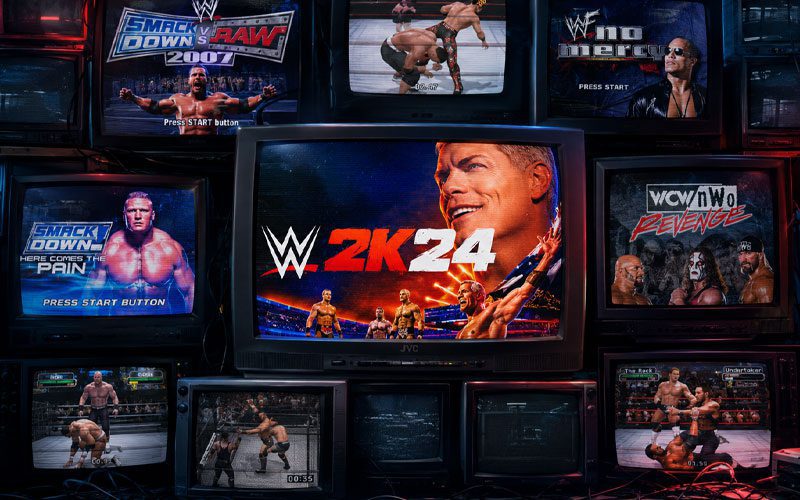
Gaming and professional wrestling share a frantic, repetitive rhythm that makes the two medium-perfect bedfellows. From the experimental 8-bit era to high-fidelity motion capture, certain titles dictated what fans expected from their sports entertainment simulated experiences.
These selections aren't just about graphics. They are about the moments that shifted how we interact with the product.
1. The WCW/nWo Revenge Engine
The AKI Corporation engine set an impossible standard for playability during the late 90s. Its grappling system prioritized timing over frantic button-mashing, forcing players to master headlocks and Irish whips rather than spamming strike combos. It remains the gold standard for fluidity, making the modern transition to button-heavy inputs feel sluggish by comparison.
2. The Era-Defining No Mercy Story Mode
WWF No Mercy pushed the Nintendo 64 to its hardware limits with a narrative depth that felt unprecedented. The branching paths allowed players to navigate the actual 2000 roster, including high-stakes title shots and backstage brawls at the Badd Blood set. Most modern career modes fail to replicate this specific level of booking consequence.
3. The Dawn of Smackdown: Here Comes the Pain
This title hit the shelves in 2003 and fundamentally altered arcade-style pacing. It streamlined the meter system, allowing for rapid-fire reversals that kept matches moving at breakneck speeds. The physics engine allowed for brutal interactions with the environment, specifically the way players could climb the scaffolding of the Elimination Chamber.
4. The Day of Reckoning 2 Stun Lock
Rarely does a GameCube title get cited for its technical limitations, but its submission system was a masterclass in frustration and tension. Holding your opponent in a Crippler Crossface required a physical battle of analog stick dexterity that truly exhausted the player. It rewarded persistence, though the AI could be unforgivingly cheap during title defenses.
5. The Visual Concepts Takeover
When Yuke's finally departed the 2K development chair, the shift to a more grounded simulation approach was immediate. This transition marked a move toward realistic weight detection, ending the era where cruiserweights could easily toss heavyweights like Andre the Giant. It frustrated fans who preferred the arcade speed, but the tactical shift was overdue.
6. The Raw 2 Customization Suite
While the actual gameplay in Raw 2 was clunky at best, its creation suite was years ahead of the industry curve. It allowed users to design custom stable entrances and manage full season-long drafting, which felt like genuine management simulation. It was a chore to play, yet it acted as the prototype for every modern Universe Mode.
7. Fire Pro Wrestling Returns
This entry proved you don't need 4K textures if the animation timing is perfect. The logic editor allowed users to program exactly how wrestlers reacted to specific spots, creating a self-sustaining simulation that played out like a real-life G1 Climax tournament. It remains far more intuitive than the bloated menus found in modern high-budget titles.
8. The SvR 2007 Weapon Physics
This specific iteration introduced environmental weapon interactions that felt dangerous. Slamming an opponent into a locker or utilizing a heavy steel chair felt impactful due to the sound design and screen shake. It was a violent, unpolished mess that captured the spirit of the Ruthless Aggression era perfectly.
9. The WCW vs. nWo World Tour Impact
This was the moment fans realized that licensed games didn't have to be garbage fire licensed shovelware. Introducing the four-player capability shifted the industry, moving wrestling games from solitary living room activities to social staples. It felt rudimentary, but it proved to developers exactly what fans wanted from their console time.
10. The 2K14 Wrestlemania Streak Mode
Recreating the most storied streak in history was a narrative achievement masked as a simple objective list. While the AI in these modes often suffers from repetitive patterns, the sheer emotional weight of trying to put down The Undertaker at the peak of his power provided a challenge missing from standard exhibition matches. It leaned into the myth of the character rather than just the wrestler.
The Big Picture
The history of wrestling gaming is a cycle of developers finding a perfect engine, bloating it with features, and starting over. Current titles prioritize depth, yet they often lose the pick-up-and-play magic that made 90s titles addictive. The best experiences aren't the ones with the most polygons; they are the ones that force you to care about the finish.
Honorable Mentions
WWF Wrestlemania 2000 for its tight roster; Legends of Wrestling for its bizarre, dream-match capability; and WCW Mayhem for being a fun, albeit deeply flawed, arcade experiment. Each of these titles struggled with technical pacing issues that kept them off the main list, but they paved the way for the current generation.