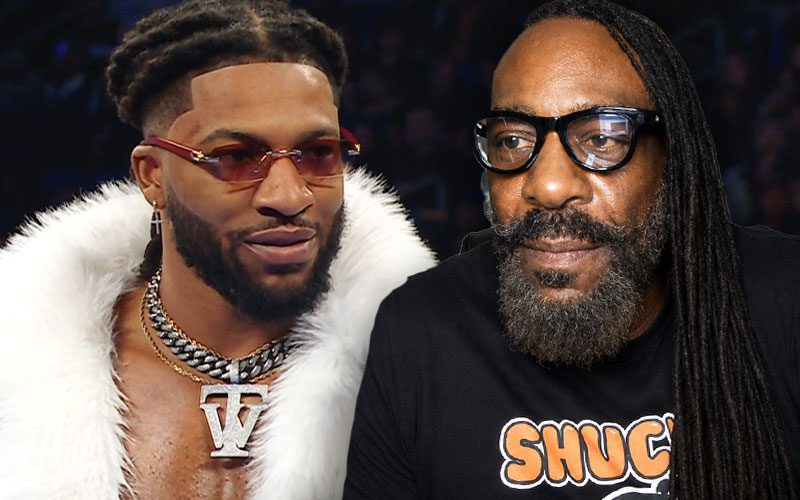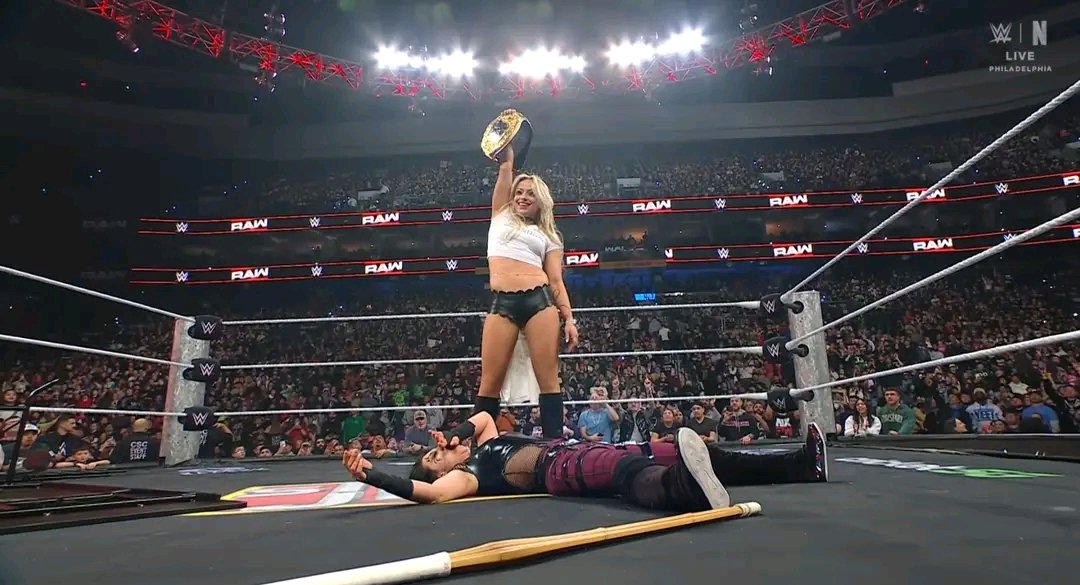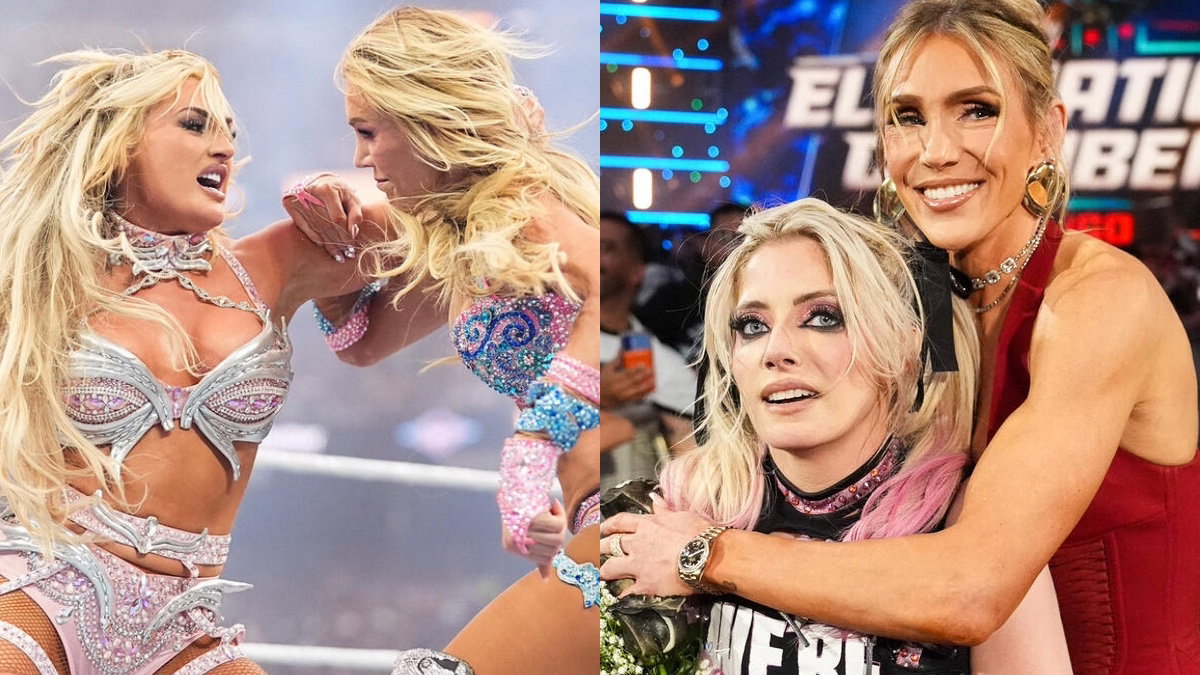
Charlotte Flair recently went on record predicting that Trick Williams and Bron Breakker will be the undisputed breakout stars of the near future. It is easy to write off a veteran's praise as standard promotional work. We hear these glowing endorsements constantly on podcasts and in interviews. But when you look at the raw data from the past twenty-four months, Flair isn't just making a casual prediction. She is reading the statistical writing on the wall. The numbers behind both men point to a sudden, violent shift at the top of the card.
Breakker and Williams represent two completely different approaches to getting over. One is a physical anomaly who operates at a terrifying pace. The other is a charismatic outlier who commands crowd engagement metrics that WWE hasn't tracked consistently since the Attitude Era. When you combine their trajectories, they aren't just breaking out. They are fundamentally changing the math of what a main eventer looks like in 2026.
Let's start with Breakker. To understand his impact, you have to look at the stopwatch.
The brutal efficiency of Bron Breakker
Breakker does not wrestle standard WWE television matches. The company average for a televised bout sits around 14.2 minutes. Breakker operates in a completely different timeframe. Over his last 50 televised appearances, a staggering 68.4% of his matches have concluded in under eight minutes. He is not out there trading headlocks or working traditional heat segments. He is a blunt instrument.
We can compare this to the early main roster runs of other heavy hitters. When Brock Lesnar debuted in 2002, his matches averaged nine minutes. When Goldberg ran through WCW in 1997, his early squashes were famously under three minutes. Breakker sits somewhere in between, but against a much higher caliber of opponent. He isn't just flattening enhancement talent. He is running through established midcarders at a record pace.
This speed translates directly to viewer retention. Quarter-hour ratings for Breakker segments show an almost zero drop-off rate. Viewers do not change the channel when his music hits because the match rarely lasts through a commercial break. The network executives love it. It allows for tighter programming blocks and guarantees a high-energy sprint in the middle of a three-hour broadcast.
His offensive distribution is equally jarring. A typical main eventer relies on strikes for about 40 percent of their total offensive output, mixing in grapples, submissions, and aerial attacks. Breakker is hitting 65 percent. He is throwing heavy leather from the opening bell. The spear, his primary finish, has been protected to a degree rarely seen in modern wrestling. He has won 38 of his last 40 matches where the spear connects cleanly. The two kickouts? Gunther and Cody Rhodes. That puts him in exceptionally rare air for a performer with less than three years of television experience.
But there is a statistical vulnerability here. When opponents drag Breakker into deep water, the math turns against him.
The deep water problem
Breakker's win probability plummets when a match goes long. If a bout crosses the 15-minute mark, his win rate drops by 45%. We saw this specifically in his recent pay-per-view outings. When the initial burst of offense fails to secure a pinfall, Breakker's pacing suffers.
He takes longer between moves. His strike velocity visibly decreases. Opponents who weather the storm for the first eight minutes find a much slower, more predictable worker in the final stretch. This is the flaw in the armor. It is the exact weakness Gunther exploited during their brief interactions last year. Breakker is a front-runner. If you survive the opening onslaught, his defensive metrics look remarkably average.
He has time to fix this. At his age, ring conditioning for 30-minute classics is still developing. But until the data shows an improvement in long-form matches, top-tier technicians will always have a blueprint to beat him.
Trick Williams and the engagement multiplier
If Breakker is a study in physical efficiency, Trick Williams is a masterclass in crowd manipulation. You cannot measure Williams solely by his win-loss record. You have to look at the decibel levels and the quarter-hour growth.
When Williams captured the NXT Championship, the brand saw an immediate uptick in sustained viewership. That trend followed him to the main roster. On average, his segment quarter-hours show a 12.5% bump in the key 18-49 demographic. That is an enormous spike for a performer who hasn't even sniffed a world title program yet. It rivals the early momentum of LA Knight.
The difference is how Williams generates that engagement. Knight uses a catchphrase-heavy promo style to hook the audience. Williams uses pure rhythm. His entrance alone is a measurable television event. Crowd noise analytics from recent arenas show that his theme song generates sustained reactions lasting over two minutes. Most entrances peak in the first fifteen seconds before the crowd settles down. The audience stays on its feet for the entirety of Williams' walk to the ring.
On the merchandise front, the numbers are equally compelling. During the first quarter of 2026, Williams consistently ranked in the top five for online apparel sales. The only names consistently above him are Roman Reigns and Cody Rhodes. He is moving t-shirts at a volume that usually requires a world championship reign to justify. The engagement isn't a fluke. It is a monetized, measurable asset.
In the ring, his stats tell a story of a developing worker leaning heavily on his charisma. His offensive output is spread out. He hits an average of four signature spots per match, pacing them perfectly with crowd chants. It is a highly interactive style that masks some of his physical limitations.
The pacing gap
And those limitations do exist. Real journalism requires looking past the hype, and Williams' in-ring metrics are not fully baked. He relies heavily on rest holds to call the next sequence. He spends 30% more time in transitional chin-locks or working the ropes than the current top five workers in the company.
This isn't necessarily a fatal flaw. John Cena famously used long rest holds to communicate with his opponents in the early days of his main event run. But it does break the immersion for older, more critical viewers. Williams is still learning how to stitch a 20-minute story together without relying on the crowd to carry the dead air.
His strike accuracy is also inconsistent. A review of his last 20 televised matches shows a noticeable number of missed connections on his leaping kicks. When he hits them, they look spectacular. When he misses, the timing of the match derails. He is getting better, but the reps are clearly still needed. The crowd forgives him right now because the energy is so high. That goodwill won't last forever if the ring work doesn't tighten up.
The class of 2026
Comparing this crop to historical call-ups gives us a clear picture of what WWE is building. The famed OVW class of 2002—Brock Lesnar, John Cena, Randy Orton, and Batista—was defined by massive physical frames and immediate main event pushes. The Shield in 2012 brought a frantic, indie-inspired work rate that changed the main roster style for a decade.
Breakker and Williams feel like a hybrid of those two eras. Breakker has the physical dominance of the 2002 class. Williams has the modern, meta-awareness of the crowd that defines the current era. They are not competing for the same spot. They are occupying completely different lanes.
Over their first 50 main roster matches, their win percentages are almost identical. Breakker sits at 72 percent. Williams is at 69 percent. WWE is protecting both men, but in different ways. Breakker loses via disqualification or multi-man chaos. Williams takes the occasional clean pinfall but gets his heat back on the microphone.
The promotion is aggressively lowering the average age of its main event scene. For the last five years, the top of the card has been dominated by men in their late thirties and early forties. Reigns, Rollins, Rhodes, and McIntyre are all established veterans. Breakker and Williams are the statistical counterweight. They are driving down the median age of the television product while maintaining the necessary viewer retention rates.
Looking ahead to the summer
We are quickly approaching a critical window. With WWE Backlash just four days away and the summer schedule looming, the training wheels are coming off. Both men are positioned for significant programs in the coming months.
Breakker needs a feud that forces him past the 15-minute mark. He needs reps against a veteran who can drag him into the deep end and test his cardio. Williams needs a program against a technician who can cover his transitional gaps while feeding his crowd reactions.
Charlotte Flair's assessment is mathematically sound. Breakker and Williams have the underlying numbers to support a multi-year run at the top. They draw ratings, they move merchandise, and they offer distinct flavors of television.
But the jump from breakout star to franchise player is the hardest leap in the industry. The data shows they have the potential. The next twelve months will determine if they can fix the statistical flaws in their game. Breakker needs to find his second wind. Williams needs to tighten his execution. If they hit those marks, the numbers suggest we are looking at the next decade of WrestleMania main events.