The Big Picture
WWE operates like a ruthless corporate machine. Ever since the Endeavor buyout transformed the sports entertainment giant into TKO Group Holdings, sentimentality gets shoved out the window.
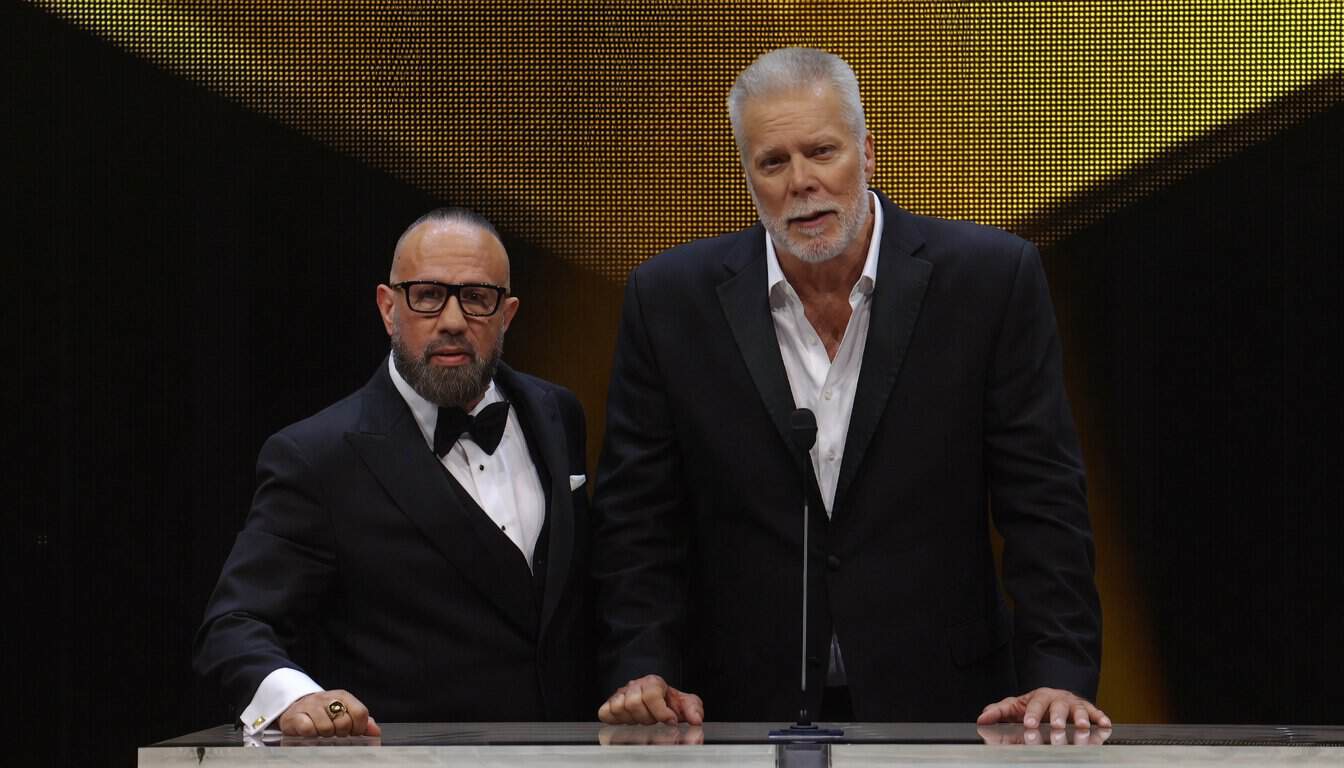
Recent news of a top star accepting a massive pay cut just to stay—as highlighted by Kevin Nash—proves that nobody is safe from the restructuring axe. From baffling releases of top merchandise sellers to veterans pushed out before their time, these are the ten most shocking contract moves in modern wrestling history.
This list isn't just about who got fired. It examines the flawed logic, the bruised egos, and the cold financial calculations that dictate who stays and who goes.
10. Tully Blanchard (The Premature Ejection)
Let's start with a classic example of a promotion cutting bait too early on a veteran mind. Tully Blanchard's abrupt departure from his backstage and on-screen roles left fans and peers scratching their heads.
Arn Anderson recently hit the nail on the head regarding his former Brainbusters partner, noting that "there was still some mileage in the tank" regarding Blanchard's utility. Management decided the financial cost wasn't worth the return, ignoring the immense psychological value a veteran brings to a young locker room.
It was a purely financial play that robbed the product of a legendary heel manager. They saved a few bucks on travel and salary, but lost a guy who knew how to draw real, visceral heat.
9. Dolph Ziggler (The Sudden End)
Nic Nemeth survived every single roster purge for nearly 19 years. He was the ultimate company man, the guy you trusted to make a new call-up look like a million bucks.
Fans still remember him blowing the roof off the Izod Center the night after WrestleMania 29. Then, in late 2023, he was unceremoniously dumped in a post-merger wave of cuts.
Ziggler was reportedly making high six figures to essentially be a high-end enhancement talent for the main roster. The front office decided they could get the same job done with cheaper NXT call-ups. It made cold business sense, but losing that institutional knowledge was a brutal shock to the system.
8. Mandy Rose (The Content Clash)
Management was perfectly happy pushing Mandy Rose as the dominant face of NXT for over a year. She held the women's title for 413 days and anchored the Toxic Attraction faction.
Then executives caught wind of the earnings she was pulling in via her premium content paywall on FanTime. Instead of working out a revenue split or reaching a compromise, they fired her within 24 hours of dropping the belt to Roxanne Perez.
It exposed a massive flaw in the independent contractor model. They demand total control over third-party revenue, and Rose simply called their bluff by taking her massive fanbase elsewhere. She reportedly made more on her paywall in a week than her entire annual downside.
7. Samoa Joe (The Double Release)
Getting fired once is an occupational hazard. Getting fired, brought back weeks later by Triple H to work in NXT, and then getting fired again less than a year later is sheer managerial whiplash.
Joe was sidelined with injuries, but his value on commentary and as a backstage scout was undeniable. He was a three-time NXT Champion with a brilliant mind for ring psychology.
The Vince McMahon regime saw a hefty downside guarantee attached to an aging, injury-prone talent. They axed him during the 2021 purges, completely disregarding his obvious utility as a coach and broadcaster. AEW scooped him up immediately.
6. The "Unnamed Star" (The Modern Pay Cut)
This situation is fresh and completely rewrites how we view current roster negotiations. Kevin Nash recently leaked that a current wrestler accepted a staggering 50 percent pay cut to remain with the company.
Nash clarified the talent is still making "huge money," but the implication is terrifying for the middle of the card. TKO is aggressively resetting the wage structure for anyone not moving the needle globally.
If you aren't drawing Roman Reigns or Cody Rhodes numbers, management is essentially daring you to test free agency. It is a ruthless tactic that proves the post-merger financial reality is strictly bottom-line driven. They hold all the cards and they know it.
5. Mercedes Moné (The Walkout over Worth)
Sasha Banks did not get fired. She looked at what she was being paid, looked at the creative direction for the women's tag team division, and walked out the door in May 2022 alongside Naomi.
Executives expected her to crawl back and accept their terms. Instead, she bet on herself, debuted at Wrestle Kingdom 17, revolutionized the Japanese women's wrestling scene, and secured a massive contract from Tony Khan.
The refusal to put her in the Becky Lynch or Charlotte Flair pay bracket backfired spectacularly. They lost a generational talent because they were stubborn about their internal pay tiers. She proved she was a global draw without the machine behind her.
4. Braun Strowman (The Monster Cut)
In 2019, Braun Strowman signed a massive extension reportedly worth over $1 million annually. He defeated Goldberg for the Universal Championship at WrestleMania 36.
Two years later, he was future-endeavored without warning. During the pandemic cost-cutting era, his hefty downside guarantee made him a prime target for the accounting department.
They essentially realized they were paying main-event money to a guy who had slipped into the upper mid-card. It was the loudest signal yet that nobody below the absolute top tier had actual job security. If a recent world champion wasn't safe, nobody was.
3. Adam Copeland (The Lowball Departure)
Edge's return from a career-ending neck injury was a massive box office draw. They squeezed three years out of the Hall of Famer, but when it came time to renew his contract in late 2023, they severely lowballed him.
Management viewed him as a part-time nostalgia act whose peak drawing days were over. Adam Copeland disagreed, taking his talents and his trademarked name to AEW for a debut at WrestleDream.
They miscalculated his desire to work a full-time schedule, handing their biggest rival a massive PR victory on a silver platter. It was an unforced error driven by a rigid corporate algorithm that failed to account for a legend's passion.
2. Cody Rhodes (The 2016 Exit)
The Stardust gimmick was killing Cody Rhodes. He begged for a change, pitched countless ideas, and was routinely ignored by writers and management.
Instead of riding out his contract in misery, Rhodes asked for his release in 2016. They granted it, assuming he would fade into the indie circuit and eventually return on their terms.
That release single-handedly birthed the modern independent boom, All In, and the foundation of AEW. When they finally bought him back in 2022, it cost them an absolute fortune. Refusing to listen to him in 2016 remains an incredibly expensive miscalculation.
1. Bray Wyatt (The Baffling 2021 Release)
Nothing tops this. In 2021, Bray Wyatt was one of the top merchandise movers in the entire company. The Fiend gimmick was a literal license to print money, moving thousands of masks and shirts.
Yet, due to reported creative clashes following his WrestleMania 37 loss to Randy Orton, he was abruptly fired. It defied all logical business metrics.
You do not cut a guy who sells that much merchandise unless the backstage relationship is completely radioactive. They eventually realized their colossal mistake and brought him back. But that initial release completely shattered the illusion that profitability and fan connection equaled job security. It was the ultimate proof that the front office plays by its own baffling rules.
Honorable Mentions
Keith Lee getting his "Limitless" gimmick completely stripped before a swift exit was a masterclass in mismanagement. Malakai Black asking to go back to NXT and getting his release papers instead showed a complete lack of creative vision.
And of course, CM Punk walking out in 2014 over pay and medical disputes remains the gold standard for messy exits. All of them showcase a front office that often trips over dollars to pick up pennies.