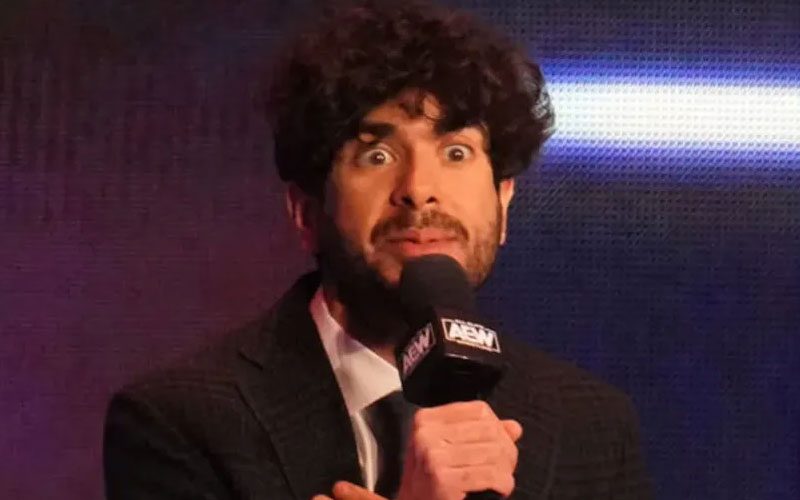
The Breakout Accusations Against AEW Management
The internal mechanics of All Elite Wrestling are under scrutiny again, and this time it directly impacts roster health. According to Ringside News, the latest reports indicate the focus has shifted away from pure business transactions into active roster mismanagement.
"Nick LoPiccolo is turning up the heat again on Tony Khan — and this time, the focus isn’t just business deals."
Khan is facing accusations of purposely benching talent, avoiding backstage conflict, and outright ghosting his own executives. We treat the term "benching" lightly in professional wrestling. Fans assume a benched wrestler is simply enjoying paid time off. From a sports medicine and athlete conditioning perspective, that assumption is dead wrong. When a performer is benched due to creative indecision or management avoiding conflict, the physiological impact is catastrophic. This isn't a structured rehabilitation program. This is athletic purgatory.
The Hidden Dangers of Roster Inactivity
Professional wrestling requires a specific cardiovascular output and neurological adaptation to impact. You cannot simulate taking a flat back bump in a standard commercial gym. You cannot replicate the oxygen depletion of a 20-minute televised match on a stationary bike. When healthy talent sit at home or languish in catering, their in-ring conditioning inevitably degrades. Losing a spot on the card is a minor inconvenience compared to the physical danger of eventually returning to the ring with accumulated ring rust.
We often talk about ring rust as a theoretical concept. It is not. It is a very real neuromuscular deficiency. The human body adapts to the trauma it regularly experiences. Tendons and ligaments in the neck and spine thicken in response to the constant impact of suplexes and slams. When a wrestler is abruptly removed from that violent environment, the body begins to soften. The physical adaptations reverse completely.
If Khan is indeed purposely benching talent to avoid confrontation, he is indirectly setting them up for severe injury. When these performers are eventually called back to television—perhaps on short notice to fill an injury gap—they are stepping under the lights without the physical hardening required to compete safely. The risk of soft tissue injuries, muscle tears, and even concussions spikes dramatically when athletes transition from zero reps to the frenetic AEW main event pace.
Biomechanics and The Cost of Waiting
Consider the specific mechanics of taking a high-angle suplex or a top-rope dive. The neck muscles must fire a fraction of a second before impact to brace the cervical spine. That involuntary reflex is honed through repetition. When you bench a wrestler, that reflex slows down. A delay of just ten milliseconds in muscle recruitment can be the difference between a successful bump and a severe stinger. We have seen instances across the industry where performers return from long absences only to blow out a knee or tear a pectoral muscle in their very first match back.
The recovery process also fundamentally changes for an inactive performer. Active wrestlers develop an aggressive lactic acid clearing mechanism, becoming hyper-efficient at reducing inflammation. A benched wrestler loses that metabolic efficiency. When they are finally booked again, the delayed onset muscle soreness is crippling, often forcing them to alter their biomechanics and placing unnatural strain on secondary joints.
Communication Breakdowns and Cortisol
The physical degradation is only half the equation. The psychological toll of being ghosted by management is severe. In combat sports and professional wrestling, mental sharpness is a primary defensive mechanism. A distracted or frustrated athlete is a dangerous athlete in the ring. A split-second hesitation out of frustration can injure an opponent.
LoPiccolo’s claims that Khan is ghosting executives point to a broader systemic breakdown in communication. If executives cannot get answers, the talent certainly cannot. Wrestlers operate as independent contractors whose financial futures rely heavily on television time and merchandise sales. Being sidelined without explanation induces massive anxiety. Cortisol levels spike when job security is threatened by silence. High cortisol severely inhibits physical recovery, muscle retention, and sleep quality.
In a standard professional sports environment, a benched player still practices with the team. In wrestling, a benched performer is often completely isolated from the product. They fly home, wait for a phone call, and watch their peers perform on television. The mental isolation directly and negatively affects their physical preparedness.
Historical Precedents and Industry Impact
This is not a new phenomenon in professional wrestling, though the physical stakes are much higher now. During the late 1990s, World Championship Wrestling was notorious for stockpiling talent and paying them to sit at home. The result was a roster filled with unmotivated, physically detuned performers who struggled to deliver when finally called upon. The injury rates spiked whenever returning wrestlers tried to work at their previous pace.
WWE faced similar criticism during periods of massive roster bloat, frequently keeping performers off television because creative had nothing for them. However, WWE maintained a robust live event schedule. If you weren't on TV, you were still taking bumps on the weekend loop to keep your timing sharp. AEW does not have that extensive live event circuit to keep benched talent conditioned.
The accusations against Khan suggest a worst-case scenario. Avoiding conflict by ghosting employees creates a vacuum of leadership. The AEW style is arguably the most physically demanding on national television. It relies heavily on high-speed sequences, complex aerial maneuvers, and high-impact striking. You cannot execute that style safely if you have been sitting on the couch for three months waiting for a text message.
Looking Ahead to the Summer Schedule
AEW is heading into a critical stretch of programming. With Double or Nothing scheduled for May 24, 2026, the roster needs to be operating at peak efficiency. Sidelining healthy talent not only depletes the available depth chart but creates a locker room environment fraught with physical uncertainty. If performers believe they can be benched at any moment without explanation, their motivation to maintain peak physical condition drops significantly.
A major critique of this management approach is the complete lack of a safety net. If a top star suffers an unexpected injury tomorrow, Khan will need to pull someone off the bench to fill that television time. If that replacement has been ghosted for months, their ring conditioning is a massive liability. It is a recipe for catastrophic secondary injuries.
The industry needs healthy, active performers. While managing a massive roster of egos is difficult, avoiding the conflict entirely is not a sustainable management strategy. It physically endangers the talent and degrades the overall quality of the athletic performance. The accusations might be rooted in business frustrations, but the downstream effects are an absolute medical nightmare for the performers stuck in limbo.