The economics of a $6.9 billion miscalculation
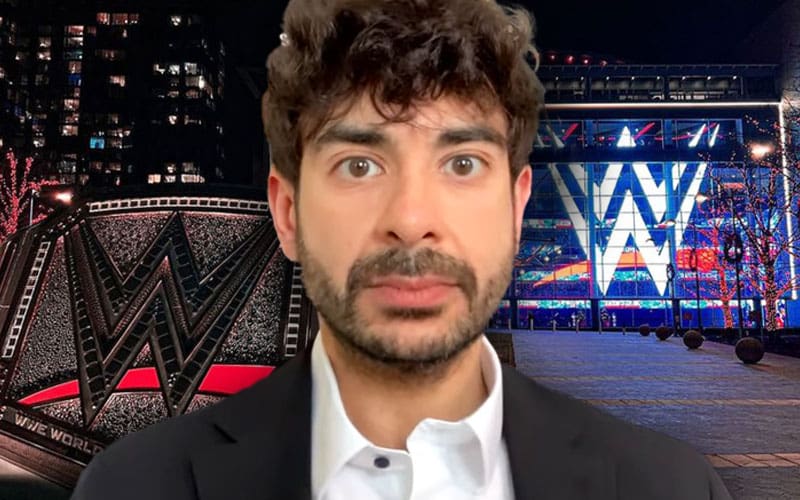
Tony Khan finally put a number on the most audacious move of his career. According to recent comments, the AEW president submitted a formal bid of $6.9 billion to purchase WWE in 2023. He called it a reasonable number. The market vehemently disagreed.
Endeavor ultimately secured WWE with a valuation north of $9.3 billion, merging it with the UFC into TKO Group Holdings. The gap between Khan’s bid and the final sale price is staggering. It represents a $2.4 billion miscalculation of what a global sports entertainment monopoly is actually worth.
When examining the figures, we have to break down the multiples. In 2022, WWE generated roughly $1.29 billion in revenue. Khan's bid represented a 5.3x revenue multiple. That is a standard evaluation for a media property with stagnant growth.
Endeavor paid a 7.2x multiple because they factored in the impending broadcast rights increases. Endeavor wasn't buying the past. They were pricing in the future.
Khan's bid, by contrast, looked like a defensive maneuver. If AEW owned WWE, they would control 95 percent of the North American wrestling market. It would have immediately solved AEW's distribution challenges.
But capital alone doesn't win bidding wars against institutional giants. Endeavor brought strategic partnerships, venue bargaining power, and a proven track record of monetizing combat sports. Tony Khan brought cash.
The death of the rebel spirit
The bid itself is less important than what it signals about AEW’s internal evolution. Khan recently admitted that the "collective rebel spirit" that defined AEW’s inception is gone. That shift wasn't organic. It was forced by harsh business realities.
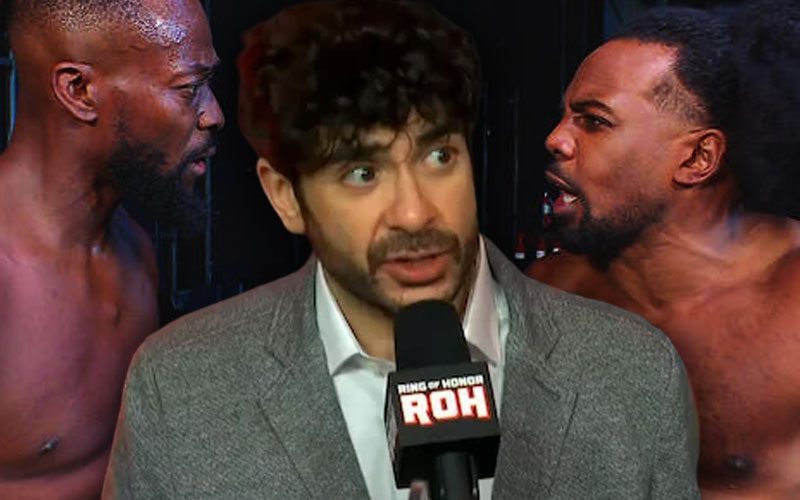
The exact turning point was the backstage brawl at All Out 2022. Khan openly acknowledges that the incident permanently altered his management style. That was exactly 43 months ago. The era of the friendly billionaire letting his locker room self-regulate died in a media scrum in Chicago.
Since then, Khan has tried to pivot from a wrestling fan with capital into a corporate shark. He wanted to buy the operational framework he has struggled to build from scratch. Yet, his recent overtures to established names suggest he still misunderstands what top-tier executives are looking for.
Take the highly publicized meeting with Shane McMahon. Khan confirmed McMahon had no interest in being an on-screen character for AEW. The assumption that McMahon wanted to trade punches with the Young Bucks on Dynamite was fundamentally flawed.
McMahon was looking at the board, not the ring. He understands equity, corporate structure, and executive power. A television angle offers him zero long-term upside. Khan met with a businessman and tried to cast a television show.
The Performance Center data gap
While Khan reflects on three-year-old bids, WWE's corporate machinery is operating with terrifying efficiency. Triple H recently praised WWE President Nick Khan, stating he couldn't imagine navigating the post-Vince McMahon era without him. Nick Khan is the architect who secured the massive Netflix broadcast deal.
That administrative ruthlessness trickles all the way down to WWE's developmental system. NXT is no longer competing with AEW for independent darlings. It has become an enclosed, highly efficient talent factory.
Tony D’Angelo just captured the NXT Championship at Stand & Deliver. As Ricky Saints pointed out, this was the culmination of five years of institutional development. D'Angelo didn't build his name in high school gymnasiums or on the international circuit.
He spent 60 months in the WWE system, being molded from the ground up in Orlando. He represents a 100 percent in-house return on investment. The system took a collegiate athlete and built a main-event television draw.
Similarly, Lola Vice is preparing for her first NXT Women’s title defense against Jacy Jayne. Vice openly discussed the significance of being the first Cuban-American champion in WWE history. From a data perspective, her ascent is even more telling.
She transitioned from a professional MMA career to a wrestling champion in under 30 months. The WWE system taught her where the hard camera is, how to structure a comeback sequence, and how to condense a match into a tight television segment.
To understand the gulf between the two developmental systems, you only need to look at television match times. In NXT, matches are meticulously timed to hit commercial breaks. Tony D'Angelo's matches over the last year averaged 9.2 minutes, designed for maximum impact within a strict television window.
AEW often gives young talent 15 minutes of uninterrupted ring time on television. This pleases live crowds, but it frequently results in noticeable viewership drops in the quarter-hour data. You cannot buy that institutional discipline; you have to build it.
Legacy acts and lost bargaining power
AEW still relies heavily on signing existing names and hoping their independent cachet translates to national television. AEW did secure Chris Jericho, who re-signed after reportedly testing the market.
"Chris had a choice and he wanted to be in AEW."
Khan touted the retention as a major win. But retaining a veteran who will turn 56 this year is a purely defensive move. It secures a baseline viewership floor, but it does absolutely nothing to expand the audience or close the gap with TKO.
When you rely on the past, you are always vulnerable to shifting loyalties. Look no further than Ric Flair. The Hall of Famer recently took to social media to blast WWE over his removal from the Roots of Fight apparel line.
He accused the company of trying to "kill" his legacy and publicly thanked Tony Khan for his ongoing support. It looked like another legacy act drawing a line in the sand. Within 48 hours, Flair completely walked back his comments.
He issued a statement saying he wasn't even mad at the people who made the decision. It was a rapid, embarrassing capitulation. It highlighted the utter lack of bargaining power these legacy acts actually possess against the TKO machine.
Flair realized what Tony Khan is still learning. You do not bite the hand that controls the majority of the market share. The licensing deals at WWE generate more revenue in a quarter than Flair's independent ventures generate in a decade.
This is the reality Tony Khan is facing right now. With WrestleMania 41 exactly 10 days away, the contrast between the two companies has rarely been starker. WWE is preparing for back-to-back nights in Allegiant Stadium, projecting record-breaking gates.
They are operating on a scale that makes a multi-billion dollar valuation look foolishly conservative. Khan’s willingness to spend is undisputed. His financial commitment to the industry is real.
But his capital allocation remains highly questionable. Bidding billions for a rival company is a headline-grabbing stunt. It does not fix the pacing issues on Wednesday nights, and it does not reverse the declining live attendance metrics across secondary markets.
The loss of the rebel spirit has left AEW in a strange middle ground. They are no longer the plucky alternative pushing boundaries. They are a heavily funded corporate entity that still operates with the booking quirks and administrative bottlenecks of an independent promotion.
A 2023 bid means nothing in 2026. The corporate machine in Stamford isn't slowing down to let anyone catch up.