
TNA just lost their ultimate safety net in Eric Young
The news broke today, on July 1, 2026. TNA Wrestling released a brief, dry statement confirming they had come to terms on the release of Eric Young, effective immediately. This was not a routine contract expiration, but a voluntary release request from a TNA original who has spent decades serving as the promotion's central tactical pivot point.
Young’s departure comes at a highly unstable moment for the promotion. It follows hot on the heels of Slammiversary 2026, where the main event saw Nic Nemeth capture the TNA World Championship from Mike Santana. Santana’s own status has been the subject of intense speculation, with reports of his impending free agency signaling a major reorganization of the main event scene.
Losing Young removes the single most versatile utility player in the company’s history. He was the worker who could anchor a pre-show, slot into a tag team, or challenge for the world title on television without losing an ounce of credibility. His final days in the company highlight how TNA failed to maximize this tactical flexibility.
In-Ring Execution and Strategic Missteps
The Sosa Pre-Show Match: A Study in Diminishing Returns
At Slammiversary on June 28, Young found himself relegated to the "Countdown to Slammiversary" pre-show. He faced Ricky Sosa in a match that lasted exactly 8 minutes and 14 seconds. The booking was designed to elevate Sosa, but the execution exposed the limitations of TNA's current developmental philosophy.
Young controlled the opening four minutes of the contest with dry, mechanical efficiency. He focused entirely on Sosa's left shoulder, using a hammerlock slam and a series of short-arm clotheslines to isolate the joint. The work was clean, but it lacked the urgency required to make the rookie's eventual comeback feel earned.
At the six-minute mark, Sosa attempted a springboard recovery to break the pressure. Young caught him mid-air with a throat thrust, demonstrating his elite defensive awareness. Yet, the finish felt rushed and uninspired, leaving the crowd in Boston somewhat flat.
Young missed his signature top-rope elbow drop, allowing Sosa to secure a quick roll-up victory. This defeat was a classic gatekeeper loss, but it was booked with a lack of foresight. The central issue was how the match was worked, rather than the result itself.
The short match duration prevented any real story from developing. It left the audience with a flat transition instead of a star-making performance. Sosa got the three-count, but he did not gain the rub that a longer, more competitive bout would have provided.
Wrestling matches are built on pacing, and Young is a master of the slow build. In this encounter, he was forced to compress his entire arsenal into a sprint. The result was a match that felt more like a television squash than a major pay-per-view pre-show spotlight.
By rushing the finish, TNA wasted one of the final performances of their most reliable veteran. Young's ability to tell a story in the ring is his greatest asset. Stripping that away for a quick roll-up did no favors to him or to Ricky Sosa.
The Santana Championship Bout: Pacing and Spacing
To see what TNA is truly losing, look back to the June 6 episode of Impact. Young challenged Santana for the TNA World Heavyweight Championship in a match that ran 14 minutes and 40 seconds. This bout was a masterclass in pacing, showing how Young could structure a main event to mask an opponent's physical fatigue.
During this match, Young played the lateral mover to Santana's linear power. Santana excels when he can charge ahead, utilizing explosive lariats and powerbombs to overwhelm his opponents. Young counteracted this by constantly changing the angles of engagement, utilizing the corners and the ring apron to interrupt Santana's momentum.
At the nine-minute mark, Young executed a death valley driver on the ring apron. It was a high-risk spot that shifted the match's center of gravity. Instead of immediately going for the cover, Young slowly rolled into the ring, allowing the referee's count to build drama while giving Santana time to sell the impact.
The finish saw Santana retain after hitting a spin-out powerbomb. Despite the loss, Young’s structural control was the reason the match succeeded. He managed the ring space perfectly, ensuring every major spot had room to breathe. Without Young's veteran spacing, Santana's offense would have looked far more repetitive.
This match demonstrated Young's value as a championship-level opponent. He did not need to win to make the champion look like a star. In fact, his ability to make Santana's offense look devastating while maintaining his own threat level is a rare skill in the modern business.
The contrast between Young's tactical approach and Santana's raw power was the central narrative. Young used defensive ring positioning, often sliding out of the ring to break Santana's momentum. This kept the champion off-balance and forced him to think, rather than just react.
It was a performance that showed Young still has plenty to offer at the highest level. His understanding of timing, particularly when to sell and when to cut off a comeback, is elite. TNA's main event scene will be significantly poorer without his presence.
Financial Reality and the Roster Shift
The context surrounding Young's release cannot be ignored. TNA has recently executed a series of workforce reductions, attempting to trim costs in a highly competitive market. As reports confirmed Eric Young is gone from TNA, the financial pressures on the company became clearer.
Young had been working without a contract for much of his recent run. He only signed a short-term deal to cover the Slammiversary cycle. This arrangement allowed TNA to use his services during a transitional phase, but it also meant they had no long-term claim on his talents.
The decision to grant his release immediately after Slammiversary indicates a company scaling down. With Nic Nemeth now holding the top title after defeating Santana, TNA is leaning heavily on established names from outside their system. This strategy leaves little room for the native veterans who built the brand's original identity.
Losing Young also hurts the locker room's technical education. Younger talent like Leon Slater, who recently challenged for the X-Division title, benefit immensely from working with veterans who understand ring psychology. Without these teachers, the undercard risks becoming a collection of athletic spots without narrative structure.
Young was one of the few remaining links to TNA's golden era. He understood the unique identity of the promotion and how to connect with its dedicated fanbase. His departure leaves a void that cannot be easily filled by incoming talent from other promotions.
The financial restructuring of TNA is clearly affecting the roster. By letting experienced hands walk away, the company is sacrificing long-term stability for short-term cost savings. This approach could lead to a less polished product on television.
Furthermore, the loss of veteran leadership can have a destabilizing effect on the locker room. Young was respected by his peers and served as a mentor to many. His absence will be felt both in front of the camera and behind the scenes.
The WWE Connection and TNA's Long-Term Loss
Speculation is already mounting regarding Young's next move. Industry sources suggest that WWE has immediate interest in bringing him back to the fold. Young has a long-standing, positive relationship with WWE Chief Creative Officer Paul "Triple H" Levesque, which could facilitate a smooth transition.
Young's history with WWE is complicated, highlighted by his 2023 departure before ever appearing on television. That release request was driven by the return of Vince McMahon to the corporate structure. With McMahon now permanently removed, the primary obstacle to Young's WWE return is gone.
Levesque has always valued utility workers who can execute specific roles. During Young's NXT run, he anchored the Sanity faction, showcasing his ability to lead groups and manage multi-man matches. WWE's current developmental system could utilize him in a similar capacity, providing a steady hand for the younger talent in Florida.
A move to WWE would offer Young financial security and a larger stage. For TNA, it represents another loss of a key asset to their primary competitor. It is a pattern that has repeated throughout TNA's history, but the speed of this departure feels particularly damaging.
Young's versatility makes him an attractive signing for WWE. He can work as a singles competitor, a tag team specialist, or a manager. This flexibility is highly prized in a company with a roster as large as WWE's.
Moreover, Young's experience would be invaluable in NXT. He could help train the next generation of WWE stars, teaching them the nuances of ring psychology. This role would allow him to extend his career while still making a significant impact.
If Young does return to WWE, it will be a major coup for Levesque. It would also be a clear indication of WWE's continued interest in signing top-tier veteran talent. For TNA, it will be a painful reminder of what they have lost.
TNA’s management of this transition has been questionable at best. The three-day turnaround between Young's pre-show loss to Sosa and his official release suggests a sudden shift in plans. It raises questions about whether TNA knew Slammiversary would be Young's final appearance when they booked the pre-show.
If they did know, using him to put over Sosa in a short match was a waste of his final night. A performer of Young's caliber deserved a more significant farewell program. If they did not know, it reveals a lack of communication between management and one of their most loyal talents.
The current booking direction feels reactive, as TNA adjusts to the loss of Santana while trying to build around Nemeth. In the process, they are letting the foundation of the promotion crumble. Young was the glue that held the mid-card and main event scenes together.
TNA will now have to find new anchors for their weekly television. Workers who can carry 15-minute matches and elevate younger talent are rare. By letting Eric Young walk away, TNA has made their path forward significantly more difficult.
The lack of a clear long-term plan is a major concern. TNA seems to be operating on a week-to-week basis, reacting to events rather than planning for them. This approach makes it difficult to build compelling, long-term storylines that keep viewers engaged.
Without Young, the promotion loses a vital safety net. He was the wrestler they could always turn to when a match fell apart or a storyline needed a boost. His departure leaves TNA in a vulnerable position, with few options to cover for any future roster disruptions.
WWE 2K24 (Standard Edition)
The ultimate wrestling sandbox to settle your dream matchups.
Frequently Asked Questions
When did Eric Young leave TNA Wrestling?
Who defeated Eric Young at Slammiversary 2026?
What happened in Eric Young's final match for TNA?
Who won the TNA World Championship at Slammiversary 2026?
Why is Eric Young's departure significant for TNA Wrestling?
More Coverage

Why WWE’s pursuit of Enzo and Cass ignores NXT's real success
2 hours ago
Top 10 Dark Side of the Ring Episodes
3 hours agoVinny Pacifico on ABC is the weirdest wrestling crossover of the year
4 hours agoKendal Grey faces her first big test as NXT champion against Nattie
7 hours agoDark Side of the Ring is finally diving into the glorious chaos of TNA
7 hours agoJeff Jarrett and TNA are finally getting the Dark Side of the Ring treatment
8 hours agoMore Analysis
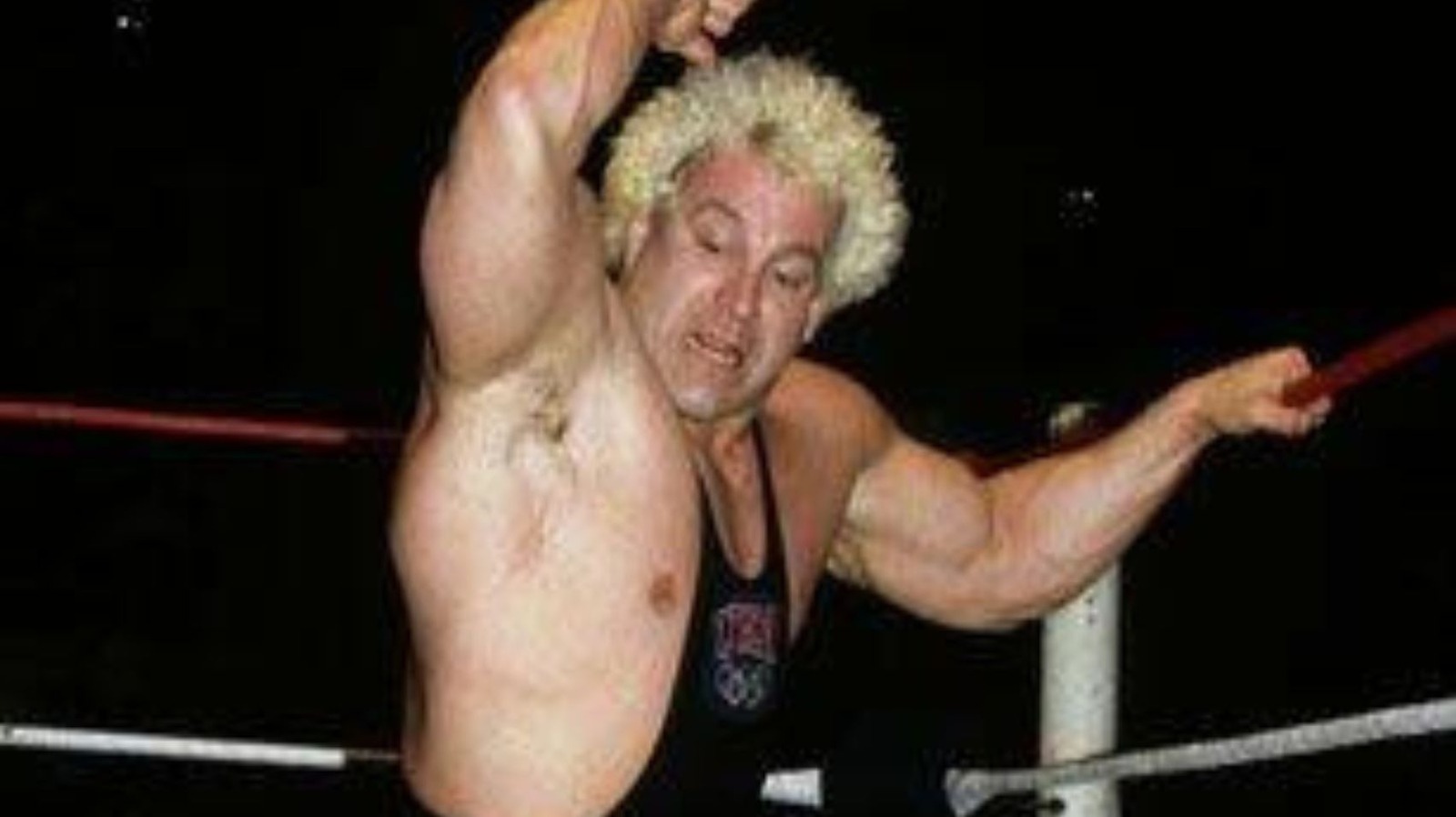
Wrestling fans are stunned after Ken Patera suffers a broken neck at the gym
an hour ago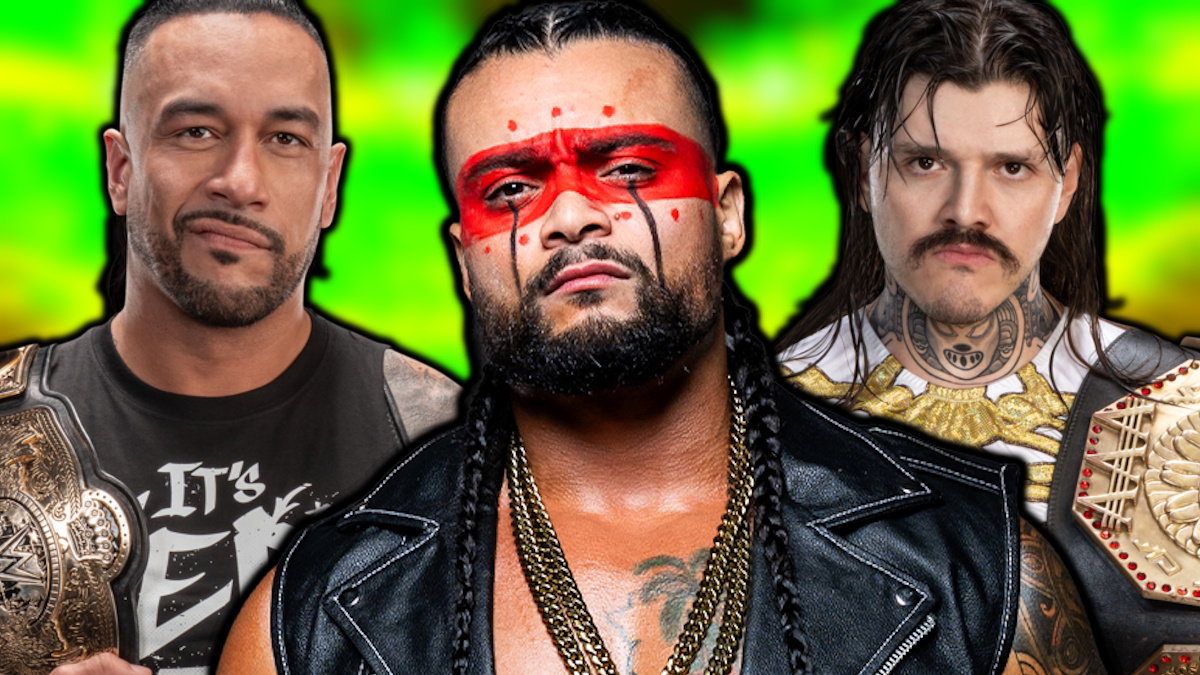
Why Mike Santana is the tactical wildcard WWE needs right now
an hour ago
Why Mick Foley's WWE exit makes an AEW appearance highly likely
an hour ago
Why WWE is ready to pounce on Eric Young after his shock TNA release
2 hours ago
Wrestling's summer injury crisis is forcing WWE and AEW to pivot their plans
2 hours ago