Pull up a stool and toast the strongest heel of the eighties
Pull up a barstool, order a pint of whatever cheap lager is on tap, and let's talk about the absolute brick house that is Ken Patera. The news dropped today that the former Intercontinental Champion broke his neck in a gym accident.
For most eighty-three-year-olds, a slip in the gym is a ticket straight to the local hospice. But Patera is not most people, and the wrestling community is currently divided between sheer panic and awe.
According to reports, the former Olympic weightlifter suffered the injury during a workout session. As Wrestling Inc reported, the accident occurred at his local training facility.
The details are sparse, but the internet went into immediate overdrive trying to parse the situation. This is a guy who spent the seventies and eighties tossing giant humans around like sacks of flour, and now the gym itself has taken a shot at him.
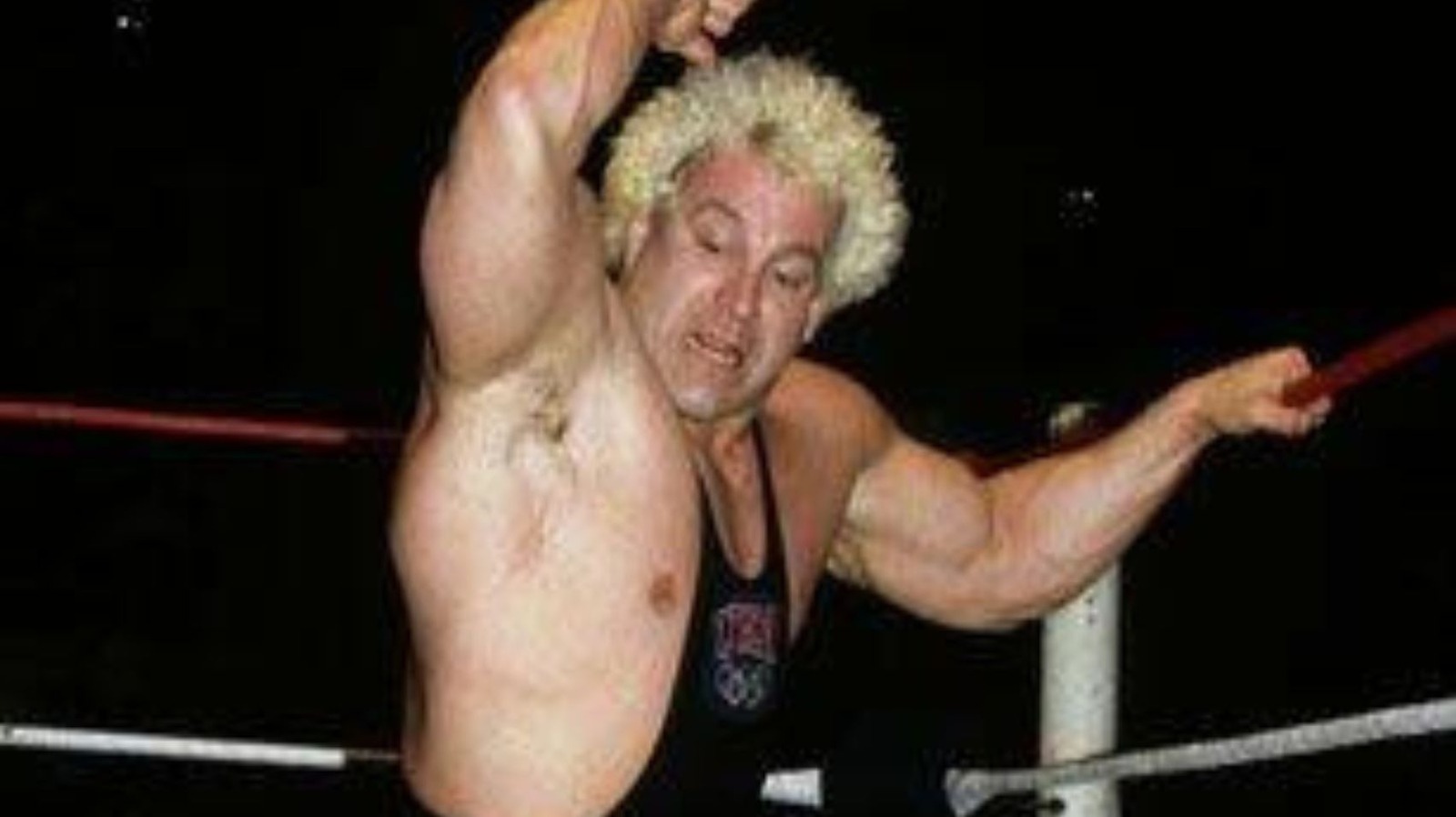
For the uninitiated, Patera was the blueprint for the power heel before the term even existed. He was not some bodybuilder who learned three moves and relied on baby oil.
Patera competed in the Munich Olympics in 1972 as a weightlifter, later becoming the first American to clean and press five hundred pounds. When news broke of his neck fracture, the collective intake of breath from old-school tape-traders was loud enough to drown out a stadium crowd.
The internet reacts to a literal titan hitting the concrete
Walk into any online wrestling forum right now, and you will find three distinct factions arguing about this news. First, you have the eulogizers who are treating Patera like a mythological god who cannot be killed.
They are posting old clips of his full nelson submission and pointing out that a broken neck is just a minor speed bump. For them, this accident is proof of his legendary toughness, especially since he is still training at his age.
Then come the safety inspectors of the internet, the fans who immediately start lecturing about gym safety for octogenarians. They are posting long-winded comments about the dangers of heavy lifting past seventy-five.
They want to know if he was using a spotter or if he was attempting something ridiculous. For this group, the injury is a depressing reminder that even the strongest men of our childhoods are ultimately fragile human beings.
The division of the territory old guard
Some veteran commentators are chiming in, comparing Patera to his old rivals from the AWA and NWA. They recall how he dominated the Minneapolis territory, working matches that felt like bar fights rather than choreographed exhibitions.
For these fans, Patera is the link to an era of legitimate tough guys like Harley Race and Mad Dog Vachon. They argue that today's locker room has plenty of gymnasts but very few men who could survive a real-life fight, let alone a broken neck.
This debate highlights a massive generational divide in how fans value wrestling history. Younger fans look at his match quality and see a plodding heavyweight, while older fans look at his physical presence and see a superstar.
Finally, we have the contrarians who cannot resist bringing up Patera's infamous run-ins with the law. They are already cracking jokes about the Waukesha McDonald's incident from 1984.
They argue his real legacy is the legal troubles that turned into a two-year prison term after a brutal brawl with police. For these posters, any news about Patera is just an excuse to revisit the wild stories of eighties wrestling degeneracy.
Sifting through the wreckage of the Waukesha legend
Let's address the elephant in the room: Patera's career was a wild ride of massive highs and absolute trainwrecks. His peak was undeniably his run under Bobby Heenan, where he captured the Intercontinental Championship from Pat Patterson on April 21, 1980.
He was a heat magnet who could draw a gate simply by looking like he wanted to rip a fan's head off. His Texas Death matches against Bob Backlund in Madison Square Garden are still studied by anyone who wants to learn how to work a physical, bruising heel style.
But the skeptics on the forums do have a point when they talk about his post-prison run in 1987. When he returned to the WWF, the company tried to push him as a babyface with a blonde perm, which turned out to be a disaster.
His movement was stiff, his speed was gone, and his matches against Dino Bravo were agonizingly slow. He was using a swinging neckbreaker that looked like it hurt him more than it hurt his opponent.
His match at Survivor Series in 1987 showed just how much he had slowed down. He was eliminated early, and his offense was limited to basic punches and clotheslines.
It was a sad sight for those who remembered his prime, when he was one of the most feared men in the sport. His decline was rapid, and by the time he left the national stage, he was a shadow of the Olympic lifter who once dominated the territories.
Yet, the enthusiasts are winning the debate on his overall toughness. Patera did not just lift weights; he lived a life that sounds like a tall tale.
He once won the strongest man competition in several events by sheer brute force. Even during his stint in prison, stories circulated about him lifting heavy beds to terrify the guards. It is this reputation that makes fans believe he will walk out of the hospital, grab a barbell, and keep going.
The verdict on the ultimate heavy lifter
So, who has the right take here? The contrarians are right that his workrate was never going to win any technical awards from the newsletter writers.
He was not doing moonsaults or diving through the ropes. But the crowd celebrating his raw, unfiltered toughness is closer to the truth.
Wrestling needs characters who feel like they could actually tear a phone book in half, and Patera was the real deal in an era of pretenders. He didn't need flashy choreography to convince you he could break you in half.
We have to look at the reality of what these guys put their bodies through. Patera spent decades landing on thin mats over hard wood, all while carrying massive amounts of muscle mass.
The fact that he is still active in the gym at eighty-three is a miracle in itself, regardless of this latest setback. Most of his contemporaries are either gone or unable to walk, while Patera was still throwing iron around until his fall.
Ultimately, this injury is a wake-up call for the community. We are losing the giants of the territory era one by one.
While we argue about star ratings and workrate, the guys who built the foundation of the business are quietly fading away. Let's hope Patera recovers from this broken neck, if only so he can keep proving the doctors wrong.
He represents an era where wrestlers were truly the toughest men on the planet. We will likely never see another athlete quite like him again.