Live television is unforgiving. When you miss a spot in front of ten thousand people in an arena, you cannot hit undo.
But if you work for the largest wrestling promotion in the world, the production truck can certainly fix it for the digital footprint.
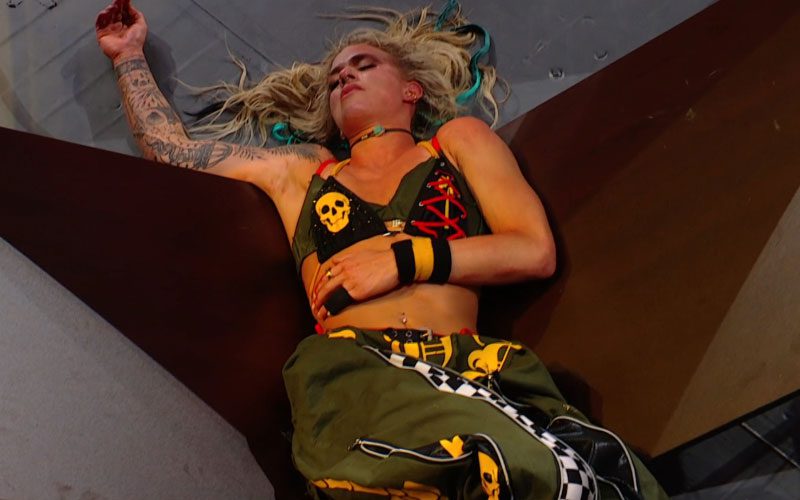
On the May 4 episode of Monday Night Raw, Sol Ruca attempted her signature finisher on Becky Lynch. The move, dubbed the Sol Snatcher, is a springboard backflip cutter. When executed perfectly, it is one of the most visually spectacular finishers in modern wrestling. When it fails, it looks like a localized trainwreck.
That is exactly what happened on Monday. Lynch was slightly out of position. Ruca over-rotated. The connection was sloppy, resulting in an awkward crash to the mat rather than a clean spike.
As WrestleTalk reported, WWE's post-production team immediately went to work. The company uploaded an edited version of the match to their social channels shortly after the broadcast.
They used a rapid camera cut and a tighter angle to mask the botched landing. The digital revisionism paints a picture of a flawless execution. The live crowd in the Omaha arena, however, saw something entirely different.
The Mechanics of the Sol Snatcher
To understand why this happened, you have to break down the mechanics of the finisher. Ruca is a freak athlete. Her background in tumbling and gymnastics gives her ridiculous body control in the air.
But the Sol Snatcher is not a unilateral move. It requires absolute compliance and precision from the person taking it.
The opponent has to stand in a specific spot, usually near the center of the ring, slightly hunched over. They have to wait for Ruca to sprint to the corner, vault off the middle turnbuckle, complete a blind backflip, and catch them by the neck.
It takes roughly 1.5 seconds from the moment Ruca leaves the ropes to the point of impact. If the opponent drifts back half a step, the move misses. If they stand up too straight, Ruca's momentum is halted abruptly.
Down in NXT, this was rarely an issue. Ruca was working with athletes who were trained in the exact same Performance Center environment. They practiced these sequences repeatedly in a controlled warehouse.
On the main roster, the variables change rapidly. You are wrestling veterans who work entirely different styles, operate at different paces, and carry years of physical wear and tear.
Becky Lynch is a masterful storyteller and one of the biggest stars of her generation. She is not, however, an explosive athlete who is going to perfectly base a springboard backflip cutter on live television with minimal rehearsal.
The timing mismatch was inevitable. You have an inexperienced rookie attempting a high-risk, high-cooperation move on a veteran who works a grounded style. The physical math simply did not add up.
The Raw Translation Problem
Before the botched finish, the match between Lynch and Ruca felt entirely disjointed. It was a clear clash of wrestling philosophies.
Lynch was trying to work a methodical pace. She repeatedly targeted Ruca's left arm, attempting to slow the rookie down and set up the Dis-Arm-Her submission.
Ruca kept trying to artificially accelerate the tempo. She threw rapid-fire dropkicks and attempted a complicated rope-walk arm drag that nearly fell apart halfway through the sequence.
Lynch wants to build tension through struggle. Ruca wants to build excitement through constant movement.
When those two styles collide without proper chemistry, the result is a match that feels like two people taking turns doing moves rather than a competitive fight.
The crowd sensed the disconnect immediately. The reaction during the middle portion of the bout was noticeably quiet. They only woke up when Ruca signaled for the finish. And then the finish fell completely flat.
This botch highlights a recurring problem with WWE's current developmental pipeline. The Performance Center produces incredible athletes capable of generating viral clips for social media.
They learn how to do the big moves. They figure out how to pop the internet crowd.
What they often fail to learn is how to construct a cohesive ten-minute wrestling match on live television. Ruca's transitional work on Raw was notably green. She looked hesitant between spots, waiting for Lynch to call the next sequence.
When you strip away the spectacular finisher, you are left with a performer who is still figuring out how to pace a basic heat segment.
The Corporate Edit
WWE's immediate instinct to scrub the botch from their digital channels is telling. We are living in an era where the company is supposedly embracing a more gritty, realistic presentation.
They regularly show blood on premium live events. They allow talent to use insider terms during promos. They blur the lines between reality and storyline constantly.
Yet, when a highly-touted rookie slips up on a complicated backflip, the production truck defaults back to the sanitized corporate playbook.
They erased the mistake because Ruca's entire character presentation right now relies on her being a superhuman athlete. She does not have a deeply layered persona to fall back on if the moves stop looking cool.
If Becky Lynch botches a move, the crowd forgives her. Her connection with the audience is built on years of emotional investment, incredible promos, and genuine star power.
If Sol Ruca botches her only viral move, the illusion breaks. She suddenly becomes just another rookie who isn't ready for Monday nights.
The Prediction: A Protected Path Forward
So, where does Sol Ruca go from here? The company clearly values her upside, otherwise she wouldn't be sharing a ring with Lynch just days before the Backlash premium live event.
But this incident will absolutely force a shift in her immediate booking. My prediction is absolute: Ruca's singles push is going on ice effectively immediately.
Over the next three months, she will be quietly shifted into a tag team role. WWE will pair her with a reliable, grounded worker to hide her in-ring deficiencies.
This is a classic booking strategy to protect an inexperienced talent. Her partner will take the heat during the match, working the fundamental holds and absorbing the punishment from the heels.
Ruca will be reserved exclusively for the hot tag. She will enter the match, hit two or three explosive offensive maneuvers, and tag back out before the pace slows down again.
This structure hides her struggles with pacing and ring psychology while still allowing the live crowds to react to her undeniable physical tools.
Furthermore, expect strict limitations on the Sol Snatcher. WWE producers are not going to let her attempt the move on uncooperative or stylistically incompatible opponents going forward.
If she hits the move over the summer, it will be against designated enhancement talent or former NXT colleagues who specifically know how to base for the rotation.
She won't be attempting it on seasoned veterans in chaotic main event segments anytime soon. The margin for error is simply too small, and the risk of looking foolish is too high.
Those expecting Ruca to fast-track her way into the Women's Championship picture are going to be disappointed. She will not hold a singles title on the main roster until the back half of 2027.
WWE is going to protect their investment. Right now, that means hiding her flaws behind an editing bay and a tag team partner.