The Bray Connection
Wrestling rarely gives us a genuine mentor-student blood feud that feels earned. We usually get forced storylines built on a backstage segment and a stolen catchphrase. This is entirely different.
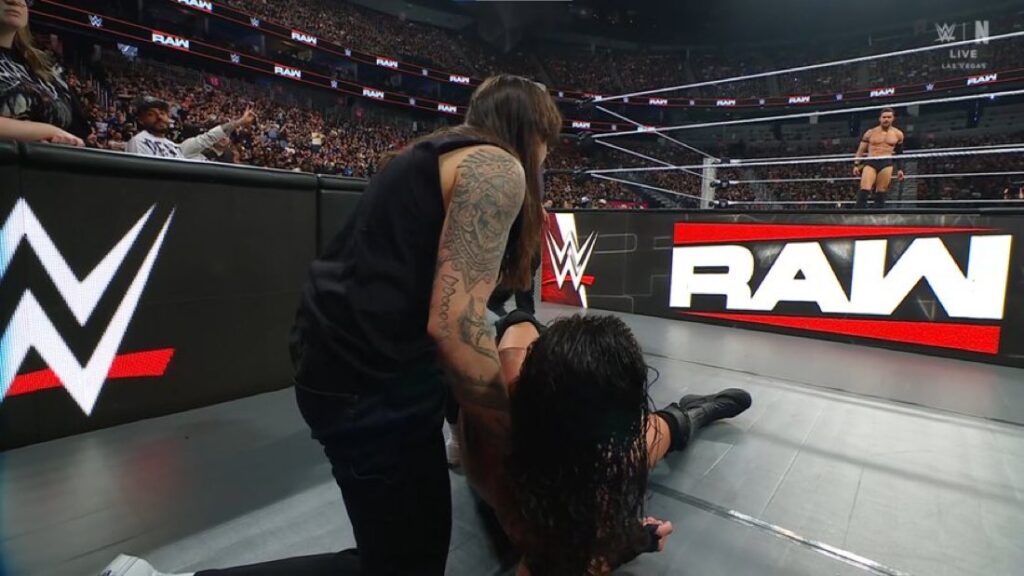
Finn Bálor and JD McDonagh share a lineage that traces directly back to a small ring in Bray, County Wicklow. Bálor literally built the promotion that gave McDonagh his start. Tonight on Raw, that long history comes to a violent head.
This is not just another television match. It is a battle for stylistic supremacy between two men who know each other's playbooks inside and out.
Mechanics of the Metronome
When you watch Bálor operate, you are watching a metronome. Every movement has a distinct, measured purpose. He rarely wastes energy on flashy sequences unless they directly set up a finish.
His entire offensive suite is designed around targeted impact. The shotgun dropkick is not just a television high spot. It is a calculated strike meant to compress the opponent's diaphragm into the turnbuckle.
McDonagh knows this. He has been studying that exact dropkick since he was a teenager. If there is one man on the roster who knows how to slip out of the impact zone, it is the Irish Ace.
Tactically, McDonagh is a nightmare to prepare for. He bumps like a crash test dummy. That reckless abandon masks a sharp, counter-based striking game.
He absorbs damage to bait opponents into overcommitting. Notice how McDonagh takes a suplex. He rotates late, ensuring he lands in a position to immediately pop up or roll toward the ropes. It is a defensive mechanism disguised as selling.
Breaking the Rhythm
Bálor relies heavily on rhythm. When he hits the Sling Blade, it triggers a sequence. Sling Blade, shotgun dropkick, Coup de Grâce. It is a brutal combination that has won him world championships.
To beat Bálor, you have to break the rhythm. You have to intercept him between steps one and two. Expect McDonagh to target Bálor’s knees early.
If you take away the explosive lift required for the shotgun dropkick, you neutralize half of Bálor’s offense. A grounded Bálor is a vulnerable Bálor.
McDonagh's signature Devlin Side suplex is a perfect counter to Bálor’s striking. It requires a tight waistlock. Bálor often leaves his midsection exposed when he winds up for a heavy forearm.
The Creative Malpractice
But we cannot ignore the booking reality that brought us here. WWE creative has frankly fumbled McDonagh's main roster run up to this point. For the better part of a year, he was booked as the Judgment Day's punching bag.
He took the pins. He took the beatdowns. He played the cowardly stooge hiding behind Rhea Ripley. Transitioning him overnight from a comedy bump-taker into a lethal threat to a former Universal Champion is jarring.
The writing hasn't earned this heat. They are asking the performers to cover up months of lazy booking with a single great match. It is a familiar failing of the Monday Night Raw creative process. They expect in-ring excellence to erase narrative incompetence.
Bálor, conversely, has been protected but stagnant. He is a tactician who occasionally forgets his own lethality. He needs an opponent who forces him out of his comfort zone.
Tag Team Psychology
That is why this match works structurally, even if the television build has been rushed. McDonagh forces Bálor to wrestle aggressively. He cannot coast against someone who knows his playbook.
Tag team partners know everything about each other. They know the exact moment a partner's cardio starts to fade. When Bálor and McDonagh operated together in Judgment Day, they functioned like a single organism.
McDonagh would take the heat segment, absorbing insane punishment. Bálor would stand on the apron, perfectly rested, ready for the hot tag. Now, those roles are completely flipped.
McDonagh cannot rely on Bálor for the save. He has to survive the heat segment against the very man who used to rescue him.
Look at their footwork when they tie up. Bálor prefers the traditional collar-and-elbow, fighting for inside control. McDonagh prefers to slip the tie-up entirely, attacking the arm from a blind angle.
The Ringside Dynamic
If the match spills to the outside, the dynamic shifts. Bálor is dangerous on the floor. He uses the barricades and the apron as weapons, creating high-impact collisions.
McDonagh is smaller, lighter, and more agile. He will likely use the ringside environment to escape rather than attack. His goal will be to drag Bálor back into the center of the ring where his mat wrestling shines.
Bálor has a tendency to drop his left hand after throwing a chop. It is a minor mechanical flaw. Ninety percent of the roster misses it.
McDonagh will not miss it. He has stood behind Bálor for two years watching him throw those chops. If Bálor drops that guard tonight, McDonagh will counter with a step-up enzuigiri.
This is why studying tape is essential. The modern professional wrestler has access to thousands of hours of footage. Bálor has been on television for a decade. His patterns are established.
He goes to the top rope when the opponent is parallel to the corner. He rarely attempts the Coup de Grâce on a perpendicular target.
The Ground Game
We do not talk enough about Bálor's grappling fundamentals. When he debuted in Japan, he had to survive against men who stretched rookies for fun. He knows how to apply torque to a wrist lock.
He will try to ground McDonagh early. A grounded high-flyer is a frustrated high-flyer. Bálor uses his body weight masterfully, driving his shin into the opponent's triceps to keep them pinned to the mat.
McDonagh’s escape route is his flexibility. He bridges high. He creates space where there shouldn't be any. That flexibility allows him to slip out of standard submission holds.
If Bálor goes for a headlock takeover, watch McDonagh's right leg. He will immediately look to hook Bálor's knee, sweeping the base. It is a constant game of physical chess.
Every hold has a counter. Every strike has a parry. The man who wins will be the man who anticipates the counter to his counter.
The Final Seconds
If McDonagh can drag his body just a few inches to the right, he alters the landing zone. Bálor will have to adjust mid-air. That hesitation is all McDonagh needs to get his knees up.
Let's talk about the 1916 DDT. It is one of the most protected moves in Bálor's arsenal. He lifts the opponent, suspending them momentarily before driving them into the canvas.
The defense against the 1916 is entirely based on core stability. If McDonagh goes limp, Bálor has to expend more energy to execute the lift. A deadweight opponent is a heavy opponent.
McDonagh is a master of deadweighting. He uses his low center of gravity to block suplexes and lifts. He will force Bálor to strain his lower back.
It comes down to reaction time. Bálor is in phenomenal shape, but reaction windows close faster as the miles pile up.
McDonagh is firmly in his physical prime. He operates a split-second faster on counters. That fractional speed advantage might be the deciding factor.
The Road to France
However, experience is a great equalizer. Bálor knows how to bait traps. He will intentionally leave an arm exposed to draw McDonagh in, only to snap on a Fujiwara armbar.
We are looking at a classic striker-versus-grappler dynamic, masked under the guise of a grudge match. Bálor wants to hit heavy. McDonagh wants to twist and torque.
With WWE Backlash looming on May 9, the stakes are undeniably high. A decisive victory here sets the winner on a collision course with a major singles title.
A loss relegates the loser to the midcard wilderness. The Judgment Day faction is fracturing, and neither man wants to be the one left holding the pieces.
It is fascinating to watch the subtle psychological warfare in their recent interactions. Bálor refuses to make prolonged eye contact. He looks past McDonagh, dismissing him.
McDonagh stares a hole through Bálor. He wants acknowledgment. He wants respect. That desperation will eventually cause him to make a mistake in the ring.
Desperation leads to over-rotation. If McDonagh goes for his moonsault and misses, Bálor will not hesitate. The transition from a missed high spot into the 1916 DDT is practically automatic.
The fans are ready for this. The live crowds have sensed the genuine animosity simmering beneath the surface. It is the type of tension you cannot fake with a microphone.
The bell will ring, and the pleasantries will vanish. We are going to see stiff forearms. We are going to see rapid-fire counters. We might even see some color.
My prediction? The match ends in a double count-out. WWE rarely gives away a clean finish on television when a premium live event is just four days away.
They will brawl into the crowd. The referee will throw the match out at the 15-minute mark. The fans will boo the finish, but it will guarantee a chaotic, no-disqualification rematch in France.
Bálor and McDonagh are artists of violence. Tonight, they finally get a blank canvas on Monday Night Raw. Do not blink.