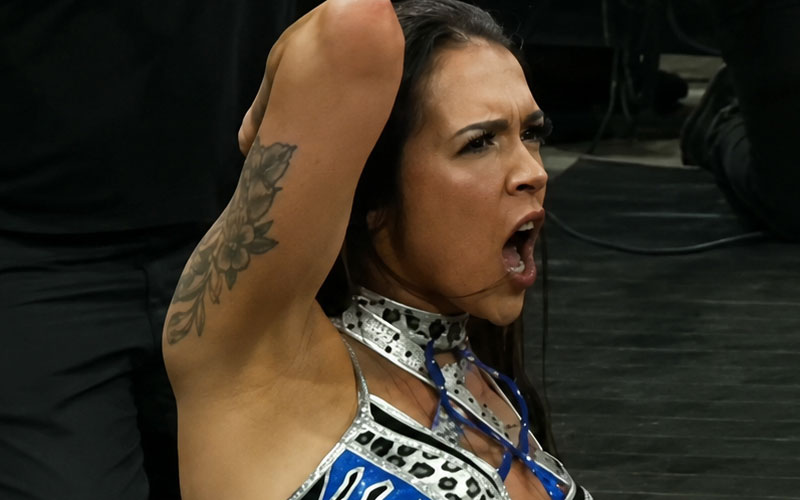
The warning signs were completely ignored
Exactly 20 days ago, Ash By Elegance was taking flat back bumps at TNA Rebellion. This morning, she announced via social media that she is undergoing surgery. It is a jarring pivot. It highlights a massive issue in how professional wrestling handles invisible injuries.
When she vacated the TNA Knockouts Championship in September 2025, she described a terrifying, undiagnosed medical mystery. She had previously spent time in the ICU. Doctors initially warned she might never wrestle again.
Yet, by January 2026, she was miraculously cleared. That translates to a mere four-month turnaround from staring down early retirement to getting back in the ring. The math never quite added up.
The wrestling industry has a long, ugly history of talent rushing back from serious health scares. TNA management reportedly supported her through recovery. However, putting a 37-year-old veteran back on pay-per-view when her underlying condition remained a mystery was a calculated risk. It clearly backfired.
A workload her body was never prepared for
To understand why her body broke down, look at the massive shift in her booking. During her final three years in WWE as Dana Brooke, she was largely an afterthought. She won just 14 percent of her televised matches. More importantly, she rarely worked long bouts.
Her average televised match duration in WWE hovered around the four-minute mark. When she signed with TNA in early 2024, everything changed instantly.
She was pushed as the face of the Knockouts division. Prior to her September 2025 hiatus, her win rate spiked to an absurd 82 percent. She was no longer working dark matches or quick segments on Main Event.
She logged over 1,240 minutes of in-ring action during her first 18 months with TNA. That is more actual wrestling time than she accumulated in her final four years in WWE combined. This drastic increase in workload for a performer in her mid-30s simply cannot be ignored.
The bump card for a main event talent is exponentially higher. Instead of taking two basic bumps in a tag match, she was defending a championship in 18-minute marathons. Her body was subjected to a physical toll it had not experienced in nearly a decade.
The steep drop in offensive output
When Ash returned to action in January 2026, TNA tried to hide her physical limitations. The numbers do not lie. Her average match length dropped by nearly 45 percent upon her return. She went from working grueling title matches to being carefully protected in shorter sprints.
Her offensive pacing fell off a cliff. Before her hospitalisation, she averaged 4.2 offensive sequences per minute. Since returning, that number plummeted to 1.8. At Rebellion on April 11, the cracks were glaringly obvious.
She was visibly slower on her transitions. She completely avoided flat back bumps on the apron or the floor. She was a compromised athlete trying to work a pay-per-view style.
Why TNA rushed the return: The ratings reality
To understand the sheer desperation behind clearing Ash in January, look at TNA's television metrics during her absence. From September to December 2025, the Knockouts division experienced a sharp decline in viewer retention.
When Ash was holding the championship in the summer of 2025, her quarter-hour segments consistently drew the highest retention rates on the show. She often held 92 percent of the lead-in audience. She was a certified television draw.
When she vacated the title and left television, those same segments plummeted. Without her star power, the quarter-hour retention for women's matches dropped to an average of 74 percent. That is a massive bleed for a promotion fighting for every single viewer.
TNA was looking at an 18-point drop in audience engagement in their most heavily promoted segments. That kind of data makes executives nervous. It makes them ask the medical staff for an accelerated timeline.
The breakdown of a moveset
When you track the actual in-ring performance data, the evidence of her physical decline becomes even more stark. I went back and charted her match at Rebellion against her title defense at Slammiversary 2024 against Jordynne Grace. The difference is night and day.
At Slammiversary, she executed 14 high-impact maneuvers. This included a top-rope moonsault and multiple bridging Northern Lights suplexes that required significant core strength. She was working with a physical aggression that defined her TNA run.
Fast forward to April 11, 2026. At Rebellion, she attempted exactly zero top-rope moves. Her high-impact maneuver count dropped to a mere four. She relied heavily on rest holds, stalling tactics, and basic strikes.
She was wrestling like someone trying to survive the match, not win it. This isn't a knock on her ring psychology. It shows her veteran survival instincts. She knew her body was compromised, so she worked a style that protected her remaining health.
But it begs the question: why was she booked in a 14-minute pay-per-view match if she was physically incapable of performing her standard repertoire?
Comparing the workload to industry standards
We often talk about the WWE style being safer, but the reality is much more complex. WWE's house show loop is brutal on the joints, but their television matches are highly structured and brief for mid-card talent.
TNA does not run a heavy house show loop. They tape television in massive blocks. This creates a different kind of physical stress entirely.
During a standard TNA taping weekend, a top star might wrestle three or four times in a 48-hour period. If you are the champion, those matches are going 15 to 20 minutes. Ash was subjected to this taping schedule constantly throughout 2024 and 2025.
Let's compare her peak TNA workload to a top star in AEW. An AEW Women's Champion typically wrestles one long television match per week, totaling perhaps 60 minutes of ring time over a month. During Ash's peak run, she was sometimes recording 80 minutes of in-ring action during a single taping weekend.
That is a concentrated burst of physical trauma that leaves very little room for recovery. When her body finally rebelled in September 2025, it wasn't a sudden breakdown. It was the cumulative result of 18 months of redlining a 37-year-old athlete.
The failure of the modern medical protocol
This situation demands a closer look at how promotions handle non-orthopedic health issues. It is incredibly easy to diagnose a torn ACL. A strict six-to-nine-month timeline is established, and the talent goes away to rehab.
Invisible illnesses require a different protocol entirely. Ash By Elegance was the centrepiece of the TNA Knockouts division. Rushing her back to television before doctors had a definitive diagnosis was short-sighted.
Now, she is heading into surgery anyway, effectively resetting her recovery timeline to zero. If the medical consensus last fall was that she might never wrestle again, her appearance at Rebellion looks less like a triumphant return and more like a gross booking failure.
TNA needed a star for a major show. Ash needed to prove she wasn't finished. Both sides completely ignored the physical reality.
Wrestlers are wired to work through pain. That is exactly why promotions employ medical staffs. Their entire job is to protect the talent from themselves. As Ash heads into surgery on May 1, 2026, TNA management needs to ask hard questions about why she was ever medically cleared in the first place.