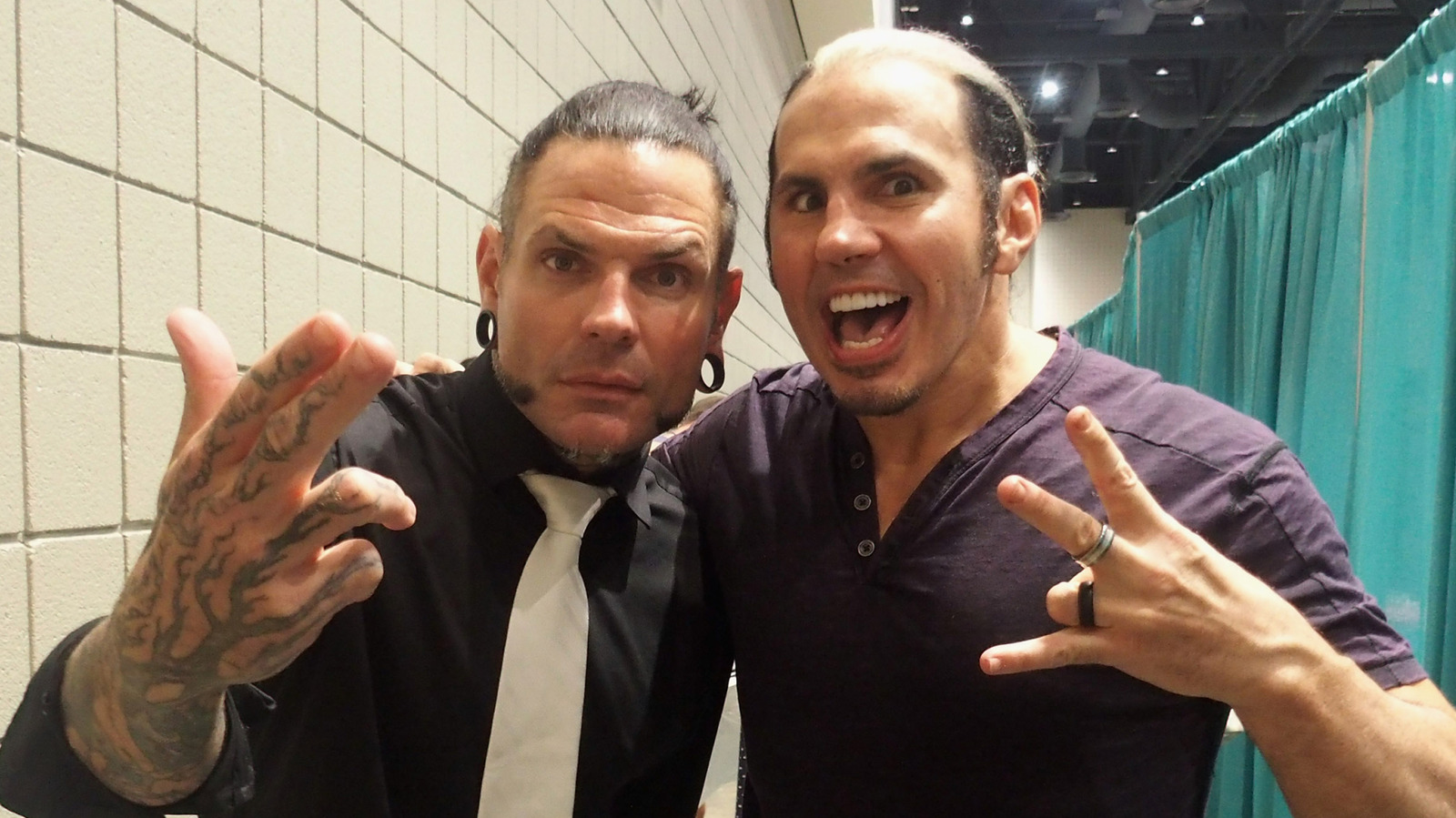
The Hardys can still draw a crowd, but their in-ring physics have changed
The Mechanics of Modern Nostalgia Booking
Independent wrestling is a numbers game. To fill minor league baseball stadiums in Avon and Niles, promotions must sell history. Northeast Wrestling is doing exactly that this week.
The promotion's double-header weekend begins on Friday, July 10, 2026, at ForeFront Field in Avon, Ohio. The following night, Saturday, July 11, they move to Eastwood Field in Niles. Both venues are baseball stadiums, presenting unique tactical and logistical challenges.
Outdoor shows require a different pacing than intimate, high-roofed indie halls. The sound disperses upward, forcing wrestlers to exaggerate their movements and slow down their match cadence.
As reported in the reports from PWInsider, the card features a mix of aging legends and active workhorses. The Hardy Boyz headline the event, supported by Mickie James, Matt Riddle, Matt Taven, and Davey Boy Smith Jr. Legends like Lex Luger and the APA are booked for meet-and-greets.
This composition reveals the financial strategy of modern independent promotions. Baseball stadium shows need to draw thousands, not hundreds, to cover costs. This scale requires headliners with name recognition that extends beyond hard-core internet fans.
The Hardys provide that name recognition, but their presence highlights a tension between drawing power and in-ring capability. The physical reality of booking a main event featuring performers in their late 40s and early 50s requires careful tactical planning.
Deconstructing the Hardy Boyz in 2026
The Hardy Boyz represent the physical limits of extreme wrestling. Jeff Hardy is 48 years old, and Matt Hardy is 51. Their careers were built on high-risk bumps, ladder matches, and high-impact offense.
Today, their physical profiles are vastly different from their prime. Matt Hardy's lateral movement is severely restricted, affecting his positioning in the ring. Years of landing on his tailbone for leg drops have compromised his hips and lower back.
In 2026, his matches are constructed to hide these mobility deficits. He relies on slow-paced brawling, corner chops, and his "Delete" gimmick to manage crowd reactions without taking heavy bumps. This tactical adjustment allows him to preserve his body while maintaining connection with the audience.
Jeff Hardy still attempts his signature high-flying maneuvers, but the physics have shifted. His rotation speed on the Whisper in the Wind has slowed, forcing him to rely on careful positioning of his opponents. The move now requires a longer setup time in the corner.
The Swanton Bomb is no longer a fluid splash, but a heavily protected, high-impact landing. Jeff absorbs most of the force with his upper back, shielding his lower spine from the impact. This adjustment protects his body but limits his offensive transition speed.
Tactically, the Hardys use classic tag team psychology to control the pace. They work a slow, methodical style that minimizes their time in the ring. The standard formula involves Matt taking the heat for the majority of the match.
Jeff is then brought in for a short, high-energy hot tag sequence lasting under three minutes. This structure protects both performers from cardiovascular fatigue. By keeping their individual ring segments short, they can execute their signature spots with greater precision.
However, this pacing limits the match's complexity. Modern audiences accustomed to rapid-fire transitions and near-falls will find these matches formulaic. The average match duration for the Hardys in 2026 is around 10 minutes.
This is a far cry from their classic 20-minute ladder matches. Yet, the shorter duration is a tactical necessity. It ensures they can work consecutive nights without risking severe injury.
The Mid-Card Workhorses Carrying the Work-Rate
While the Hardys draw the fans, the actual athletic burden of the card falls on younger performers. Northeast Wrestling Champion Matt Taven is the primary workhorse. Taven's style is built around high-velocity rope work, precise springboard maneuvers, and sustained pacing.
Taven's matches are designed to contrast with the main event. He operates at a higher tempo, averaging four to five offensive transitions per minute. His role is to provide the modern wrestling showcase that the headliners can no longer deliver.
This positioning is essential for maintaining the promotion's credibility among hard-core fans. Taven must carry the athletic weight of the show, working a longer match with higher physical risks. His performance dictates the work-rate standard for the entire event.
Davey Boy Smith Jr brings a different tactical dimension. Smith relies on catch wrestling, high-angle suplexes, and physical power. His presence ensures a diverse style distribution across the card.
He matches up well against younger, athletic opponents who can bump for his power moves. Smith's style is physically demanding but low-risk for injuries. His reliance on suplexes and submissions means he does not need to take high-flying risks.
This longevity-focused approach allows him to work a heavy schedule. His match pacing is methodical, focusing on joint locks and positional dominance. This style contrasts with Taven's high-flying speed.
Matt Riddle represents a middle ground between shoot-style realism and sports entertainment. Riddle's offense is built on kickboxing strikes, gutwrench suplexes, and submission transitions. His style is fast-paced and realistic, appealing to fans who prefer a sport-centric presentation.
Riddle's matches are often structured around quick, explosive bursts. He uses his amateur wrestling background to dictate the pace. His ability to transition from a sprawl into an ankle lock adds a layer of tactical realism.
However, his style requires opponents who can match his intensity and athletic conditioning. Riddle cannot work his style with everyone on the card. This limitation requires careful matchmaking from the promotion.
The contrast between these three workhorses and the main event is stark. Taven, Smith, and Riddle provide the work-rate that justifies the ticket price for purists. Without them, the card would feel like a slow-paced nostalgia exhibition.
Their presence allows the promotion to strike a balance between history and contemporary action. The younger wrestlers draw the critical praise, while the veterans draw the gates. It is a symbiotic relationship that keeps the promotion running.
Mickie James and the Women's Division
Mickie James provides a similar bridge in the women's division. James uses her veteran ring generalship to dictate the flow of her matches. Her transition from a headscissors takeover to her signature DDT is executed in under three seconds.
This speed minimizes the window of counter-attacks for her opponents. James's matches are structured around storytelling rather than high-risk stunts. She excels at using psychology to make simple moves look devastating.
Her presence on the card is a major draw for fans who remember her historic WWE runs. Like the Hardys, she must manage her physical workload. She does this by focusing on submissions and ground-based brawling, reducing the number of high-impact bumps she takes.
This tactical approach allows her to remain active and effective. Younger female talent on the card can learn from her ring positioning. She shows how to control a crowd with facial expressions and body language, rather than risky dives.
The Meet-and-Greet Economy and Legend Protection
The financial engine of these stadium shows is the pre-show autograph session. In Avon, the session begins at 4:00 PM, three hours before the 7:00 PM bell time. In Niles, the session starts at 3:30 PM, with the show beginning at 7:30 PM.
These meet-and-greets feature legends who do not wrestle. Lex Luger, Ron Simmons, and JBL are advertised. Luger, now 68, has significant mobility issues and does not take bumps.
The APA, consisting of JBL and Simmons, are also primarily booked for autograph signings. This setup is a calculated business model. Fans pay premium prices for autographs and photos with legends.
The revenue generated from these sessions helps cover the high appearance fees of the talent. This subsidizes the cost of the actual wrestling card, making stadium shows financially viable. Without this pre-show revenue, the promotion could not afford the active roster.
However, this model has drawbacks. It creates a reliance on stars from previous eras, which can overshadow the current roster. Younger talent on the undercard often wrestle in front of half-empty seats as fans queue for autographs.
This disparity can hinder the development of new local stars. The promotion must balance the attention given to legends versus active wrestlers. If the fans only care about the past, the promotion has no future.
Furthermore, the high cost of booking legends limits the budget for the rest of the card. The promotion must carefully balance their spending. If too much budget is allocated to meet-and-greet stars, the quality of the actual wrestling matches can suffer.
This is the delicate tightrope that Northeast Wrestling must walk. They must use the past to fund the present, without sacrificing the future. The Ohio shows will be a test of this balance.
The Tactical Blueprint for Indie Survival
Northeast Wrestling's approach is a pragmatic response to the realities of the independent wrestling market. Nostalgia sells tickets, but work-rate keeps fans coming back. The combination of the Hardys, modern workhorses, and meet-and-greet legends is a proven formula.
The success of the Ohio weekend will depend on how well the promotion executes this formula. The shows must be paced to prevent crowd fatigue. Outdoor stadium shows are notorious for losing crowd energy during the mid-card.
The promotion must use the workhorses to keep the energy high before the Hardys take the ring. Pacing is key to keeping the audience engaged over a four-hour event. The transition from high-velocity matches to nostalgia segments must feel natural.
There are risks involved in this strategy. Outdoor shows are vulnerable to weather disruptions, which can affect attendance and match quality. Rain or high humidity can make the ring canvas slippery, increasing the risk of injury for high-flying performers like Taven.
The promotion must have contingency plans in place. A wet ring canvas forces wrestlers to alter their styles, eliminating springboard moves and top-rope dives. This shift can hurt the work-rate of the younger talent.
Additionally, the reliance on aging stars is not a long-term solution. The Hardys cannot wrestle indefinitely, and the pool of legends from the Attitude Era is shrinking. Promotions must eventually find new ways to draw crowds without relying on nostalgia.
This transition will be the biggest challenge facing independent wrestling in the coming decade. The Ohio double-header will draw thousands of fans who want to see Matt and Jeff Hardy one more time. As long as the promotion protects its aging stars and supports them with quality workhorses, the model remains viable.
The tactical blueprint is clear, and Northeast Wrestling is executing it to the letter. The promotion is leveraging the past to survive the present. It is a necessary compromise in a difficult market.
For fans attending in Avon and Niles, the weekend offers a chance to witness history and athleticism. The challenge for the wrestlers is to make those two elements coexist. The success of the shows will be measured not just by the gate, but by the quality of the action in the ring.
WWE Championship Toy Belt (Gold Version)
The ultimate roleplay accessory for every future world champion.
Frequently Asked Questions
When and where is the Northeast Wrestling double-header in 2026?
Who is scheduled to appear at the Northeast Wrestling events?
How do outdoor baseball stadiums affect wrestling matches?
How has Matt Hardy adjusted his wrestling style in 2026?
How does Jeff Hardy protect his body during the Swanton Bomb?
More Coverage
Why Riddle versus Swann is the weekend's most intriguing tactical battle
8 hours ago
Why the WWE ID program is turning into a trap for indie talent
1 day, 7 hours agoNick Gage's ballpark victory exposes Joey Janela's disastrous 2026 slump
1 day, 13 hours ago
Mick Foley is taking over Boca Raton, but BRCW's real test lies in August
2 days, 3 hours agoWhy Tim Bosby and Mike Anthony are about to change the Memphis title picture
2 days, 8 hours ago
Raja Jackson is in jail, and his wrestling career is officially dead
2 days, 21 hours agoMore Analysis
The Hardys are back on the road and why that matters for the indies
2 months, 4 weeks ago
Matt and Jeff Hardy are nearing a final, necessary pivot
1 week, 5 days ago
The brutal math of the Hardys facing SSB in 2026
1 month, 2 weeks ago
The Hardy Boys are pushing their luck and it’s getting hard to watch
1 week, 4 days agoThe Hardys are taking the Hardy Party to Sacramento and it’s complicated
2 months ago