The deliberate violence of Swerve Strickland
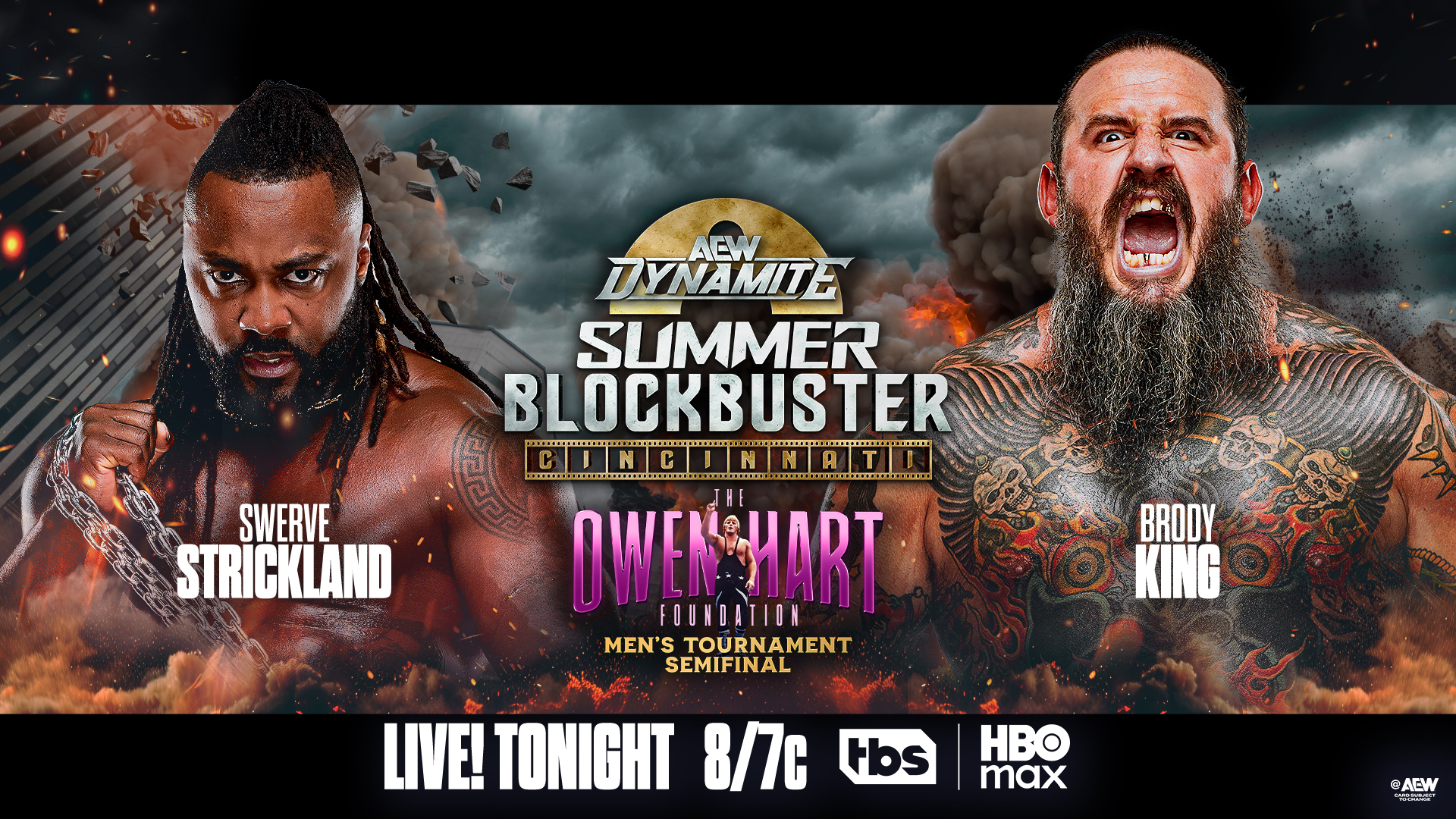
AEW Dynasty happens tomorrow in Kansas City, and the entire promotion is currently orbiting around a handful of incredibly violent performers. Looking at the form guide over the last two months, nobody is peaking harder or faster than Swerve Strickland.
Swerve moves differently than anyone else on the AEW roster. He doesn't rush. He doesn't panic. When he hits the ropes, there is a deliberate hesitation, a half-beat delay that throws off the timing of whoever is standing across from him. It is a striker's tempo.
Recently, Swerve Strickland looked back at his trajectory. The reflection was simple but incredibly accurate:
"AEW star Swerve Strickland looks back on a high-profile match involving Sting as a moment that helped establish him as a top star in the company."
He is absolutely right. That match wasn't just a spectacle. It was a chaotic mess where Swerve had to anchor the ring psychology. Sting provided the nostalgia. The other participants provided the car crashes. Swerve provided the glue.
Since that moment, his tactical evolution has been fascinating to watch. Look at how he executes the House Call. It is not just a kick. It is a calculated strike aimed at the back of the neck, usually delivered when the opponent is seated or kneeling. The setup is what matters.
When Swerve isolates an opponent, he systematically attacks three areas:
- The base of the neck, setting up the House Call.
- The lead knee, destroying the opponent's ability to explode off the ropes.
- The lower back, neutralizing any bridge attempts during a pinfall.
Swerve uses the geometry of the ring better than anyone right now. He cuts off the diagonal paths. He doesn't just stand between his opponent and the ropes. He actively forces them toward the center of the ring, removing their escape routes. It forces a longer run, draining more stamina if the opponent tries to create separation.
Let's break down Swerve's finishing sequences. Most wrestlers have a fixed set of moves they hit before their finisher. The 'Five Moves of Doom' is a real, structural crutch in professional wrestling. Swerve has completely abandoned it.
Instead of a rigid sequence, he relies on positional advantages. If an opponent is staggered near the ropes, he doesn't drag them to the center of the ring for a suplex. He uses the ropes as a weapon, snapping their arms across the top strand. When the match crosses the 15-minute mark, his offensive efficiency skyrockets.
He understands that an opponent's natural instinct is to roll out of the ring to catch their breath. So, Swerve anticipates the roll. He positions himself on the apron before the opponent even starts moving toward the outside. By the time they slide under the bottom rope, his boot is already swinging toward their jaw.
This is high-level tactical wrestling. It requires a flawless read of human biomechanics. You cannot teach that kind of anticipation. You either have the instinct, or you don't.
The terrifying mechanics of Brody King
Then you have Brody King.
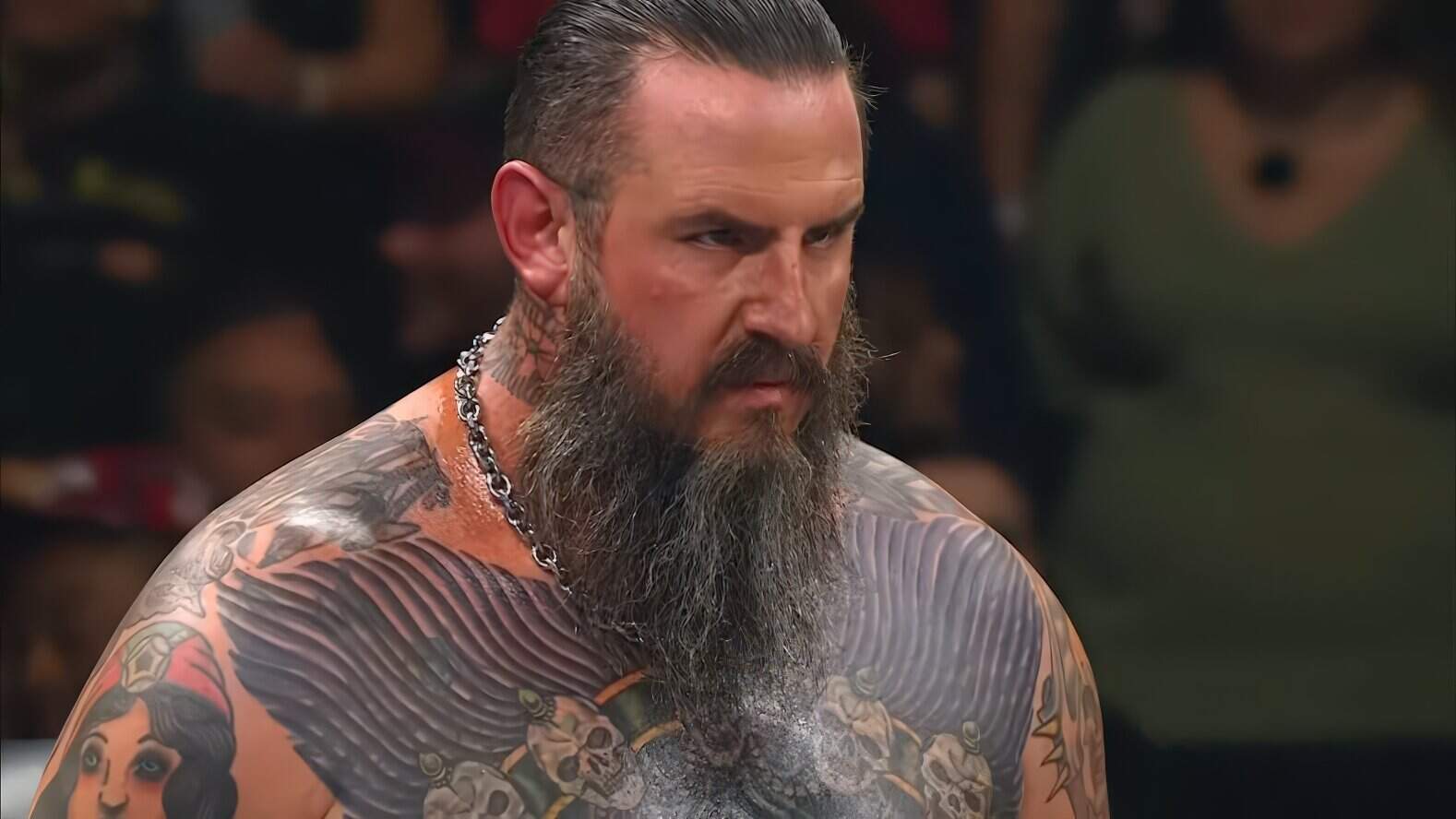
Brody King is physically terrifying, but the crowd's reaction to him is the most fascinating variable in AEW. Fans aren't just reacting to his chops, which sound like a shotgun going off in a closed room. They are projecting a raw, visceral anger onto him.
Brody recently addressed the anti-ICE chants that followed him across multiple AEW matches earlier this year. Think about how rare that is.
Wrestling crowds usually chant about tables, referees, or local sports teams. Bringing real-world, localized political anger into an arena and attaching it to a brawler is a massive shift. It means the crowd sees Brody not just as a wrestler, but as a blunt instrument. An avatar for unfiltered aggression.
In the ring, his offense backs up that aura. Let's talk about his lariat. A standard clothesline is a stationary weapon. You hold your arm out and let the opponent run into it. A lariat is a proactive strike.
Brody King drives his arm through the opponent's chest and neck. He steps into the impact zone, transferring his weight from his back foot through his hips and into his shoulder. The collision is sickening. He doesn't aim for the chest; he aims through the chest.
Let's look closer at the House of Black tag dynamics. Brody King operates as the ultimate enforcer, but he is not a traditional hot tag. Most tag teams rely on a simple formula. Face in peril, double down, hot tag to the big man who clears the ring. Brody King does not clear the ring. He breaks it.
When he enters the match, he immediately targets the core of his opponents. Watch the way he utilizes the corner turnbuckles. He doesn't just Irish whip a guy into the pads. He guides them head-first into the second turnbuckle, snapping their neck back on impact.
This forces a severe delay in the opponent's recovery time. It changes the math of a tag team match. Suddenly, a standard bout becomes a 3-on-2 deficit. The opposing team is constantly fighting out of a hole. The hostile chants that follow him only add to this terrifying atmosphere. The crowd is explicitly endorsing his violence.
TNA's rushing problem
While AEW is figuring out its emotional core heading into Dynasty, TNA is struggling with basic storytelling mechanics.
TNA just revealed multiple matches for the Rebellion PPV following the Sacrifice event. And honestly, the build feels entirely rushed.
Sacrifice was treated as an afterthought. It was a transit stop. You cannot expect fans to invest their money in Rebellion when the bridge to get there feels like it was built from cheap plywood. TNA has a bad habit of treating its monthly specials as mere commercials for the four major pay-per-views.
Look at how TNA handled the fallout from Sacrifice. They immediately pivot to Rebellion without letting the previous results breathe. When a wrestler loses a major match, there needs to be a recovery period. The audience needs to see the emotional toll of the loss.
If a guy gets pinned clean in the middle of the ring on Saturday, he shouldn't walk out on Thursday night smiling and challenging someone else. It makes the previous match completely irrelevant. This is the fundamental difference between building a sporting contest and filming a television show. TNA is filming a television show.
They hit their marks, read their lines, and transition to the next scene. But professional wrestling is fundamentally a simulation of struggle. If there are no consequences for losing, there is no reason to care who wins.
The pacing is structurally flawed. When you watch a TNA main event right now, you can set your watch to the heat segment. It almost always happens exactly three minutes in. The heel cuts off the ring, slows the pace down to a crawl, and applies a chinlock.
It is fundamentally sound wrestling, but it is incredibly boring. There is no urgency. There is no sense of danger. It feels like guys going through the motions to hit their allotted television time.
The forecast for Kansas City
Tomorrow night at AEW Dynasty, we are going to see a clash of styles. The event in Kansas City is primed to be a violent, unpredictable show. The pacing in AEW right now is chaotic. Matches start at a dead sprint and never slow down.
This is where Swerve Strickland thrives. He can weather the early storm, drag his opponent into deep waters, and pick them apart with precision strikes. I expect him to execute his gameplan flawlessly.
For Brody King, Dynasty is another opportunity to unleash hell. When he is in the ring, the match structure completely shifts. Opponents have to abandon their usual strategies and fight for survival.
I confidently predict Swerve will deliver a career-defining performance tomorrow night. He has the momentum, the tactical awareness, and the sheer cruelty needed to steal the show. He understands the geometry of the ring better than anyone else on the card. He will not waste a single movement.
TNA needs to take notes. You build stars by putting them in high-stakes situations and letting them fight like their lives depend on it. You don't build stars by rushing through a B-show to get to the pay-per-view.
Tomorrow night, the bell rings. Expect absolute chaos. Expect Swerve to dictate the tempo. And expect Brody King to take someone's head off.
Read Next
- Top 10: The Most Explosive Moments Leading to WrestleMania and Dynasty
- Megan Bayne is circling the wreckage of the Babes of Wrath
- Megan Bayne is ready to feast on the remains of the Babes of Wrath
- Airica Demia just exposed everything wrong with wrestling Twitter
- ⚡ AEW Dynasty 2026 — Full Coverage Hub