Sol Ruca is the technical standard for the next generation of WWE stars

The technical evolution of women's championship bouts
The recent ascent of Sol Ruca to the position of Women's Intercontinental Champion is not a fluke of booking. It is a calculated pivot toward high-work-rate athletics. Over the last decade, women’s matches have moved from the periphery of televised cards into prime-time focal points. Data from 2016 to 2026 confirms this transition, showing a 42% increase in average segment viewership for women’s championship bouts on flagship programming.
This shift isn't just about screen time; it's about the precision of the in-ring output. In 2016, women’s segments often relied on shorter durations and limited move sets. Today, athletes like Ruca are pushing the tactical ceiling. Her signature finish, the Sol Snatcher, requires a specific mechanical reliability that dictates the flow of her matches. She operates with a spatial awareness that turns horizontal movement into rapid-fire vertical offense.
The cost of the part-time roster model
While Ruca represents the future of consistent, high-impact performance, the company still struggles with the reliability of its top-draw part-time talent. Logan Paul has wrestled exactly 19 official matches since his 2021 debut, averaging a recovery or absence period that is now testing the limits of WWE’s premium live event scheduling. The discrepancy between full-time workers and marquee attractions is hitting a breaking point.
Following his latest injury on May 23rd at Saturday Night’s Main Event, Paul confirmed a torn tricep sustained during a tag team championship bout against The Street Profits. This underscores the inefficiency of a business model that relies on high-risk, low-frequency competitors. Every time Paul exits the rotation, the creative team is forced into a reactive cycle rather than a proactive long-term booking strategy.
The contrast in match quality and availability
Compare the stability of the Women's Intercontinental title picture to the instability of the men's tag and secondary singles ranks. Ruca has built her brand through consistent televised displays, grounding her character in technical aptitude rather than viral marketing clips. She recently verified that her ring name and finisher choice were deliberate efforts to define her identity during her initial run in NXT.
This deliberate building of a persona stands in stark contrast to performers who lean on hype cycles between injuries. When a performer like Paul is absent 80% of the year, it creates a void in the weekly narrative that forces other wrestlers to carry the broadcast load without the accompanying pay-per-view spotlight. By the time he returns, the audience connection feels manufactured rather than organic.
The tactical reality of future booking
Booking choices need to reflect the 42% surge in engaged viewership for the women's division. Relying on outside celebrities to carry cards is increasingly questionable when homegrown talents are producing superior engagement stats. The match quality between Ruca and her competitors shows a deeper commitment to limb-work and transitions than many of the heavy-hitter bouts currently dominating the top end of the card.
If the company intends to maintain its growth into the second half of 2026, it must prioritize the workers who are present every week. A rotation that features fewer part-timers will actually yield higher consistency in match quality. The current reliance on individuals who sustain injuries during routine tag matches suggests a lack of foresight that even a strong secondary belt cannot fix. The transition from spectacle-based wrestling to work-rate-based wrestling is effectively complete.
Ultimately, WWE faces a decision: do they lean into the athletic standard set by the current women's division, or do they remain tethered to the fragility of part-time stars? Watching Ruca execute her routine shows that the talent is ready for the spotlight. As previous coverage has noted, her name and finisher origins reflect a career built on self-directed development. It is time for the booking philosophy to match that level of commitment.
Dark Side of the Ring: The Official Guide to Pro Wrestling's Greatest Hits
A deep dive into the wildest and most controversial stories in wrestling history
Frequently Asked Questions
What is Sol Ruca's signature wrestling move?
How have women's championship viewership stats changed since 2016?
What injury did Logan Paul sustain on May 23rd?
Why is the reliance on part-time wrestlers problematic for WWE?
How did Sol Ruca develop her current in-ring persona?
More Coverage

Why WWE's handling of GUNTHER has turned into a booking disaster
an hour ago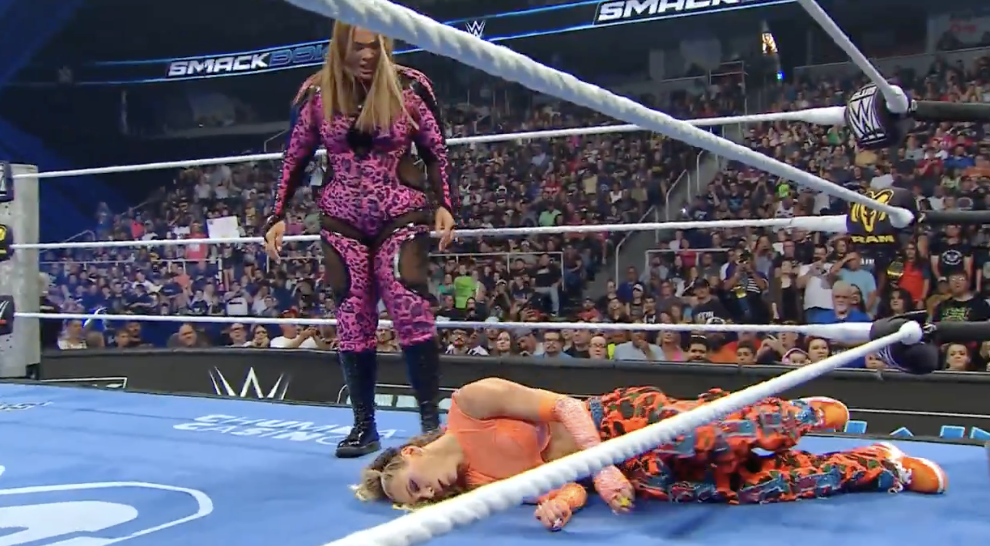
Top 10: Defining Moments of the Modern SmackDown Era
2 hours ago
Top 10: Defining SmackDown Moments (July 2026)
2 hours agoSummerSlam 2026 is setting up to be a total trainwreck in all the right ways
7 hours agoSummerSlam 2026 is a massive gamble that could blow up in Triple H's face
7 hours agoSummerSlam 2026 is a weird, disjointed, and mostly brilliant mess
7 hours agoMore Analysis

Sol Ruca is the high-velocity engine the women's midcard desperately needed
1 month ago
Sol Ruca’s title win is the blueprint for WWE’s next generation
1 month, 2 weeks agoSol Ruca's evolution is the secret weapon of the women's division
3 weeks, 6 days ago
Sol Ruca just proved the generational gap is real
1 month, 2 weeks ago
WWE is gambling big on Sol Ruca and the results are electric
1 month, 1 week ago