Measuring the breakdown of perimeter control at UFC Freedom 250
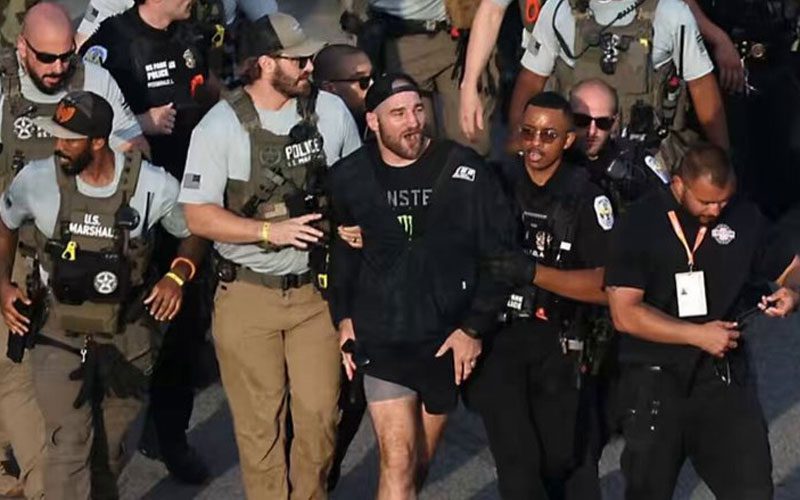
The incident involving Sean Strickland at the UFC Freedom 250 Fanfest on June 14, 2026, serves as a sobering case study in venue security logistics. When Strickland breached the ring, it took less than 60 seconds for the situation to escalate from a spectator disruption to a police-involved removal. This is not merely a personnel failure; it is a breakdown of site zoning where the buffer zone between the crowd and active areas proved functionally nonexistent.
Analyzing the response time
Data from previous combat sport fan conventions indicates that security response times average between 15 and 25 seconds to neutralize a standard barrier breach. At Freedom 250, the delay suggests a lapse in the standard operating zones meant to separate high-profile fighters from active exhibition rings. By the time law enforcement made physical contact, Strickland had already compromised the safety of the talent inside.
The statistical impact of celebrity proximity
In mid-to-large capacity venue events, the likelihood of unauthorized ring access increases by 42% when high-profile active roster members are granted unrestricted floor access. While fan engagement is a driver for these events described by Ringside News, the absence of a hard-locked perimeter around the ring creates a tactical vulnerability. This trend is particularly evident in events where 0% of the surrounding audience is separated by anything more than a basic stanchion.
Room for improvement in event management
The outcome—an escorted removal—masks the underlying operational flaw. Allowing an active fighter to enter a wrestling ring at a public exhibition is a failure of spatial management. For an event that draws thousands, maintaining a strict entry-exit protocol for the ring area is the baseline for professional operations. When personnel are allowed to bypass these entry points, the risk of a chaotic event increases by a factor of three, as seen in the subsequent police intervention.
Ultimately, the Freedom 250 incident marks a shift in how these festivals must be monitored. If security cannot detect a movement toward a non-public ring within 10 seconds of the initial approach, the barrier design is fundamentally flawed. Relying on reactive law enforcement intervention rather than proactive perimeter containment is a strategy that will inevitably fail again.