
Richard Holliday and the limits of social media beef
The friction between digital bravado and live execution
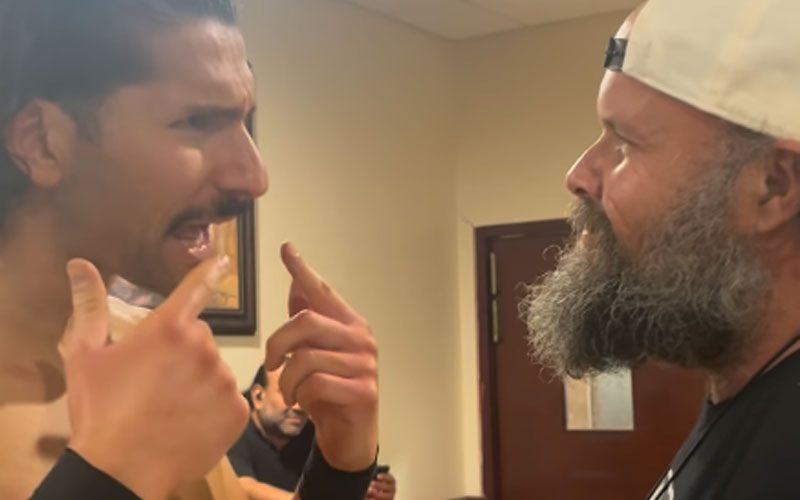
Professional wrestling thrives on the intersection of reality and scripted conflict. When Richard Holliday decided to confront the Bad Ass Construction Worker following weeks of escalating digital exchanges, he was testing whether the heat generated on a keyboard could actually be sustained in a physical space. Most wrestlers treat social media as an extension of their character, a place to inflate egos or goad opponents, but rarely does it translate into a credible narrative. Holliday, however, seems obsessed with closing the gap.
We saw this trajectory in the recent exchange between Holliday and his rival at a local venue. The segment didn't feel like a standard scripted angle. It carried the jagged edge of two individuals who had clearly exhausted the utility of Twitter threads and Instagram stories. Wrestlers often lack the self-awareness to realize when a digital feud is losing steam, but Holliday managed to treat the physical confrontation as a necessary release valve for the mounting pressure.
Missing the mark on authentic heat
Despite the intensity, there is a critical failure in the staging of this rivalry. While the confrontation itself was framed as the logical conclusion to their online back-and-forth, the physical interaction lacked the technical stakes to move the needle. A heated promo or a face-to-face in a parking lot serves as middle-of-the-road storytelling; it lacks the urgency of a high-stakes match. If the promotion truly intended to capitalize on their verbal jousting, they should have booked a match with specific stipulations—such as a last-man-standing or a cage match requirement—to force a definitive resolution.
Holliday’s commitment to his character work is undeniable, yet he often drifts into territory where the audience struggles to distinguish between genuine animosity and rehearsed theater. When you push the line of reality this hard, you risk losing the casual viewer who just wants to see a clean finish. The match output in the industry is currently defined by high-work-rate encounters, and Holliday’s focus on personality-driven drama risks falling behind the curve if the actual wrestling doesn't match the level of his verbal aggression.
The shift toward hyper-realism in professional wrestling is not without its risks. By inviting the audience to observe the behind-the-scenes friction, you peel back the layers that keep the business protected. Holliday’s specific style of confrontation feels like an artifact of an earlier era—the Mid-South or early territory days—when the barrier between the performer and the fan was porous. In the modern era, where every interaction is recorded on a mobile device and analyzed by thousands, this approach needs more than just vocal volume to succeed.
There is also the matter of substance. If the Bad Ass Construction Worker is to be a credible threat to someone of Holliday’s standing, the booking must prioritize his in-ring prowess over his internet persona. Right now, he is an opponent defined by his reaction to social media posts rather than his ability to work a hot tag or execute a convincing sequence of moves. The contrast in their skill sets hasn't been highlighted effectively. If the promotion wants to make this feud resonate until it reaches a climactic event—perhaps even building momentum for the later stages of the seasonal cycle—they need to shift the focus from the monitor to the ring.
Ultimately, this feud remains a curiosity rather than a cornerstone of the product. The lack of a clear, high-stakes trajectory means that the intensity of their recent confrontation will likely fade by the time the next weekly episode airs. Without a concrete payoff involving a significant championship or a grudge match of consequence, the entire endeavor feels like a side-quest in an otherwise crowded narrative calendar. Holliday is talented enough to carry a mid-card angle, but he needs a more disciplined framework to ensure that his out-of-ring antics serve his in-ring development, not distract from it. Relying on organic, often chaotic social-media-driven friction is a risky substitute for well-crafted, long-term booking.
Frequently Asked Questions
What is the main issue with the rivalry between Richard Holliday and his rival?
Why does the article argue that the feud lacks urgency?
How does Richard Holliday approach his character work on social media?
What risks are involved in the shift toward hyper-realism in wrestling?
What does the author suggest to improve the feud?
More Coverage

WWE roster health update: A mid-summer injury reality check
1 day, 4 hours ago
Why Gangrel is right about the lost art of wrestling psychology
1 day, 13 hours ago
WWE sniffing around the indie scene again
2 days, 8 hours ago
WWE is pivoting to microdrama and honestly I'm confused
5 days, 8 hours ago
Richard Holliday's departure from GCW fuels WWE speculation
6 days, 11 hours ago
Richard Holliday's departure from GCW signals a move to WWE
6 days, 11 hours agoMore Analysis
Richard Holliday is the biggest wild card on the independent market
2 months, 3 weeks ago
Richard Holliday's departure from GCW signals a move to WWE
6 days, 11 hours ago
Richard Holliday's departure from GCW fuels WWE speculation
6 days, 11 hours agoSummerSlam's digital buildup misses the physical mark
5 hours agoThe integrity crisis in modern wrestling discourse
3 weeks, 4 days ago