A Ghost from the Tuesday Night Wars
It is currently April 19, 2026. The entire professional wrestling world is swarming Las Vegas right now. We are just hours away from the opening video package for WrestleMania 41 Night 1 at Allegiant Stadium. Everyone is arguing about CM Punk, Cody Rhodes, and whether John Cena is going to leave his sneakers in the ring.
But while everyone else is vibrating at a modern-day frequency, the YouTube algorithm decided to throw me down a very weird set of stairs. It served me a five-year-old audio clip. Specifically, a Wade Keller Pro Wrestling Podcast post-show from exactly five years ago: April 14, 2021.
Hosts Tom Stoup and Kelly Wells spent exactly 78 minutes breaking down that week's episode of NXT. Listening to it today is a jarring experience. It feels less like a wrestling review and more like an autopsy report for a patient who didn't know they were dying.
The Trauma of Moving to Tuesdays
You have to remember the extreme trauma surrounding April 2021. The Wednesday Night Wars were officially over. AEW Dynamite had beaten NXT into a bloody pulp in the television ratings. Every single week felt like a referendum on Triple H's creative vision, and the audience had spoken.
They preferred the chaotic energy of Tony Khan's shiny new toy over the established developmental brand. Triple H’s beloved Black and Gold experiment had to pack up its toys, admit defeat, and retreat to Tuesday nights.
That April 14th broadcast was their literal first Tuesday show. The entire brand was having a massive identity crisis. The super-indie utopia was cracking, and you could hear the confusion in the voices of the podcast hosts as they tried to make sense of the erratic booking.
The Agony of "Cool Kyle"
Let’s start with the most painful segment they discussed: the reintroduction of Kyle O'Reilly. Just days prior at the Stand & Deliver premium live event, O'Reilly defeated Adam Cole in a brutal, blood-soaked unsanctioned match. This was supposed to be his massive babyface coronation.
He broke free from the Undisputed Era faction. He was supposed to be a hardened, lone-wolf badass. Instead, we got the debut of "Cool Kyle." It remains one of the worst character pivots of the modern wrestling era.
Cool Kyle traded his combat gear for a double denim Canadian tuxedo and an absurd bucket hat. He carried himself like a thirty-five-year-old man who just bought his first skateboard. He looked less like a world-beater and more like a guy who corners you at a house party to aggressively defend the latest Weezer album.
He started playing air guitar on the ring ropes with zero irony. He made these weird, goofy facial expressions while walking down the entrance ramp. Listening to the podcast hosts try to find the silver lining in this terrible gimmick is genuinely hilarious in hindsight.
They were trying to talk themselves into it. They hoped it was just him blowing off steam after a violent blood feud. But the reality was obvious to anyone with functioning eyes. Kyle O'Reilly is an unbelievable in-ring technician, but he possessed exactly zero of the main event swagger that made Adam Cole a massive star.
Without Bobby Fish and Roderick Strong standing behind him, O'Reilly looked completely lost on television. The experiment failed miserably. He never became the top guy management wanted him to be, and he eventually fled to AEW to essentially just be Adam Cole's sidekick again.
The Assassination of Sarray
Then there is the debut of Sarray, which took up a massive chunk of the podcast's discussion. This one genuinely hurts to revisit. Sarray was brought in from Japan as "The Warrior of the Sun." The pre-debut hype packages were absolutely phenomenal.
We all fully expected her to follow the exact same path as Asuka, Kairi Sane, and Io Shirai. She was positioned as the next dominant Joshi talent who would terrorize the locker room. Her debut match against Zoey Stark on that April 14 show was an absolute banger.
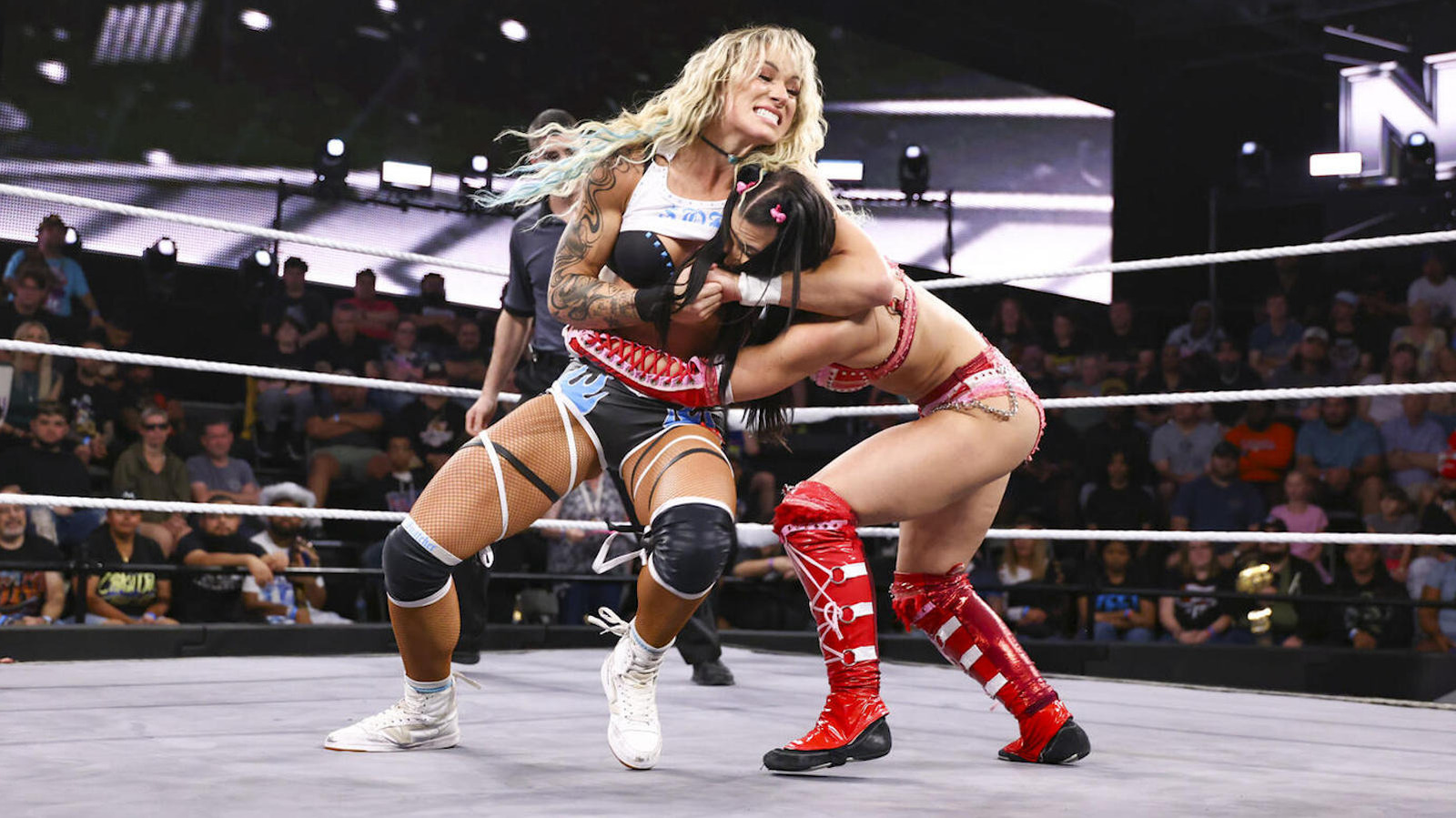
Sarray hit a nasty missile dropkick and showed off some incredibly crisp, high-impact suplexes. Stark bumped her ass off to make the new arrival look like a lethal striker. The podcast hosts were raving about the match quality, predicting a rapid rise to the championship picture.
Listening to their optimism is like watching a horror movie where you know the killer is hiding in the closet. We all know how this story actually ends. A few months after this podcast was recorded, Vince McMahon seized control of the developmental brand.
The pastel, neon nightmare of NXT 2.0 arrived. Somebody in corporate management looked at this badass, hard-hitting Japanese striker and decided she needed a complete character overhaul. They literally dressed her as a middle school student who transformed into a wrestler using a magical amulet.
It was insulting. It was one of the most baffling booking decisions of the decade. They took a world-class athlete and turned her into a walking anime punchline. She went from throwing stiff dropkicks to wandering around backstage looking for her high school classroom.
Sarray eventually left the company, her prime athletic years completely wasted by the WWE corporate machine. She went back to Japan and immediately started having incredible matches again. Hearing people in 2021 have genuine hope for her WWE career is just depressing.
A Division in Limbo
The audio review also spent a ton of time analyzing the broader state of the NXT women's division. Raquel Gonzalez had just dethroned Io Shirai for the NXT Women's Championship. That title change was a massive signal fire to the rest of the industry.
You could feel the tectonic plates shifting beneath the roster. Taking the belt off a generational talent like Shirai and putting it on a powerhouse like Gonzalez meant the rules of engagement had changed. The era of the workrate-heavy indie darlings was clearly being phased out.
Management wanted size. They wanted athletes with raw power. They wanted blank canvases they could mold from scratch, rather than established veterans from the independent circuit.
Zoey Stark is a perfect example of this weird transitional period. In 2021, she was the designated workhorse. Her entire job was to have a competitive twelve-minute television match and then stare at the arena lights to make a new star look credible.
Five years later, she is doing the exact same job on the main roster. Some folks are just destined to be the mechanic in the ring. The division was losing its gritty, competitive identity and morphing into a pure developmental territory again.
When you look at the women's division today, it is night and day. We have legitimate superstars main eventing premium live events on a monthly basis. Back in April 2021, they were throwing things at the wall and praying something would stick. The booking was disjointed, reactionary, and completely devoid of long-term planning.
Living in Denial
This entire podcast episode is a fascinating slice of wrestling media. It captures a fanbase and a media bubble completely in denial. Nobody wanted to admit that the NXT we loved was already dead and buried.
We thought "Cool Kyle" was just a bad wardrobe phase that would eventually get tweaked. We thought Sarray was going to be holding championship gold by Survivor Series. We thought the Tuesday move would give the brand room to breathe and rebuild away from AEW.
We had absolutely no idea that Bron Breakker was warming up in the Performance Center bullpen, getting ready to literally smash the black and gold set with a sledgehammer. We couldn't see the massive, chaotic reset rushing toward us.
The irony of listening to this 2021 podcast during WrestleMania 41 weekend is thick enough to cut with a chainsaw. Cody Rhodes and CM Punk are dominating the news cycle today. Five years ago, we were genuinely arguing about whether a bucket hat was ruining a man's career.
It sounds ridiculous now, but at the time, it felt like life or death for the brand. Tonight, Allegiant Stadium is going to be packed to the rafters. The wrestling business has never been more profitable or culturally relevant. But diving back into that messy, confused Tuesday night in 2021 is a necessary reality check.
It shows how quickly a wrestling promotion can lose its absolute mind. It proves how much damage a few bad creative meetings can do to incredibly talented people. Five years is a blink of an eye in real life, but in professional wrestling, it is an absolute eternity.