The Lesnar Factor and the Booking Trap
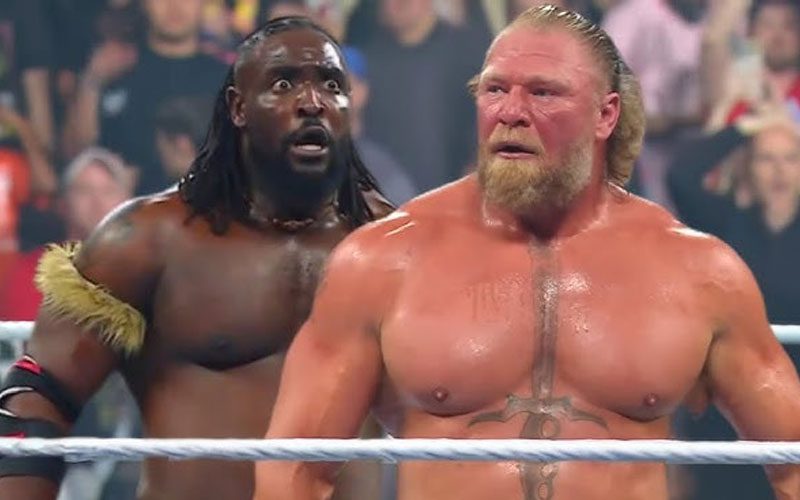
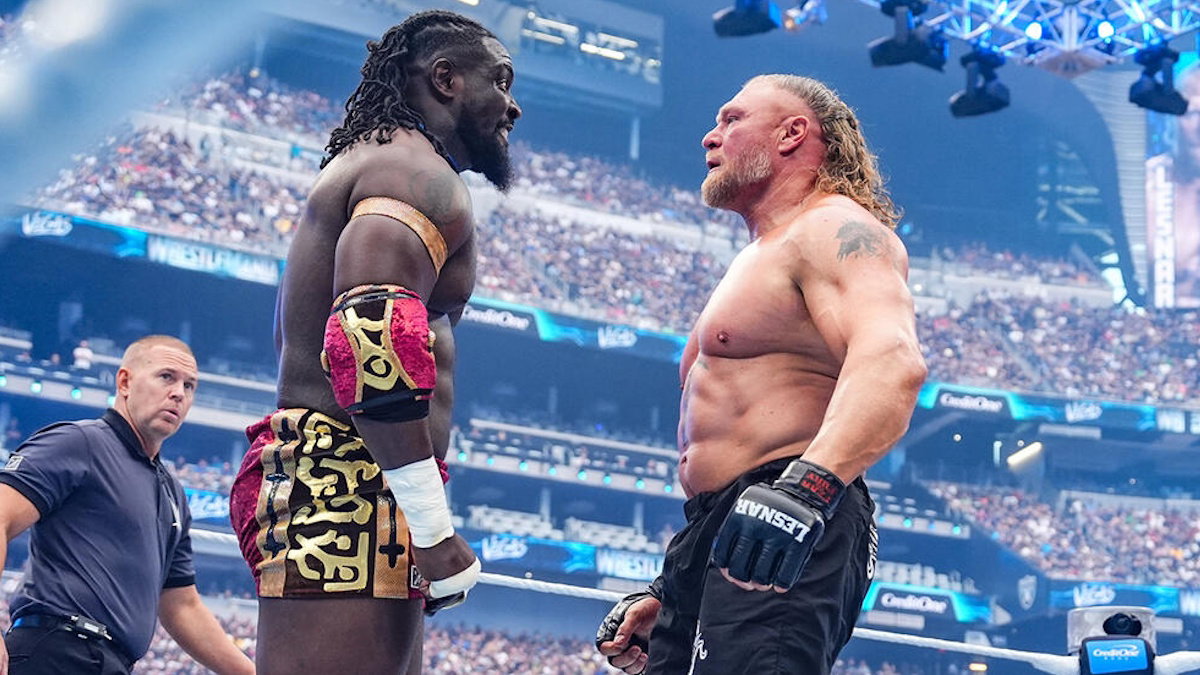
Oba Femi finds himself in the most precarious position a rising star can occupy. After pinning Brock Lesnar, the standard for every subsequent performance has been set at an unrealistic ceiling. Booking a young talent who has already defeated a generational attraction like Lesnar creates a vacuum for future challengers.
As Bully Ray noted on his podcast, the sheer scale of that victory creates a difficult navigation for creative teams. If Femi wins, it feels expected; if he loses, the accomplishment of the Lesnar victory is diluted. The company has to manage his trajectory carefully to avoid burning through his peak drawing power before he can even reach a marquee card like WrestleMania.
Mentorship and Tactical Evolution
The transition from a developmental brute to a main roster headliner often requires secondary assets. Mark Henry, the man who perfected the World’s Strongest Slam, has publicly expressed interest in passing the move to Femi. This type of endorsement is rarely just academic; it serves as a passing of the torch that validates a wrestler's move-set to a skeptical audience.
By adopting a legendary maneuver, Femi gains an immediate visual shorthand for dominance. It is a smart strategic move for a performer who relies on physical gravity to get over with fans. However, reliance on heritage moves carries its own risks, as comparisons to Henry are inevitable once the bell rings.
The Public Discourse Problem
The current environment surrounding WWE talent management is hyper-sensitive. The backlash directed toward veterans like Bully Ray when they offer candid critiques underscores a disconnect between legacy minds and modern fan expectations. When Eric Bischoff steps in to call critics mentally stunted, it shifts the focus away from the actual in-ring product.
This noise often obscures the technical progress of guys like Femi. If talent management becomes a shouting match on social media, the actual physical development and injury prevention protocols fall to the background. The industry needs to focus on preserving Femi’s health rather than debating who gets to comment on his push.
Strategic Implications for the Coming Quarter
Looking at the calendar, WWE is moving toward Backlash on May 09, 2026. This is the first major PLE where Femi will have to prove that the Lesnar match was not a singular freak event but a baseline for his capability. Consistency is difficult to maintain when the industry is conditioned to expect instant gratification.
The risk of burnout or lingering injuries from his heavy-hitting style is increasing. Femi’s work rate has been high, and performing against Lesnar requires a level of intensity that is physically taxing. Sources indicate no official injury as of May 01, 2026, but the structural integrity of his push depends on keeping him active rather than on the sidelines.
Historical precedents show that quick ascents often lead to uneven landings. Think back to early monster runs from the 2000s; wrestlers who were pushed too far, too fast, without a deep stable of credible opponents often stagnated. The creative team needs at least three distinct angles before the summer run-up to the World Cup window to sustain this heat.
If the plan is to keep Femi at the top of the card through the autumn, the company must guard against the dreaded mid-card drift. Defeating Lesnar is the easy part. Sustaining that heat for 365 days is where legends are separated from flavor-of-the-month attractions. The industry is watching to see if Femi has the creative stamina to match his physical output.