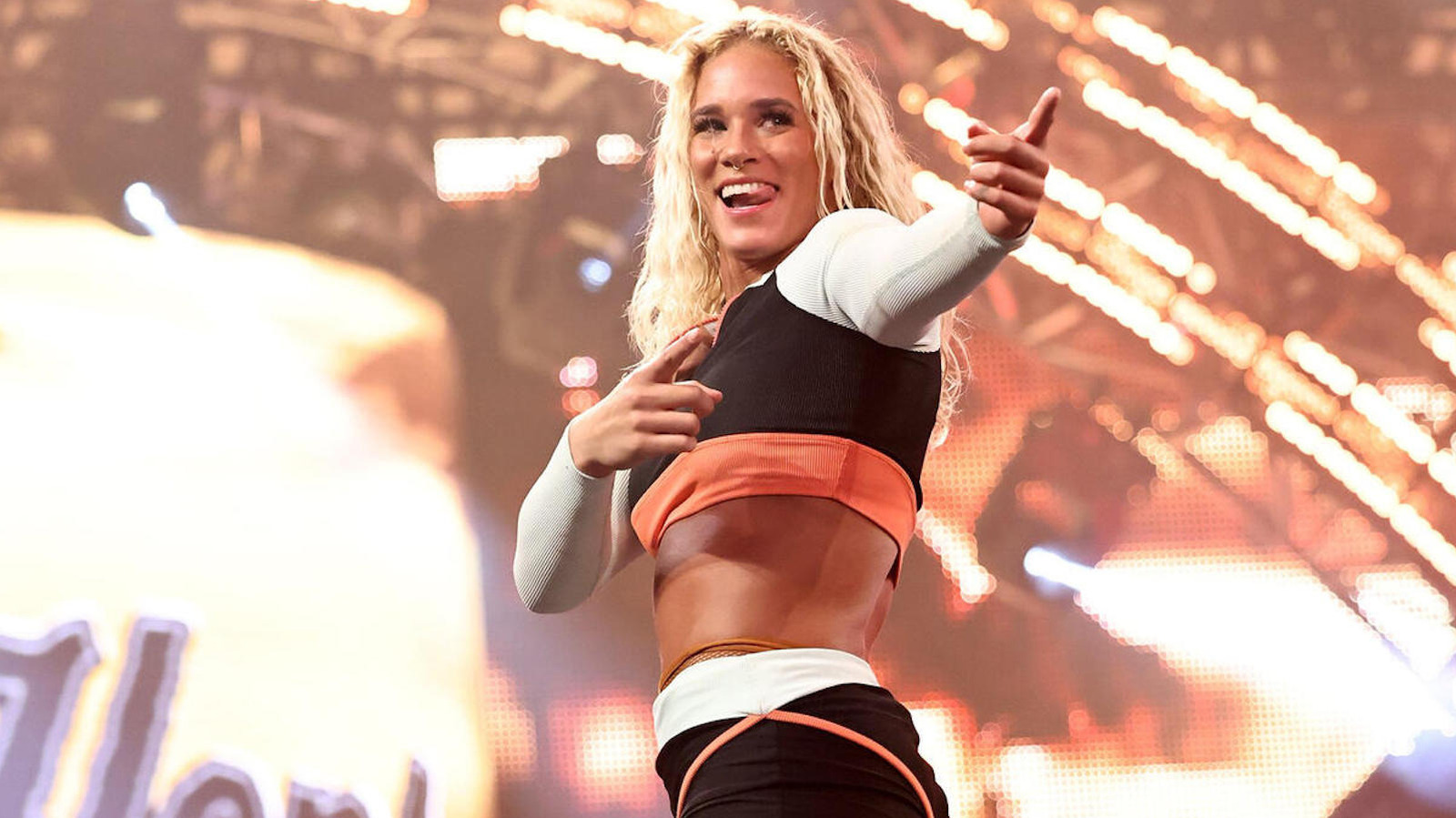
NXT's betrayal addiction is spiraling completely out of control
The exhaustion of constant swerves
Tuesday night’s episode of NXT was utterly exhausting. It felt less like a wrestling program and more like a frantic game of Clue played at fast-forward speed.
If you tuned in on May 19th expecting a measured, developmental showcase of tomorrow’s main eventers, you got something entirely different. You got paranoia. You got backstabbing. You got a booking sheet that looked like it was written in an absolute panic.
The broadcast delivered two title matches, the continued baffling saga of Dark State, whatever Izzi Dame is doing with Spears, and enough sudden betrayals to make a 1998 episode of WCW Nitro blush.
Shawn Michaels has built up an impressive track record taking over the creative reins in Orlando. He steadied the ship after the chaotic neon nightmare of the initial 2.0 rebrand. But right now, the Heartbreak Kid is leaning heavily on his absolute worst crutch.
He is addicted to the shock heel turn. It is a classic, lazy booking trap. When you do not know how to logically progress a feud, just have someone hit their tag team partner with a steel chair.
The broken betrayal economy
Let’s talk about the betrayal economy in professional wrestling. A great double-cross requires deep investment. You have to believe the friendship is real before the knife goes into the back.
Think about DIY. Think about Kevin Owens turning on Sami Zayn. Those moments hit like a freight train because the audience bought into the bond. Right now, NXT is handing out betrayals like free samples.
Tuesday featured so many sudden allegiances shifting that you needed a whiteboard to keep track of who hated who. Since the start of the year, we have seen over 15 separate betrayals across the brand. This dilutes the currency of a heel turn. If everyone is constantly looking over their shoulder, the audience stops caring entirely.
We are watching a fundamental misunderstanding of what generates heat. Heat is not generated by surprise alone. It is generated by perceived injustice. When a heel turns on a babyface, the audience needs to feel the sting of the betrayal.
They need to feel angry on behalf of the victim. But how can the audience feel angry when the victim themselves seems perfectly willing to turn around and betray someone else next week? The moral alignment of the entire roster is completely muddy.
There are no true heroes or villains right now, only a swirling vortex of opportunistic backstabbers. This cynical approach to character alignment makes it impossible to invest in anyone’s success.
Why should I cheer for a tag team to win the belts if I know they are just going to implode in a backstage segment immediately after? It is a nihilistic way to book a wrestling show, and it actively pushes the audience away.
We just assume every tag team is five minutes away from a violent breakup. The developmental system is supposed to teach these young talents how to tell stories. It is supposed to teach them how to pace a feud.
Throwing them into rapid-fire betrayal angles does not teach them pacing. It teaches them how to chase a momentary gasp from the Performance Center crowd. The regulars in Orlando are a forgiving bunch, but even they seemed burned out by the sheer volume of double-crosses on the May 19th show.
You cannot build a sustainable main roster career if your only character trait is wanting a sudden singles push at the expense of your partner.
Kelani Jordan and the danger of safe booking
Amidst the absolute chaos, Kelani Jordan continues to rack up wins. She is the glaring anomaly on the roster right now.
While everyone else is busy playing mind games or forming splinter factions, Jordan is just wrestling and securing victories. Her athleticism has never been in question. She walked into the Performance Center with raw physical tools that you simply cannot teach.
But her progression between the ropes is what stands out. She is stringing sequences together with far more fluidity than she was a year ago. She doesn't just hit spots; she is starting to understand the space between the spots.
That is the true hallmark of a wrestler moving from a raw athlete to a competent worker. However, her presentation still feels incredibly safe.
Winning matches on weekly television is great, but she desperately needs an edge. A clean-cut, happy-to-be-here babyface routine has a very low ceiling on the main roster.
Eventually, you run into the buzzsaw of a jaded audience. She needs a rival who pushes her out of her comfort zone. Booking her to just rack up wins without any real adversity is a half-measure that will hurt her when she eventually moves up.
The completely aimless Dark State
And then there is Dark State. What are we actually doing here? The faction has been drifting aimlessly for weeks.
The May 19th episode did absolutely nothing to clarify their mission statement. A wrestling stable needs a unified purpose to survive. The Bloodline had the preservation of Roman Reigns' dominance. The Undisputed Era wanted all the gold.
What does Dark State want? Right now, they feel like a collection of leftover gimmicks thrown together in a blender. It is spooky purely for the sake of being spooky.
The lighting changes, the cryptic promos, the vague threats — it is all window dressing hiding a severe lack of substance. You cannot get over by just standing in the shadows and looking menacing.
The audience is too smart for that. They demand motivation. The current booking is doing a massive disservice to the talent involved in the group.
They are trapped in a gimmick that feels completely disconnected from the rest of the show. If NXT does not pivot soon, Dark State is going to end up in the exact same forgotten graveyard as Sanity or Retribution.
Burning title matches on free TV
Let’s look at the decision to burn two title matches on a standard Tuesday night episode. The strategy of front-loading free TV with championship bouts is a legacy tactic.
It pops a rating in the short term, but it severely damages the prestige of the belts over time. A championship match should feel like a major event. It should carry heavy weight.
The history of NXT is built on the prestige of its championships. Think back to the reign of Asuka, or the intense, grueling title defenses of Finn Bálor. The belt meant you were the absolute best worker in the building.
When you water down the championship scene by throwing away title matches on a random Tuesday, you erode that history. The current champions deserve better than to be used as shiny bait to hold viewers through a commercial break.
A title match should dominate the build-up to an episode. It should be the singular focus of the marketing. Instead, the matches on May 19th felt like an obligation to fill television time.
The audience can sense when a match is happening because the story demands it, versus when it is happening because the formatting sheet required twenty minutes of wrestling. The latter makes the product feel incredibly sterile, despite the high work rate of the performers involved.
When you throw them onto a card already stuffed with backstage betrayals and cryptic promos, the titles become a total afterthought. The matches themselves were technically proficient, as is the standard in Orlando.
You rarely get a genuinely bad match in NXT anymore; the baseline athleticism is simply too high. But these bouts lacked heat. They lacked the big-fight feel that makes a championship match memorable.
One of the bouts suffered from terrible commercial break placement, killing the momentum just as the crowd was starting to buy into a near-fall. The other was booked with a messy, overbooked finish.
You cannot build strong champions if they constantly require interference or fluke roll-ups to retain their belts. It is a short-sighted booking philosophy. It prioritizes the shock of the moment over the long-term credibility of the titleholder.
If every major match ends in a dusty finish, the audience simply stops caring who holds the gold. The belts become props rather than prizes.
The baffling Izzi Dame situation
The most confusing segment of the night belonged to Izzi Dame and Spears. The underlying threat that Dame is going to somehow disappear Spears is incredibly jarring.
NXT has occasionally dabbled in the absurd — remember the parking lot kidnappings of the Legado Del Fantasma era? — but this feels entirely out of place right now.
Dame has shown serious promise as a powerhouse. She has size, presence, and a natural sneer that translates perfectly to television.
Putting her in a convoluted, mildly threatening storyline involving Spears takes away from her physical dominance. We do not need convoluted mystery angles for a powerhouse heel.
We need her hitting people with devastating powerbombs. Professional wrestling is at its absolute best when it is simple and direct.
The moment you start introducing implications of kidnapping or off-screen violence, you cross a line into terrible soap opera territory. It requires a suspension of disbelief that the modern audience is rarely willing to give.
Missing the developmental point
It is impossible to watch the current iteration of NXT without comparing it to the golden era of the brand under Triple H.
That version of NXT was a masterclass in slow-burn storytelling. Feuds were built over months, not minutes. When Tommaso Ciampa turned on Johnny Gargano in Chicago, it was the culmination of a year-long narrative arc.
Every look, every tag, every miscommunication mattered. Today’s NXT operates on an entirely different, highly caffeinated timeline.
The attention span of the booking committee seems to reset every single commercial break. We are sacrificing narrative depth for constant, relentless motion.
The young talent in the Performance Center are learning how to hit their marks and execute high-flying maneuvers. But they are not learning how to sell a storyline.
They are not learning how to make the crowd wait for the emotional payoff. And that is a massive problem for a developmental brand.
The main roster is unforgiving. If you get called up to Raw or SmackDown and you only know how to wrestle at full speed, you will burn out immediately.
You have to know when to slow down. Right now, NXT is a speeding car with no brakes, driven by a creative team that is terrified of dead air.
The May 19th episode was a microcosm of Shawn Michaels' worst habits. He is a phenomenal booker when he has a clear, long-term vision.
But when he is trying to fill two hours of weekly television, he defaults to pure chaos. It is entirely too much.
The brand needs to take a deep breath. Developmental is about laying the foundation. It is about teaching the basics of ring psychology and character building.
You cannot learn those lessons when the script is demanding you execute a triple-cross betrayal in the middle of a supernatural kidnapping angle. Tuesday night was very, very noisy, but it said absolutely nothing.
Mattel WWE Elite Collection Series 109 Action Figure, Dominik Mysterio
Grab the most 'hated' superstar in the ring for your collection.
Frequently Asked Questions
Who is currently running creative for WWE NXT?
Why was the May 19th episode of NXT criticized?
How many betrayals have happened in NXT this year?
What makes a successful heel turn in professional wrestling?
What negative impact does constant shock booking have on NXT?
More Coverage
Smackdown's booking is becoming a repetitive struggle
an hour agoWhen Ozzy wasn't looking: The weirdest wrestling crossover of the year
5 hours ago
AJ Styles is reflecting on his legacy while others look elsewhere
5 hours ago
Ethan Page is playing a dangerous game with his ego in NXT
6 hours ago
Ethan Page says his custom NXT title was the real top prize and fans are split
6 hours agoGear Check: Sorting the Must-Haves from the Merch Table Filler
7 hours agoMore Analysis
NXT booking is hitting a fever pitch and losing its mind
1 month, 1 week ago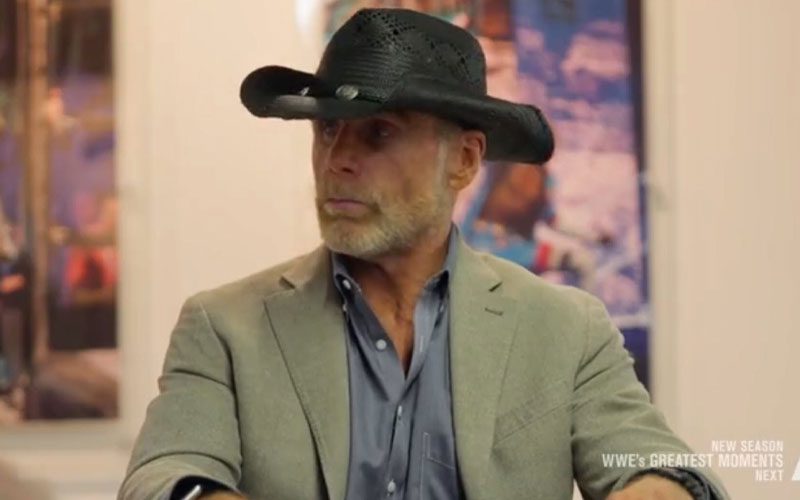
Shawn Michaels is turning NXT into a chaotic promotional experiment
2 months, 3 weeks agoNXT's post-WrestleMania hangover is getting painful to watch
2 months, 3 weeks agoNXT is completely unhinged right now and I am losing my mind
2 months agoNXT is losing its identity ahead of a messy postseason stretch
3 months, 2 weeks ago