The shadow of an icon: Cole addresses his start
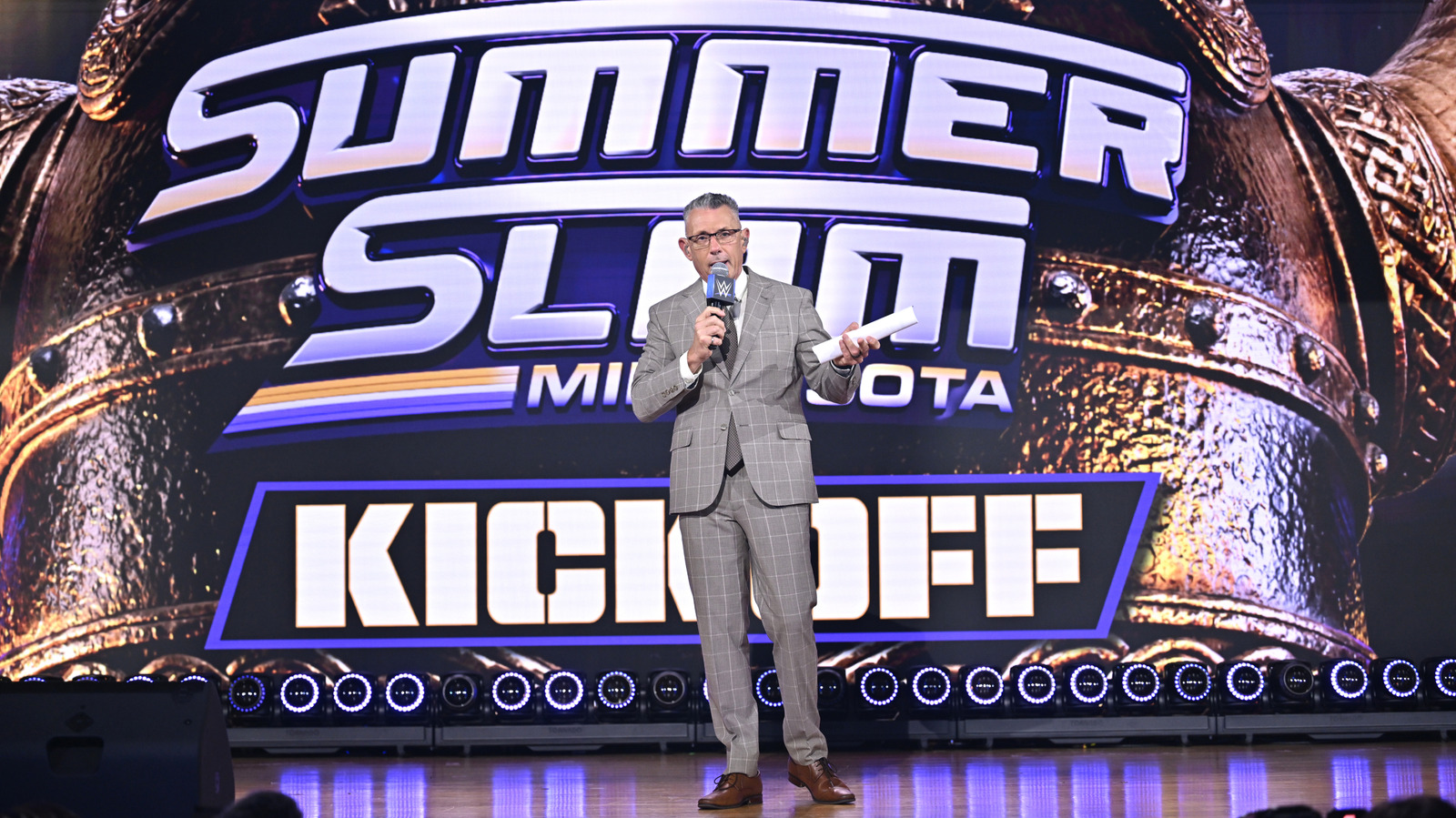
Michael Cole has served as the literal voice of WWE for over two decades. Recent commentary from the veteran broadcaster clarifies his perspective on being initially tagged as little more than a placeholder for Jim Ross. When Cole first climbed into the announce booth for television play-by-play in 1998, the industry standard for color and lead commentary was tethered almost exclusively to Ross.
Jim Ross was dealing with Bell's Palsy during that late-90s window, leaving a vacancy that management needed to fill. Cole stepped into that void under intense scrutiny. It is important to note that joining the team during the height of the Attitude Era meant stepping directly into the heat of a cultural phenomenon. Fans were not looking for a new voice; they were looking for the comfort of the familiar.
Defining a career through longevity
Cole’s tenure has outlasted nearly every executive and performer from the period he joined. He spent years in the crosshairs of internet message boards and critics who viewed his style as corporate compared to the grit and southern charm of Ross. This dynamic formed the early narrative of his career, which he has had to shed piece by piece over the last twenty-eight years.
His transition from a fresh-faced reporter to the focal point of WWE broadcast operations represents one of the most drastic shifts in how the company presents its product. Today, there is no ambiguity regarding his standing. He is the anchor, the reference point for the current generation of fans who have no memory of a WWE broadcast without him at the desk.
Beyond the placeholder narrative
"I was viewed as the guy who replaced Jim Ross, the guy who didn't have the grit, the guy who wasn't from the wrestling business."
This admission points to the massive hurdle Cole faced in earning credibility with the audience. Early in his career, he was a journalist tossed into a carny world. The contrast between his polished delivery and the wild, unpredictable nature of Austin or Rock-era television created a friction that many viewers felt was irreconcilable.
However, the skepticism remains valid in certain circles. While Cole has mastery over the current production style, his evolution suggests a rigid compliance with corporate messaging that some fans find distracting. Unlike the organic, reactive nature of the Jim Ross era, Cole’s work can sometimes feel like a scripted teleprompter exercise rather than a ringside reaction.
Industry implications of the change
The shift from Ross to Cole signifies a move toward highly produced, safe television broadcasting. For years, critics argued that the move to Cole’s style sterilized the intensity of the matches. If the product is meant to be a gritty sport, the commentary is expected to reflect that tone. Instead, fans got a polished, professional play-by-play caller whose goal was rarely to steal the spotlight from the action itself.
Cole’s longevity proves that management values consistency and reliability above all else. His ability to navigate management regimes has been flawless. Whether the product was high-concept or low-brow, Cole has been there to call the spot, regardless of whether the audience was ready to accept him. His success is not defined by how closely he could mimic his predecessor, but by how successfully he maintained the desk while the rest of the company changed around him.
Refining the booth for 2026
Looking at the current state of WWE broadcasting, the pressure on the lead caller has changed. It is no longer about replacing a legend; it is about keeping the pace with a faster, high-impact style of in-ring work. Cole has adapted by delegating more of the storytelling to the experts on the panel, moving away from being the lone narrator he was tasked with being in 1998.
The debate over his legacy will likely continue until he hangs up the headset for good. Some will point to the legendary calls of the past; others will point to the sheer volume of hours he has provided on air. He has effectively outrun the stigma of being the replacement, proving that persistence is the most effective way to rebrand a professional reputation. In a high-turnover business like professional wrestling, his stay at the top is the 28-year anomaly that nobody expected to witness.
Final assessment: Cole succeeded because he stopped fighting against the comparison. By leaning into his own strengths as a professional storyteller, he transformed the broadcast booth into his own space. He did not become the next Jim Ross, which turned out to be the smartest decision he ever made for his career longevity.