The transition from canvas to camera
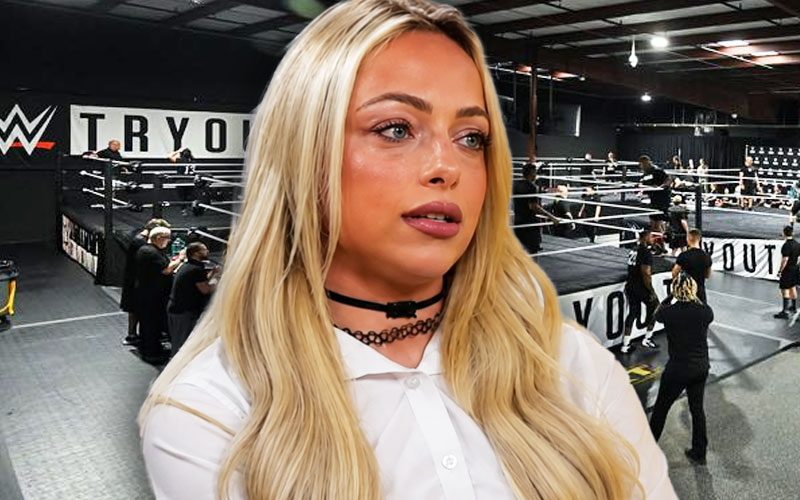
Professional wrestlers eyeing the silver screen is a well-worn path, but Liv Morgan is operating with a distinct tactical awareness. While many performers struggle to shed the exaggerated cadence of an arena promo when stepping onto a film set, Morgan is leaning into the specific physiological conditioning required by the WWE grind. She arrives at her debut project with a internal clock calibrated by high-pressure, live-television environments.
As WrestleTalk recently reported, Morgan believes her background provides a structural advantage for Hollywood productions. It is a cynical take to assume all wrestling skills fade when the lights dim on the ring, but her focus on readiness speaks to the 200-plus travel dates that define the roster's existence. The ability to memorize sequences under a strict timeline is exactly what film directors demand.
Predictability vs. improvisation
There is a recurring flaw in the crossover attempt: physical stiffening. Actors coming from theater backgrounds often struggle with the naturalism required for film, while wrestlers frequently suffer from over-enunciating or telegraphing movements intended for a crowd of 20,000. If Morgan cannot suppress the muscle memory of an Irish Whip or the dramatic flair of a ringside sell, her character work will collapse into caricature.
The risk here is one of dilution. WWE demands a specific, stylized energy that reads in the rafters but can appear jarring in a medium-shot. Her success will depend on her ability to throttle back the intensity — to trade the big bump for the micro-expression. If she plays to the back row, the lens will catch the effort, and the performance will feel hollow.
The strategic utility of the WWE schedule
Morgan mentioned that the roster is conditioned to be ready at any point in time. This isn't just athlete hyperbole; it is a description of a brutal, unforgiving workflow. When a segment is cut or a script is rewritten at 6:00 PM, the performer must adapt instantly. That level of flexibility is rare in the film industry, where time is often squandered on endless prep.
Morgan clearly views her current career as the laboratory for her future. She is not just burning hours on the road; she is refining her emotional access. The industry is littered with failed crossovers that banked on name recognition over craft. By focusing on the mechanics of these high-stakes production environments, Morgan is positioning herself to survive the transition where others have burned out.
The road ahead
Watching this project unfold will be a test of whether genuine wrestling resilience outweighs traditional acting schooling. I expect her to bring the necessary discipline to set, but her biggest challenge will be the restraint of her own performance style. If she manages to translate her ring agility into a nuanced screen presence, she might actually find a foothold. If she treats the camera like a referee expecting a big spot, she will find herself back in the squared circle by 2027.
My prediction is simple: the project succeeds on her professional work ethic, but struggles with the stylistic clashing of her background. She will hit her marks and learn her lines flawlessly, but the screen will struggle to capture the personality that usually projects over an arena floor. She will likely land the role but find the transition back to the ring remarkably difficult once her eyes are turned toward larger projects.