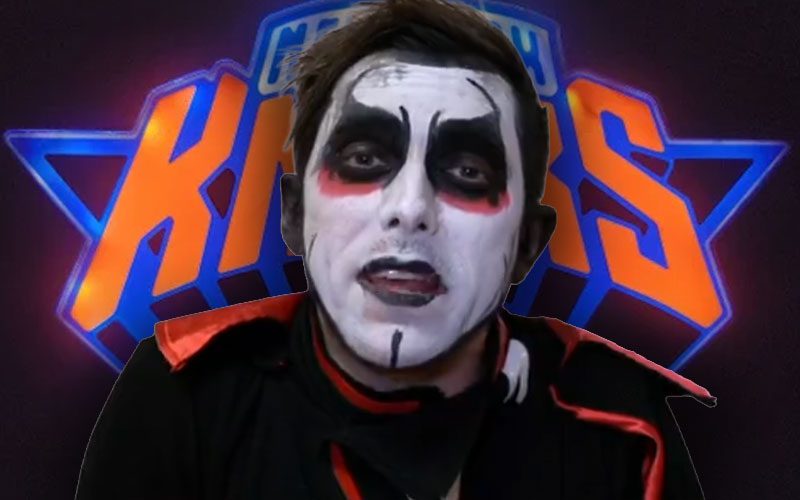
How Danhausen hijacked the NBA playoffs with a single finger
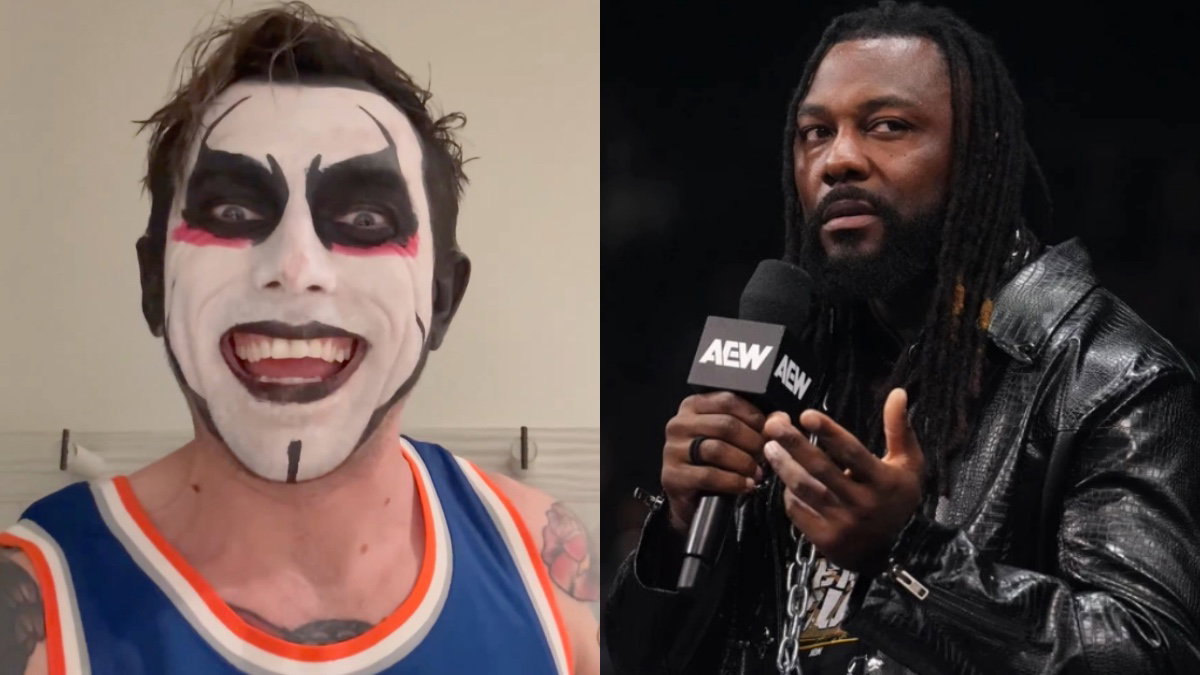
The Anatomy of a Courtside Hex
The modern professional wrestling economy operates on a bizarre currency. It is no longer just about who holds the gold or who closes the show. It is about who can hijack the broader cultural conversation with the least amount of physical exertion.
On Tuesday night, we witnessed a masterclass in this exact discipline. The Cleveland Cavaliers and the New York Knicks were engaged in a high-stakes tactical battle during Game 1 of the NBA Eastern Conference Finals. The floor spacing was tight. The defensive rotations were brutal.
Yet, the most effective offensive maneuver of the evening did not come from a point guard. It came from a man sitting courtside, wearing full face paint and a cape.
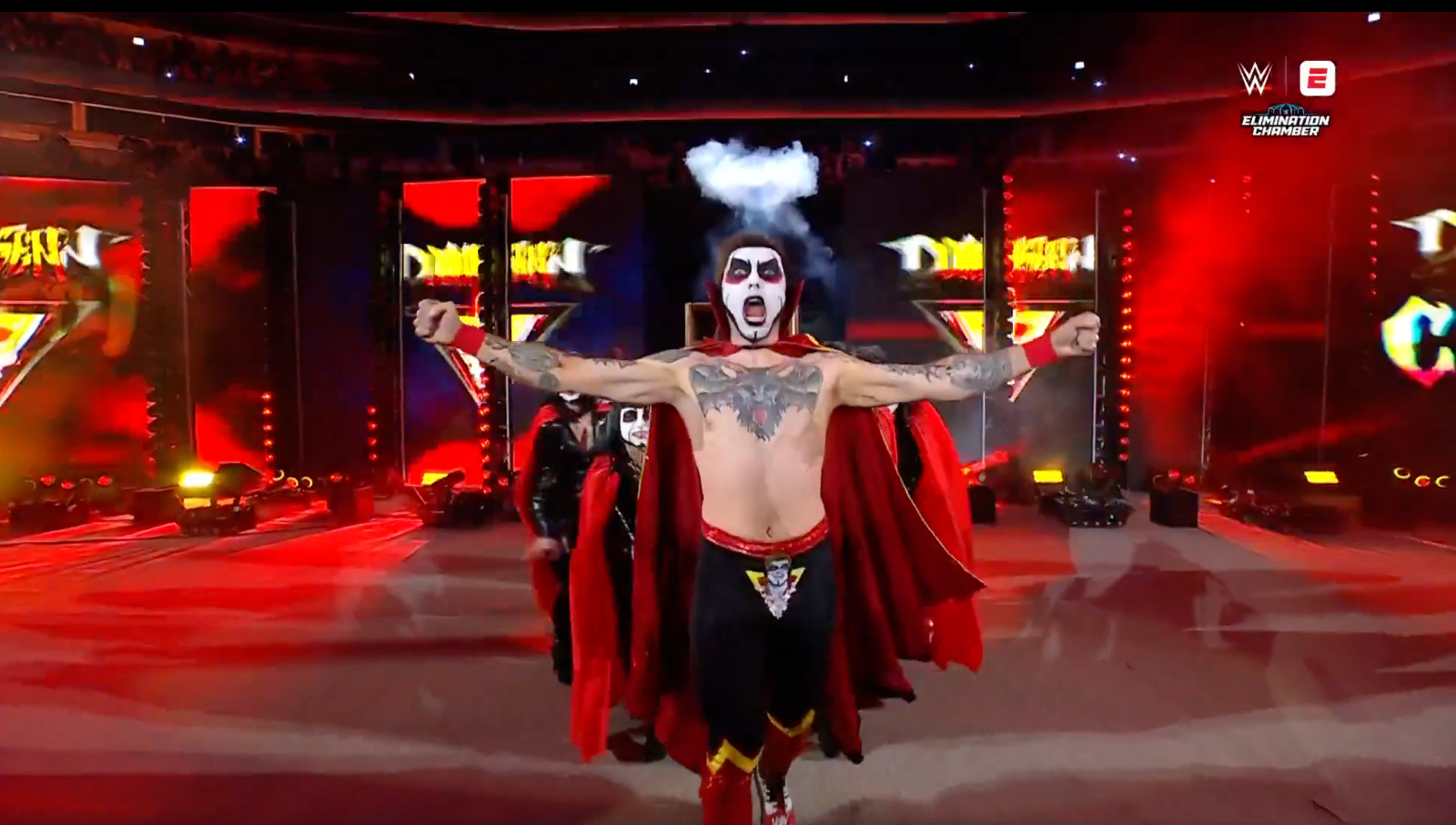
Danhausen, now a fixture of the WWE roster, pointed his finger at the Cleveland bench. He cast a curse. The Cavaliers subsequently faltered, dropping the opening game of the series.
Shortly after the final buzzer, Danhausen took to social media to claim his victory. He offered no complex explanation for the Knicks' success. He simply stated his case.
"Danhausen Told You The Curse Was Real"
It was a simple tweet, but the ripple effect across the industry was immense. The most telling reaction did not come from a WWE colleague or a basketball analyst. It came from the other side of the promotional divide.
AEW’s Swerve Strickland broke the unspoken barrier between the two companies. As widely aggregated online, Strickland publicly admitted he is a 'believer' in the hex. He validated the gimmick.
This entire sequence of events requires a deep, clinical breakdown. We have to examine why a comedic wrestling gimmick successfully infiltrated a mainstream sports broadcast. We must analyze how WWE is deploying this character, and why an AEW top star felt compelled to acknowledge it.
The Inverse of the Monday Night Wars
To truly understand the weight of this moment, we must contextualize it within the historical relationship between professional wrestling and the NBA. During the peak of the late 1990s boom period, the crossover was entirely unidirectional.
Basketball players entered the wrestling ring to siphon off the massive television ratings. We saw Dennis Rodman align with the nWo, skipping Chicago Bulls practice to swing steel chairs. We saw Karl Malone team with Diamond Dallas Page.
The spectacle was massive, but it was fundamentally flawed. It relied on athletes stepping outside their comfort zone to execute basic wrestling holds. They were tourists in a predetermined world.
What Danhausen achieved at the Eastern Conference Finals is the exact inverse of that dynamic.
Instead of an NBA player attempting to grasp wrestling psychology, a wrestler imposed his psychology onto an actual NBA game. Danhausen did not step onto the court to shoot a free throw. He stayed in his element, utilized his specific character traits, and let the real-world sporting event react to him.
This is a far more sophisticated form of media manipulation. It does not break the fourth wall. Instead, it extends the kayfabe reality into the physical world.
The Knicks didn’t just beat the Cavaliers with better rebounding. They beat them with supernatural assistance. Or, at least, that is the narrative Danhausen successfully planted in the public consciousness.
Contrasting Philosophies of Violence and Absurdity
The reaction from Swerve Strickland requires a deeper examination of contrasting character archetypes. In AEW, Strickland operates as a cold, terrifyingly competent killer. He does not rely on magic.
His menace is rooted in a chilling reality. When Swerve systematically dismantled Hangman Adam Page, there were no curses involved. There was only a relentless, physical assault.
Strickland’s character is built on the premise that violence is a tool to achieve a specific goal. Danhausen’s character is built on the premise that absurdity is a tool to avoid violence altogether.
They are polar opposites on the psychological spectrum of professional wrestling.
Yet, Strickland’s public admission that he is a 'believer' bridges that gap. It is a subtle acknowledgment from a serious worker that comedy, when executed with absolute conviction, is just as effective as bloodshed.
Swerve recognizes the difficulty of the assignment. It is incredibly hard to make an audience care about a mid-card comedy act. It requires a relentless commitment to the bit, regardless of how ridiculous the scenario might seem.
By validating the curse, Swerve is essentially applauding the craftsmanship of a fellow worker. Game recognizes game.
The Biomechanics of a Hex
We need to evaluate the curse not as a supernatural event, but as a wrestling maneuver. Think of it as a psychological submission hold.
When an opponent locks in an armbar, the target has to sell the physical pain. They contort their face. They reach for the ropes. The audience understands the mechanics of the joint manipulation.
When Danhausen points his finger, the opponent has to sell an entirely different kind of trauma. They have to sell confusion, sudden bad luck, or sheer terror. It requires an immense amount of trust between the two performers.
If the opponent refuses to sell the curse, the entire gimmick collapses. It looks ridiculous. But when a massive heavyweight trips over their own feet because a smaller man in makeup pointed at them, the illusion is complete.
This relies heavily on the concept of 'buying in'. The locker room has to agree that the curse is a legitimate threat within the confines of their fictional universe.
This is why Swerve Strickland’s comments are so significant. Strickland is stating that, even outside of WWE, the working professionals respect the mechanics of the maneuver. If a top guy in a rival company buys in, it forces the audience to buy in as well.
It is a fascinating evolution of kayfabe. We have moved past pretending that Irish whips are a natural phenomenon. We are now collectively pretending that dark magic can influence the NBA playoffs.
And strangely enough, the latter requires far less suspension of disbelief than the former.
The Tactical Flaw in Corporate Booking
We must, however, approach this situation critically. This strategy has a massive, glaring flaw. The curse is a rapidly depreciating asset.
Right now, it is an incredible novelty. The Cavaliers lost, Danhausen looks like a mystical tactical genius, and the internet is engaged. But WWE has a terminal inability to practice restraint.
The moment a gimmick generates a positive metric, WWE’s instinct is to mass-produce it. If Danhausen shows up at the NHL playoffs next week to curse the Florida Panthers, the joke is dead. If they script a three-minute backstage segment where he tries to curse the General Manager, the magic evaporates.
The power of the Danhausen character lies in its spontaneity and its scarcity. The NBA moment worked because it felt entirely unscripted. It felt like a rogue element had invaded the broadcast.
If WWE tries to manufacture that feeling, they will fail. They cannot choreograph virality.
This is the exact trap that ruined Bray Wyatt’s initial run as The Fiend. The character was mesmerizing when it appeared sparingly. But once WWE started booking The Fiend in regular matches, bathed in red light and ignoring finishing moves, the mystique vanished.
Danhausen is not a main-event monster, but the principle remains the same. If the curse becomes a weekly television trope, it loses its power completely.
Protecting the Asset
We have to look at the immediate aftermath of this NBA playoff game. How does WWE follow this up? If they are smart, they do absolutely nothing.
They should let the tweet simmer. They should let the sports blogs aggregate the story. They should let the Cavaliers deal with the media questions about whether they were actually hexed by a wrestler.
But if they force a segment on Monday Night Raw where the announcers spend five minutes explaining the joke, they will kill the momentum instantly. WWE commentators have a dreadful habit of over-explaining the subtext until there is nothing left but dry, corporate copy.
The curse works because it is unexplained. It works because it is strange.
We must also consider the long-term viability of this act within the WWE ecosystem. How does Danhausen fit into a WrestleMania card? Next year, WrestleMania 41 heads to Las Vegas.
The card will be stacked with massive, serialized narratives. Cody Rhodes will likely be defending the WWE Championship. The Bloodline saga will continue to dominate the main event scene.
Where does a cursing ghoul fit into that structure?
The answer is that he doesn't need a twenty-minute match. He doesn't need an intricate storyline. He needs forty-five seconds of screen time in the exact right moment.
Imagine a high-stakes title match. The referee is down. The heel is about to use a steel chair. Suddenly, Danhausen appears on the apron. He points the finger.
The heel freezes. The babyface hits their finisher. The crowd explodes. That is how you deploy this weapon. It is a tactical strike, not a sustained campaign.
The Undefeated Postseason Run
The NBA playoff appearance was a perfect proof of concept. It demonstrated that the character can generate heat outside the wrestling bubble. It proved that the gimmick survived the transition from the indies to the corporate behemoth.
But the hard work starts now. WWE has to protect this character from their own worst instincts. They have to resist the urge to overexpose him.
Swerve Strickland understands this. The fans who made Danhausen viral understand this. The lingering question is whether the WWE writers room understands it.
For now, the Cleveland Cavaliers are down 1-0 in the Eastern Conference Finals. They have to figure out how to crack the Knicks' defense. They have to adjust their pick-and-roll coverage.
And, if they are smart, they will figure out a way to lift the curse before Game 2. Because right now, Danhausen is undefeated in the postseason.
Read Next
- Danhausen in The Garden: A Cryptic Message About His AEW Future?
- Danhausen to WWE is real and the merchandise numbers are completely insane
- Why Leon Slater is the top free agent target for WWE and AEW this summer
- Alex Kane's expiring contract is the first big test for the new MLW TV era
- ⚡ AEW Dynasty 2026 — Full Coverage Hub
WWE 2K24 (PS5)
The definitive wrestling simulation experience currently dominating the consoles
Frequently Asked Questions
What did Danhausen do at the NBA playoffs?
Which NBA teams were playing when Danhausen cast his curse?
How did Swerve Strickland react to Danhausen's NBA curse?
How does Danhausen's stunt compare to 90s wrestling crossovers?
What happened to the Cleveland Cavaliers after Danhausen cursed them?
More Coverage

Drew McIntyre sidelined following brutal SmackDown encounter
2 hours agoWWE's New York gamble is a calculated risk ahead of WrestleMania 42
2 hours ago
WWE's Saturday Night's Main Event math doesn't add up
2 hours agoWWE's return to New York changes the math on stadium attendance
2 hours ago
Top 10: Top Moments from MSG
3 hours ago
SmackDown is drifting into mid-summer malaise
3 hours agoMore Analysis
Danhausen’s bizarre cross-sport curse tour is working
1 month, 1 week ago
Danhausen’s Knicks takes are the weirdest part of the post-season
1 month agoDanhausen’s Knicks audition is exactly the absurdity wrestling needs
1 month ago
Danhausen’s Knicks curse is the smartest heel move of 2026
1 month, 2 weeks agoDanhausen has officially conquered the NBA and we should be terrified
1 month, 3 weeks ago