A Much-Needed Reality Check
Gable Steveson has finally stopped pretending to be something he isn't. After a highly publicized, embarrassing failure in WWE and a brief, bizarre cup of coffee in the NFL, the Olympic gold medalist has signed a multi-fight deal with Real American Freestyle. According to reports from WrestlingNews and F4WOnline, the ink is dry on a contract that brings him back to his roots.
The timing is immediate. Real American Freestyle 07 is heading to Tampa this weekend. While it is unclear if Steveson will be competing right away or just making an appearance to announce his arrival, the move represents a massive pivot. For the first time in nearly five years, Steveson is returning to an environment where his athletic pedigree actually matters more than his ability to read a scripted promo.
This is the smartest decision he has made since he left the University of Minnesota. But it also comes with a stark reality: if this multi-fight deal doesn't work out, he is essentially out of high-profile athletic options.
The Sports Entertainment Disaster
To understand why this move is so significant, you have to look at the absolute wreckage of Steveson's pro wrestling career. WWE gave him a developmental deal that most independent wrestlers would kill for. They set him up in a custom training facility near his home. They drafted him to Monday Night Raw in 2021 before he had even taken a single flat back bump on television.
The expectation from management was that he would be the next Kurt Angle. The reality was that he looked completely lost under the arena lights. Pro wrestling requires an extroverted charisma and an innate sense of physical timing. Steveson possessed neither of those traits.
We have to place heavy blame on WWE's creative direction at the time. Drafting a man who had zero professional matches to the flagship Monday night program was an act of extreme hubris. The creative regime assumed they could simply skip the entire developmental process because Steveson had a gold medal around his neck. They robbed him of the chance to make his mistakes quietly in front of 200 people in a Florida armory.
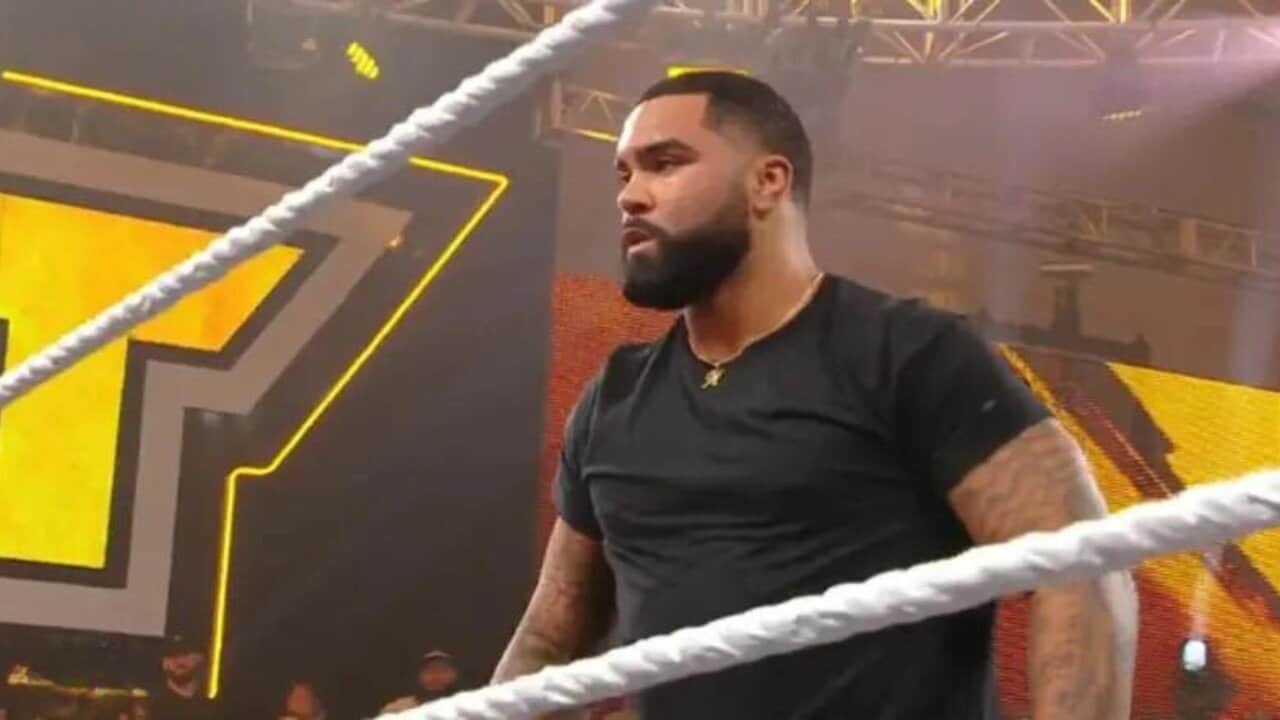
His televised peak eventually arrived in a match against Baron Corbin at NXT Great American Bash. The crowd in Texas mercilessly booed the supposed babyface Olympian. They chanted that he wasn't Kurt Angle. The match ended in a sloppy double count-out that helped nobody. He was eventually released, ending one of the biggest recruiting busts in modern WWE history.
The irony of his wrestling journey is highlighted by his own brother. While Gable was handed the keys to the kingdom and failed, his brother Bobby Steveson ground away in NXT under the name Damon Kemp. Kemp actually learned the craft, took his bumps, and became a highly capable television performer in factions like Diamond Mine. It proved that the amateur background wasn't the problem—it was Gable's complete inability to adapt his specific personality to the medium.
The fundamental issue was never his raw strength. The issue was his total lack of theatrical presence. He moved like a real amateur wrestler, which meant he looked stiff and uncooperative in a scripted environment. WWE tried to force a square peg into a round hole, and the peg snapped.
The Brief Football Interlude
Following his WWE exit, Steveson attempted another improbable pivot. He signed an undrafted free agent contract with the Buffalo Bills to play on the defensive line. It was a pure roll of the dice by the NFL franchise, hoping his explosive power would translate directly to the gridiron.
It didn't happen. He was cut before the regular season even began. The NFL is a league of ruthless specialists. You have men who have spent fifteen years learning exactly how to shed a block from a pulling guard. Steveson was trying to learn the basic rules of neutral zone infractions while competing against veterans fighting for their livelihoods. It was an impossible task, and his swift release reflected that harsh truth.
This sequence of events left Steveson in a strange, depressing limbo. He was a world-class athlete without a sport. He had spent his early twenties chasing lucrative, entertainment-focused contracts instead of refining his core grappling skills on the mat.
Returning to the Mat
This brings us to his new home. The promotion is hosting its seventh major event in Tampa this weekend, and they are offering Steveson a genuine lifeline. The multi-fight deal indicates they view him as a foundational piece of their roster going forward.
According to PWInsider's coverage of the Tampa event, Real American Freestyle has been quietly building a reliable, dedicated audience. They aren't trying to compete with massive stadium shows, but they have carved out a space for hardcore grappling and combat fans. Adding a name like Steveson completely changes their ceiling.
Why does this work? Because Steveson won't be asked to grab a microphone and trade insults with a mid-card heel. He won't be asked to remember defensive line play calls. He will be asked to step onto a mat and physically dominate another human being. That is the one specific thing he has proven he can do at an elite level.
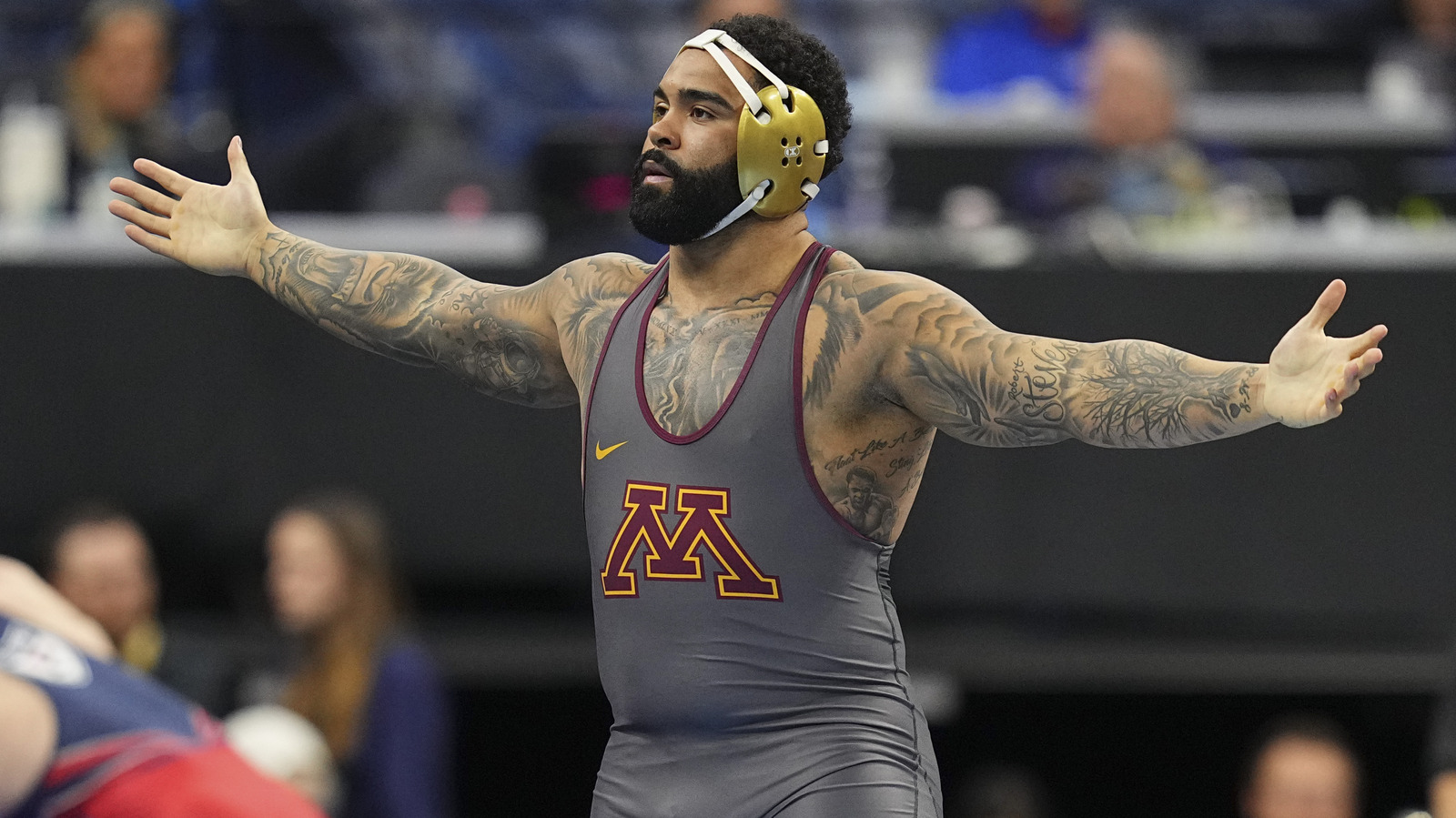
To truly appreciate the gap between his amateur peak and his professional valley, you have to rewind to the Tokyo Olympics. Down on points in the final seconds against Geno Petriashvili, a massive and heavily favored opponent, Steveson executed a spin-behind takedown with less than a second remaining on the clock. It was a display of sheer willpower and generational athleticism. That single sequence made him an overnight sensation and prompted the initial bidding war for his services.
His collegiate record at Minnesota was frankly absurd. He won two Dan Hodge Trophies, the collegiate wrestling equivalent of the Heisman.
- Three-time Big Ten Conference Champion
- Two-time NCAA Division I National Champion
- Finished his college career on a dominant 52-match winning streak
- Surrendered exactly zero takedowns during his entire senior season
That version of Gable Steveson is terrifying to any opponent. If his new promoters can tap into even a fraction of that relentless competitor, they have a massive draw on their hands. The problem is that we haven't seen that focused version of Steveson in years.
The Competitive Reality
The details of the multi-fight contract reported by WrestlingNews suggest this isn't just a quick cash grab exhibition. Steveson is committing to a schedule. He is committing to grueling training camps. This is a severe departure from the sporadic, start-and-stop nature of his WWE tenure, where he would disappear from television for months at a time.
But this deal is not a guaranteed success. While Steveson has been attempting to learn how to hit the ropes or rush an NFL quarterback, the grappling and combat sports world has continued to aggressively evolve without him.
He is stepping into an environment where his opponents have been grinding purely in this single discipline. The transition back to legitimate competition will require a total overhaul of his physical conditioning. You don't train for a demanding freestyle match the same way you train for a predetermined dark match in Orlando.
There is also a significant psychological component to consider. Steveson has been publicly humbled twice in the last few years. He was rejected by wrestling fans and abruptly cut by an NFL team. He needs to rebuild his shattered confidence. He needs to remember how to be the apex predator on the mat, rather than a confused rookie trying to remember his spots.
Assessing the Probability
The timing of this announcement provides a brutal contrast. WrestleMania 41 is exactly 25 days away in Las Vegas. When WWE originally signed him, this was the exact timeline where Steveson was projected to be main-eventing stadium shows and holding world championships. Instead of preparing for a marquee match at Allegiant Stadium, he is preparing to grapple at a convention center in Tampa. The juxtaposition tells the entire story of his derailed career.
For Real American Freestyle, this is a brilliant piece of business. They instantly inject mainstream intrigue into their upcoming card and future events. Even people who don't follow freestyle grappling closely will tune in just to see what Steveson looks like in a real competitive setting again.
For Steveson, it is a completely necessary reset. He is getting back to his roots. But the pressure is immense. If he steps onto the mat and looks sluggish, or gets easily handled by a specialized grappler, the narrative will become completely toxic. He will be permanently viewed as an athlete who wasted his prime athletic years chasing sports entertainment money instead of greatness.
This multi-fight contract guarantees we will see exactly what he has left in the tank. The hype is gone. The massive WWE corporate machine is no longer behind him. It is just Steveson, the mat, and an opponent who wants to make a career-defining name off a former Olympic gold medalist.