The Corporate Guillotine
There is a fundamental truth in professional wrestling economics that has held firm since the death of WCW: the office always wins.
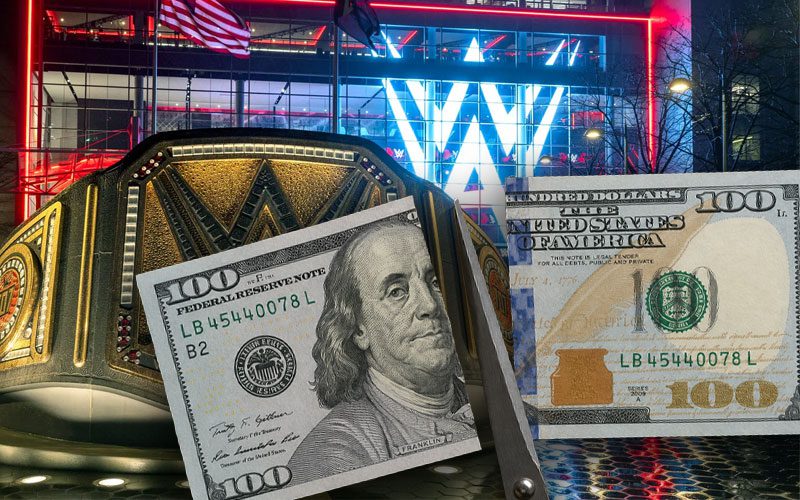
But the news breaking this week fundamentally alters how we understand the current contract market. According to WrestleTalk, a heavily pushed WWE talent has agreed to a staggering 50% pay cut. This comes amid a sweeping roster purge that has already seen over 20 names depart the company.
A pay reduction of that magnitude for an actively featured television character is virtually unprecedented.
We are used to hearing about pay cuts when veterans transition to part-time roles. We expect downside guarantees to shrink when a mid-card act is relegated to dark matches. But for someone currently receiving a significant push to accept half their previous salary? That is a blaring siren for the state of wrestling wages in 2026.
Let's look at the numbers.
During the peak of the WWE-AEW bidding wars, downside guarantees exploded. Mid-card talents who would have historically signed for $250,000 were suddenly commanding $500,000 or more. Management was terrified of losing optics. They stockpiled talent, artificially inflating the middle class of the locker room.
That era is dead. TKO's management style is ruthlessly efficient. They do not care about optics. They care about margins.
When you cut 20 talents in a single sweep, you send a message to the survivors. The message is simple: you are replaceable. The fact that an actively pushed star looked at the market and decided to forfeit half their guaranteed money tells us exactly how cold the business has become.
The Math of the Downside Guarantee
To understand why a talent would agree to this, we have to examine how WWE contracts actually function.
Wrestlers are not salaried employees. They sign downside guarantees. This is the absolute minimum they will be paid, regardless of whether they are main-eventing premium live events or sitting in catering for 12 months.
Let us run a conservative mathematical model. In 2021, standard main roster downsides for mid-card acts hovered around the $350,000 mark. But for a pushed star, the baseline was significantly higher. Based on historical leaks and court disclosures, a featured act likely commands a downside between $600,000 and $1.2 million.
If we assume an $800,000 guarantee, a 50 percent cut wipes $400,000 off the books immediately.
Now, consider the broader context of the recent purge. The WrestleTalk report notes that over 20 names have departed the company. If we assign a conservative average downside of $200,000 to those released talents, management just slashed roughly $4 million in guaranteed payroll.
By strong-arming one pushed star into a massive reduction, they achieved 10 percent of the savings generated by firing 20 people. It is brutal, detached corporate arithmetic.
But why would the wrestler agree?
In wrestling, television time is a drug. It is also the primary driver for ancillary income. If you are regularly featured on Monday Night Raw, your merchandise sells. You receive featured placements on shows like this Saturday's Backlash premium live event. You get a larger royalty check from the annual video game.
Management knows this. The negotiation likely wasn't a simple request to take less money. It was a threat. Take less guaranteed money, or we pull your television time, kill your push, and watch your merchandise sales plummet to zero.
Faced with losing the platform that drives their bonus revenue, the star capitulated. They traded guaranteed financial security for the continued opportunity to earn variable income.
The Impossible Merchandise Deficit
Making up that deficit is nearly impossible. If a wrestler loses four hundred thousand dollars in guaranteed downside, they have to make that up in merchandise just to break even.
A standard WWE t-shirt sells for roughly $35 on WWEShop. Standard talent royalties sit at 25 percent of net profits, which usually shakes out to about $1.50 to $2.00 in the wrestler's pocket per shirt sold.
To recoup a massive pay cut strictly through apparel, our pushed star needs to sell an additional 200,000 t-shirts this year. That is an impossible metric for anyone not named Cody Rhodes or CM Punk.
Premium live event payouts have also shifted. In the pay-per-view era, a spot on the WrestleMania card meant a life-changing payday based on buyrates. Today, the network model means bonuses are discretionary. Management decides what a Backlash or SummerSlam spot is worth. If you are already fighting off a massive pay cut, you have absolutely zero ground to argue over a discretionary bonus check.
The Shrinking Alternative
Five years ago, the answer was obvious. You turn down the pay cut, walk out the door, and answer a phone call from Tony Khan.
That negotiating power has vanished.
AEW has an incredibly bloated roster. While they are still handing out massive contracts to premier free agents, they are no longer writing blank checks to WWE mid-carders just to score a headline.
Between 2019 and 2022, AEW's strategy was aggressive expansion. They signed almost everyone who left Stamford, offering premium contracts to ensure they looked like a destination rather than a secondary option. But television time on Dynamite and Collision is finite. Khan is currently juggling a massive roster. He does not need another mid-card WWE castoff, regardless of how heavily they were pushed on Monday nights.
If a pushed WWE star balks at a pay cut and hits the open market today, they face a grim reality. AEW might only offer them a fraction of their previous WWE deal. New Japan Pro-Wrestling is battling a brutal exchange rate, making full-time relocation a massive financial downgrade. TNA Wrestling produces a solid television product, but their top contracts max out well below a standard WWE downside.
The free agent market in 2026 is a buyer's market.
The 20 names released recently will soon flood the independent scene. Promoters only have so much budget to go around. The supply of television-ready wrestling talent has vastly outpaced the demand for it.
The psychological impact on the locker room is profound. Wrestlers walk into the building for television tapings and see empty lockers. They see friends scrambling to update their Pro Wrestling Tees stores and begging for independent bookings on social media.
Gutting the Middle Class
We have not seen wage suppression like this since 2001. When Vince McMahon purchased WCW, he acquired a monopoly. Overnight, the massive guaranteed contracts handed out by Eric Bischoff and Ted Turner vanished. Wrestlers who were making millions were suddenly offered entry-level WWE deals or told to sit at home.
For two decades, WWE enjoyed that monopoly. Then AEW briefly resurrected the spirit of the Monday Night Wars. Wrestlers finally had an alternative, and wages skyrocketed across the board. What we are witnessing in 2026 is a violent market correction.
In major North American sports—the NFL, NBA, NHL—labor typically commands roughly a 50% split of league revenues through collective bargaining agreements. Professional wrestling has never operated in the same universe. Historically, WWE's talent compensation has hovered somewhere between 8 percent and 12 percent of total corporate revenue.
With the TKO merger, the mandate is clear: keep that percentage as low as possible.
What does this mean for the locker room? It means the middle class is about to be gutted.
WWE will always pay its legitimate needle-movers. The talent driving stadium ticket sales will always have bargaining power. But professional wrestling requires a massive supporting cast. It requires workers to fill out the undercard, to make the top stars look good, and to carry the grueling house show loops.
Those workers are now staring down the barrel of extreme austerity measures.
A talent taking half their pay to keep their spot on television is not a heartwarming story of betting on yourself. It is a grim warning to everyone else in the back.
If a heavily featured star couldn't hold the line against a pay cut, the lower card has zero chance. We are likely entering a period where WWE relies increasingly on short-term, lower-guarantee contracts for its mid-card. They will cycle through NXT talent on cheap entry-level deals, chew them up on the main roster, and discard them before they hit their second contract phase where they would traditionally demand a raise.
This is a dark shift for labor in professional wrestling. The hoarding era is officially over. Welcome to the era of corporate efficiency.