The Road to WrestleMania Just Got a Legal Detour
Here we are, barreling down the highway to WrestleMania 41. The sign for Vegas is glowing in the distance, just over three weeks away. Everything should be about Cody's title defense, Cena's last ride, and the glorious pageantry of it all. But just when you think WWE's corporate ship is sailing smoothly on a sea of Peacock money, they hit a legal iceberg. And now, a giant mouse-eared tugboat named ESPN is getting involved.
Back in January, a couple of fans got fed up and filed a class-action lawsuit against WWE. The core of their argument revolves around the messy, frustrating world of Premium Live Events (PLEs) and where you can actually watch them. You know the deal. You pay for a service, you expect to get the thing you paid for. When you don't, you get angry. In this case, the anger was enough to drag WWE into federal court.
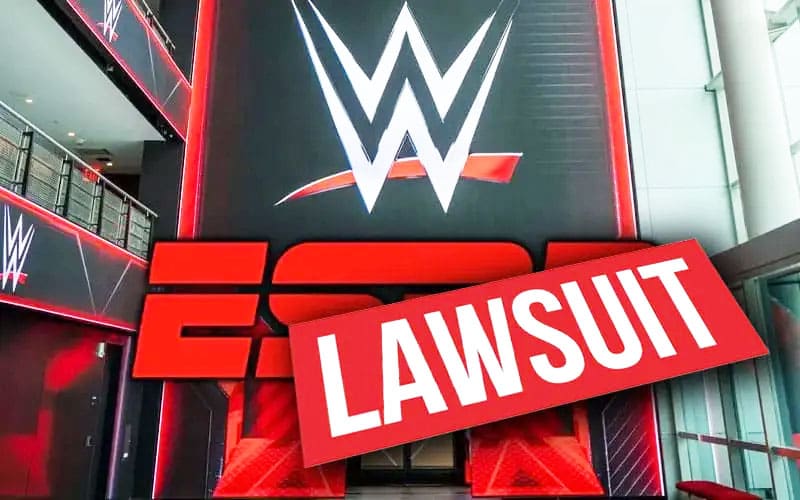
For a few months, it was just another corporate headache for WWE to deal with. But now? ESPN has filed a motion to intervene. The Worldwide Leader in Sports just tagged itself into the match, and it's not on the side of the fans.
Disney's Lawyers Enter the Ring
So, why would ESPN, a business partner of WWE's rival AEW, jump into this specific mess? The answer is a piece of corporate legalese that should send a shiver down every consumer's spine: compelling arbitration.
ESPN isn't joining the lawsuit to help the fans or to stick it to WWE. They're jumping in to kill the lawsuit entirely. By filing a motion to compel arbitration, they are trying to force the entire dispute out of a public courtroom and into a private, closed-door process. It's the corporate equivalent of a wrestler dragging their opponent under the ring to beat them with a wrench where the referee can't see.
Think about it. When you sign up for ESPN+, or Peacock, or any of the dozen streaming services you need to watch sports, you scroll past a massive wall of text—the terms of service. Buried in that fine print is almost always an arbitration clause. It basically says that if you have a problem, you agree not to sue. Instead, you'll take your complaint to a private arbitrator, often one chosen by the company you're mad at. It's a system designed to protect corporations from accountability.
ESPN's argument is that the fans who filed the suit are ESPN+ subscribers, and therefore, they are bound by that arbitration clause. They want a judge to look at the case and say, "Sorry, you guys agreed to play by our rules. Case dismissed. Go talk to our arbitrator." It’s a brutal, but effective, legal maneuver.
The Real Losers Here? The Fans.
This is where it gets infuriating for the average person who just wants to watch the Royal Rumble without seven logins and a law degree. ESPN's move is a clear power play to reinforce the idea that consumers have almost no real power. You can give them your money, but the second you have a legitimate complaint, they point to a legal document you never read to shut you up.
If ESPN is successful, the class-action lawsuit could die before it ever really gets started. Arbitration is a black hole for consumer complaints. The proceedings are private, the decisions aren't public record, and there's very little room for appeal. It prevents a big, public discovery process where WWE or its partners might have to reveal embarrassing details about their operations or contracts. It keeps the whole dirty business in-house.
The critical flaw in this whole model is the complete imbalance of power. You, the fan with a nine-dollar-a-month subscription, are supposed to go toe-to-toe with the legal department of The Walt Disney Company. It's a squash match. It’s Brock Lesnar versus a local enhancement talent, and the outcome is never in doubt. The whole system is designed to make you give up.
A Tangled Web of Streaming Nonsense
This lawsuit, and ESPN's intervention, is a perfect snapshot of the garbage fire that is modern sports media rights. Everything is sliced up across different platforms, each with its own subscription fee and user agreement. WWE PLEs are on Peacock in the US, but the WWE Network elsewhere. AEW is on TBS and TNT, but their pay-per-views are on Bleacher Report or, yes, sometimes even ESPN+ in other regions. It’s a mess.
Companies like WWE and ESPN want to have it both ways. They want your subscription money, but they want zero liability when the service is confusing, or buggy, or doesn't deliver what was promised. They build a labyrinth of contracts and terms of service, and the second someone shows up with a map and a lawyer, they try to tear the whole building down.
While WWE's top brass is likely popping champagne over their stock price and the road to Vegas, this lawsuit is a reminder of the simmering frustration among the people who actually pay for the product. Now, with ESPN running interference, it looks like another case where the house—or in this case, the Mouse—always wins.