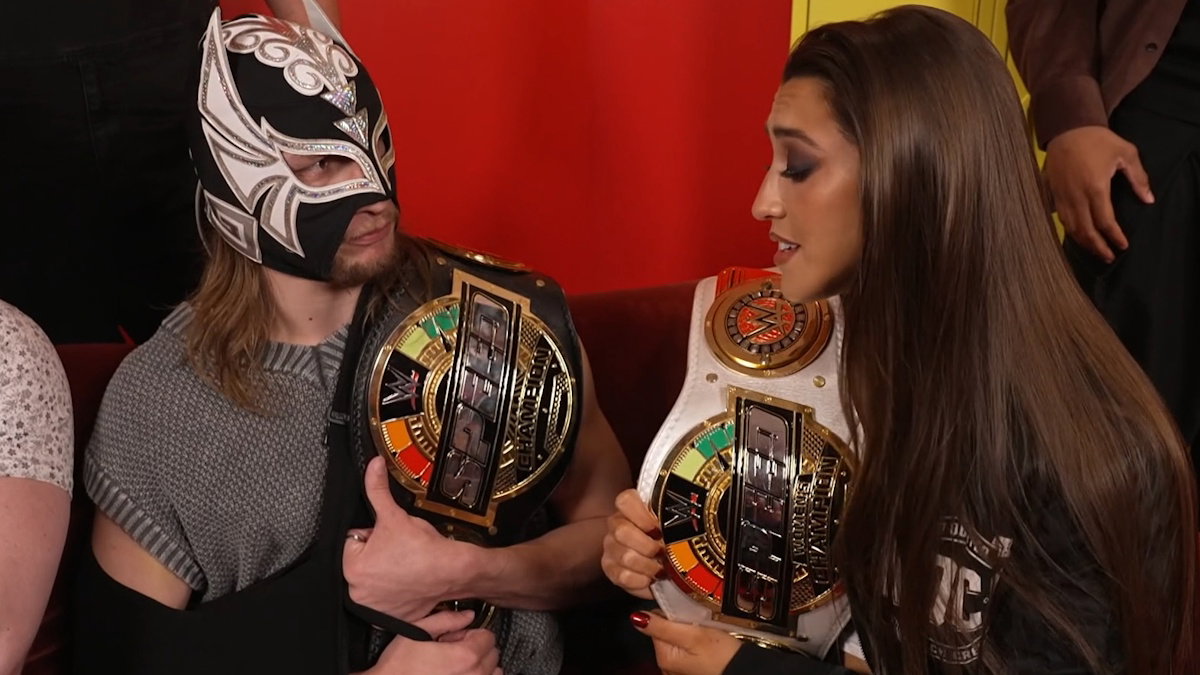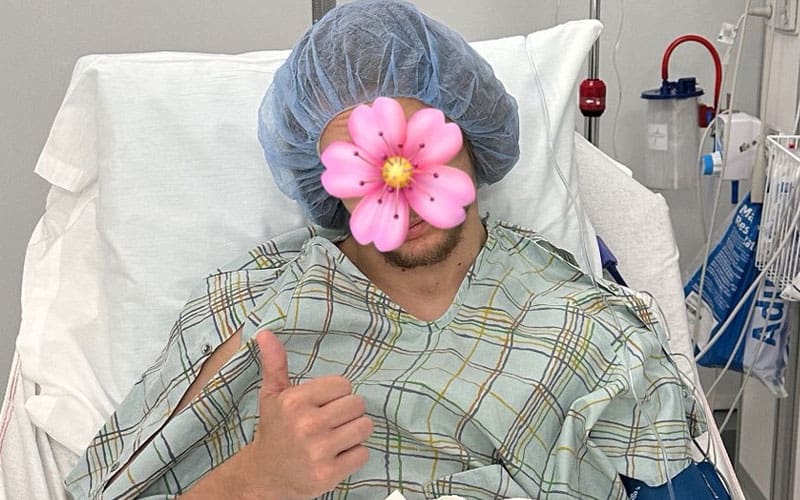
Elio LeFleur’s momentum just hit a concrete wall. The rising NXT star underwent successful surgery on April 7 to repair a torn labrum and damaged ligaments in his shoulder. This confirms the worst fears following a spot gone wrong at an untelevised NXT live event in Lakeland, Florida, on March 20. The recovery timeline points to a grueling six months on the shelf. If rehabilitation goes smoothly, LeFleur will not see a WWE ring again until at least October.
This is a brutal setback for a performer who was quietly building one of the most compelling resumes on the brand. LeFleur was officially forced to vacate the WWE Men's Speed Championship on the March 31 episode of NXT. He held the belt for just 34 days. That stands as the shortest reign in the short history of the championship. The abrupt end to his run is a massive blow to the wrestler and the promotion alike.
The timing is objectively terrible. We are exactly ten days away from WrestleMania 41 in Las Vegas. LeFleur was expected to be heavily featured across the weekend, particularly during the Stand & Deliver festivities. Now, instead of a marquee title defense on the biggest weekend of the calendar, he faces half a year of physical therapy. He misses the payday, the exposure, and a massive career milestone.
As WrestleTalk reported, the injury was severe enough to immediately pull him from television. The quiet nature of the Lakeland incident left fans guessing for weeks. The lack of an immediate televised angle to write him off only added to the confusion. WWE eventually ripped the band-aid off, confirming the surgery and launching a new tournament to crown his successor. The handling of the news was clunky at best, leaving the audience completely in the dark until the title was formally stripped.
The Problem with the Speed Division
LeFleur’s injury exposes a glaring flaw in WWE’s recent creative strategy. The WWE Men's Speed Championship is built entirely on the premise of rapid-fire, high-risk offense compressed into tight broadcast windows. You are incentivizing talent to work at a reckless pace. The margin for error shrinks significantly when the format demands immediate escalation.
When you rush the work, the body pays the toll. This isn't the first time the division has struggled to maintain its own breakneck pace. The format practically begs for shoulder and knee blowouts. LeFleur, formerly known as Aigle Blanc on the European independent circuit, is a spectacular athlete. He built his reputation on precision. But even the sharpest workers cannot outrun the sheer physics of the Speed format. Gravity always wins.
Booking a division entirely around adrenaline and risk is a fundamentally flawed strategy. It turns the mid-card roster into cannon fodder. Management clearly wants the viral engagement of quick highlight clips for social media platforms. They got them. But they also got a vacated title and a star sitting in a sling. The tournament to crown a new champion is already underway, but the shine is completely off the belt right now.
This is exactly what critics feared when the Speed concept was first pitched. It reduces professional wrestling to a sequence of isolated stunts. The narrative suffers because there is no time to breathe or sell. The talent suffers more because they are constantly launching themselves into the void. WWE needs to take a hard look at the match agents and the instructions being handed down to the locker room. If the mandate is to sprint through every single sequence without exception, this injury will not be an isolated incident.
The Reality of the Florida Loop
NXT live events are a necessary proving ground for developing talent. The so-called "coconut loop" around Florida towns like Lakeland, Tampa, and Orlando is where reps are logged. It is where timing is perfected. But it is also a dangerous, untelevised gauntlet that has claimed many careers.
Working in front of two hundred people on a Friday night carries the exact same physical risks as working a stadium show in front of seventy thousand fans. The mat is just as hard. The ropes are just as unforgiving. We have seen this tragedy play out multiple times in recent WWE history. You can trace a direct line from LeFleur’s current situation back to Finn Bálor popping his shoulder at SummerSlam 2016, or Tommaso Ciampa constantly battling his own body during his prime NXT run.
Samoa Joe had to vacate the NXT Championship multiple times due to sudden injuries. Karrion Kross won the top prize and immediately surrendered it the next night because of a separated shoulder. LeFleur joins a miserable fraternity of champions forced to hand over their gold to a referee rather than a physical opponent in the ring. The history of NXT is littered with vacated titles.
The labrum is a notoriously difficult tear to bounce back from. The shoulder joint relies heavily on that ring of cartilage for basic stability. Surgical repair means anchoring the tissue back to the bone with sutures. The first eight weeks are almost entirely immobile. Attrition in professional wrestling is guaranteed, but a torn labrum steals a performer's base strength. Taking bumps on a surgically repaired shoulder changes how a wrestler moves for the rest of their career.
Scrambling for a Replacement
LeFleur’s absence creates a massive vacuum on Tuesday nights. He was not just holding a prop; he was the functional anchor of the mid-card. Now, the creative team has to scramble to rewrite two months of television. The original plans for the spring are completely burned.
As noted by Ringside News, the surgical update was directly provided by the talent, confirming the long road to recovery has officially started. But WWE television stops for no one. The Speed Championship tournament feels like a rushed patch job. They are throwing random bodies into a bracket simply to keep the television format alive. There is no real story being told here.
There is a strong argument to be made that they should have simply retired the belt. Handing a vacated championship to the winner of an improvised tournament rarely gets the new champion over. It feels like an administrative correction rather than an organic triumph. The fans know who the real champion was. They know he never actually lost the belt in a match. Whoever wins this tournament will immediately be branded with an asterisk by the audience.
The lack of depth in the Speed division is now glaringly obvious. Without LeFleur anchoring the matches, the tournament is largely populated by lower-card talent trying to get a brief television appearance. WWE leaned far too heavily on one man to carry a flawed concept.
Looking Ahead to October
When October rolls around, LeFleur will have a built-in redemption story waiting for him. The pop for a returning, unpinned champion is always loud. The narrative writes itself. He never lost his title, and he has returned to reclaim his property.
But six months is an absolute eternity in the current wrestling climate. By the time the fall arrives, the roster will look entirely different. The post-WrestleMania draft will have shuffled the deck dramatically. Main roster call-ups will gut the top of the NXT card. New international signings will have debuted and established their own fanbases. The makeup of the brand will be unrecognizable compared to today.
LeFleur will not just be battling ring rust when he finally gets cleared. He will be fighting for television time in a totally reshaped hierarchy. Management has a very short memory. If someone else gets hot over the summer, LeFleur’s guaranteed title shot could quietly disappear. He has the pure talent to climb the mountain again. But the Lakeland injury robbed him of his most valuable asset: timing. He was on the verge of breaking out. Now, he has to start from scratch.