The Riyadh Sprint and the Weight Disparity
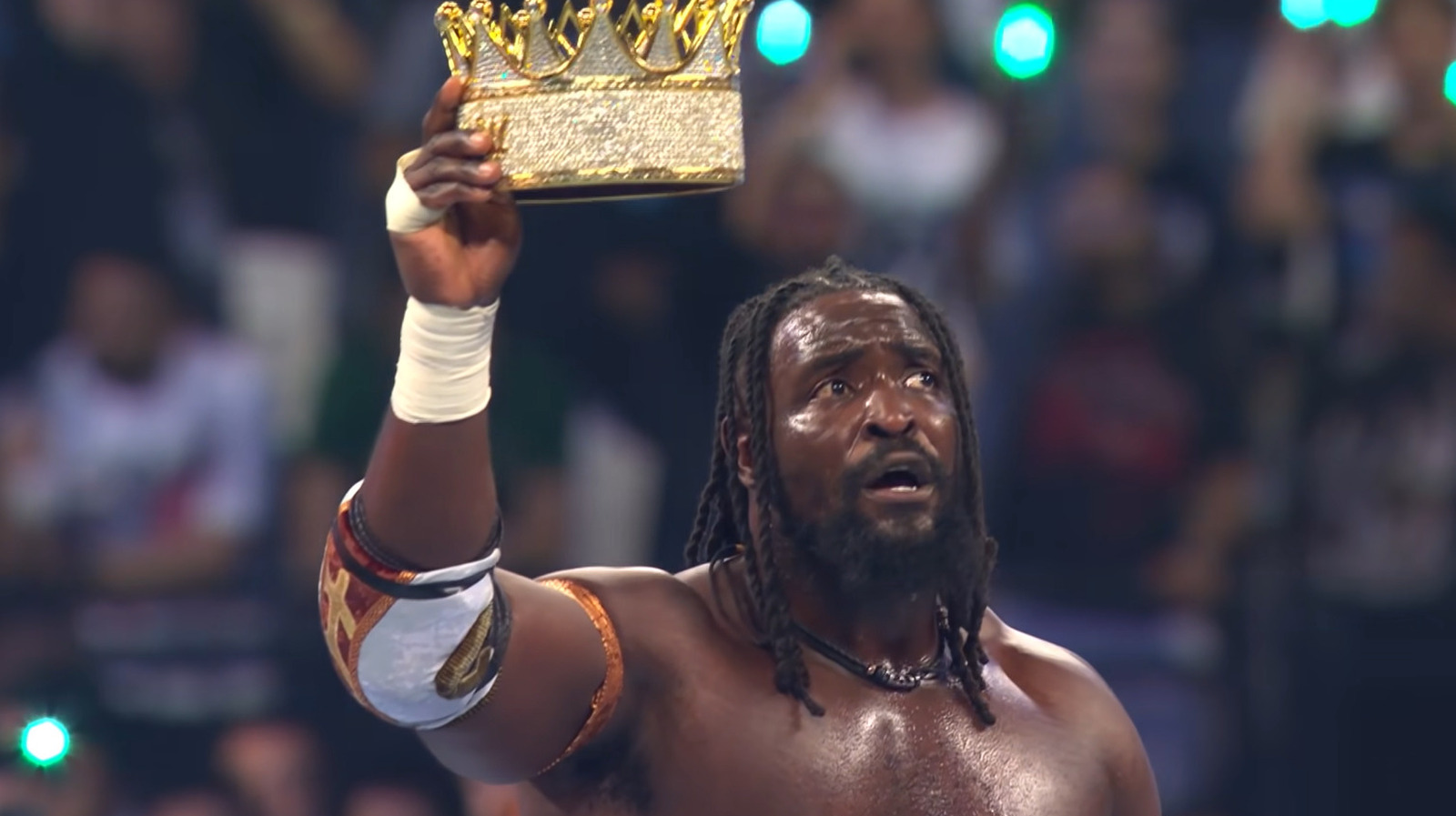
In the 29-year history of modern WWE King of the Ring finals, the average match duration sits at fourteen minutes and twelve seconds. On June 27, 2026, at the Kingdom Arena in Riyadh, Saudi Arabia, Oba Femi shattered that historical baseline. The powerhouse from Lagos, Nigeria, pinned Jey Uso in exactly 7 minutes and 48 seconds to claim the crown.
But the brevity of this match did not point to a clean, dominant sweep. Instead, it exposed a tactical vulnerability that Jey Uso exploited and Booker T highlighted. At the 5:42 mark, Femi was locked in a sleeper hold that nearly ended his rapid ascent to the main roster.
The physical and statistical metrics of this finish deserve a cold, analytical breakdown. Booker T was quick to raise alarms, stating on his podcast that Oba Femi had tapped out and Jey Uso should be the rightful King. The controversy has sparked intense debate among fans, questioning whether the referee made a critical error in judgment.
This match was a collision of statistical profiles that ended in controversy. To understand the gravity of the situation, we must first break down the tournament path that brought these two men to Riyadh. The numbers reveal contrasting tactical approaches and statistical anomalies.
The Statistical Improbability of the Fatal Four-Way
The 2026 King of the Ring tournament utilized Fatal 4-Way matches in the opening round, reducing a favorite's chance of advancing to just 25%. In his opening tournament bout, Oba Femi won the men's King of the Ring tournament opening stage by defeating Carmelo Hayes, Solo Sikoa, and Penta.
In a multi-man environment, a powerhouse cannot rely on isolation. Femi’s victory was a statistical outlier, securing the pinfall while absorbing only three significant strikes. His efficiency in multi-man matches remains historically high.
Jey Uso advanced by overcoming LA Knight, Royce Keys, and Finn Bálor. Uso spent 40% of the match outside the ring, letting his opponents wear each other down. This tactical patience allowed him to enter the semifinals fresh, where he defeated Je'Von Evans.
Oba Femi dismantled Dominik Mysterio in the semifinals despite interference from the Judgment Day. Femi’s power bypassed the numbers game of the faction. However, it concealed the tactical flaws Jey Uso exposed in the finals at WWE Night of Champions 2026.
The Physics of a 68-Pound Weight Disparity
To understand why the final match ended so quickly, we must look at the massive weight differential. Billed at 6-foot-6 and 310 pounds, Oba Femi held a 28% mass advantage over the 242-pound Jey Uso. In wrestling physics, a larger mass allows a competitor to absorb impact and dictate the center of the ring.
Femi’s center of gravity remained immovable for the first three minutes. Jey Uso avoided a traditional grappling contest against the former shot put champion. His solution was velocity, hoping to wear down Femi with aerial maneuvers.
Uso executed two suicide dives and two top-rope splashes. This high-risk strategy gave Jey Uso a temporary offensive efficiency rate of 75% in the opening minutes. However, high-velocity offense has a steep cardio tax.
By the five-minute mark, Uso's offensive output dropped as Femi cut off a third dive with a forearm. That strike changed the momentum, forcing Uso to pivot to a submission strategy. This brings us to the most controversial sequence of the entire tournament.
"Oba tapped. Oba tapped. Oba tapped. Jey Uso should be the King of the Ring. They might need to put an asterisk by this win. I'm just saying. But I'm proud. I'm proud of Oba Femi going out there and becoming the King of the Ring now."
The Mechanics of the Sleeper Hold Controversy
At the 5:42 mark, Jey Uso locked in a sleeper hold from behind. Femi, carrying Uso's 242-pound frame on his back, dropped to a single knee. The camera angle from the hard cam showed Femi's right arm striking the canvas twice in rapid succession.
In professional MMA, two distinct slaps on the mat constitute a submission. Jey Uso, believing the match was won, momentarily loosened his grip. This split-second hesitation allowed Femi to power out and execute two running uppercuts before hitting his finisher, the "Fall From Grace."
A closer look at the referee's line of sight explains the non-call. The official was positioned on Femi's left, looking at the lock of the sleeper hold under the chin. From that angle, Femi's right hand was completely obscured by Jey Uso's torso.
Femi did not tap; he was using the mat to find purchase to push himself back up. By striking the canvas, he was attempting to find a base to execute a rear escape. This action was misinterpreted by Uso, highlighting the danger of referee positioning.
As Booker T raised concerns, this moment split the audience. The lack of an immediate replay review remains a glaring officiating issue. In modern wrestling, camera angles still dictate the narrative of a match.
From NXT Dominance to the SummerSlam Trap
This controversy stands in stark contrast to Femi's NXT run. During his historic reign as NXT North American Champion, which lasted for 273 days, Femi was untouchable. He defended the title ten times, averaging a defense every 27.3 days.
Comparing NXT Dominance and Main Roster Scrutiny
In those ten matches, Femi won eight by pinfall and two by stoppage, never once finding himself in a submission hold. His reign was built on clean finishes. The main roster, however, presents a different level of tactical complexity.
Uso analyzed over a decade of televised match data to target Femi's slow lateral movement. He exploited this with circle-routing before applying the sleeper. Femi must shore up his submission defense immediately.
Booker T, who ruled as King Booker in 2006, offered advice to the new King. He warned that critics will judge Femi based on the quality of his reign. He advised Femi to rule with an iron fist.
Oba Femi's NXT Championship Reign Defenses
Here is a breakdown of Oba Femi's ten successful title defenses during his historic 273-day NXT North American Championship reign. This list showcases his dominant path to the main roster before his King of the Ring run:
- Defeated Dragon Lee at NXT Vengeance Day (February 4, 2024)
- Defeated Lexis King on NXT (February 20, 2024)
- Defeated Brooks Jensen on NXT (March 12, 2024)
- Defeated Dijak and Josh Briggs at NXT Stand & Deliver (April 6, 2024)
- Defeated Ivar at NXT Spring Breakin' (April 30, 2024)
- Defeated Joe Coffey and Wes Lee at NXT Battleground (June 9, 2024)
- Defeated Wes Lee at NXT Heatwave (July 7, 2024)
- Defeated Duke Hudson on NXT (July 16, 2024)
- Defeated Otis on NXT (August 13, 2024)
- Defeated Tony D'Angelo at NXT No Mercy (September 1, 2024)
Despite the controversy, WWE has decided to move forward with the official result. Femi is already locked into his next major program, which will culminate in a Hell in a Cell match against Brock Lesnar at SummerSlam in August 2026. This match represents a massive step up in competition and physical danger.
Lesnar remains a master of the Kimura Lock and the rear-naked choke. If Jey Uso made Femi slap the canvas in under six minutes, Lesnar will target that vulnerability inside the cell. The statistical probability of Femi surviving is low if he repeats his errors.
Femi must adjust his ring positioning and hand-fighting before entering the cell. The crown should be a springboard, not a trap. Without addressing this asterisk, his reign will be remembered for a referee's missed call.
The numbers show power alone will not protect him from Brock Lesnar inside Hell in a Cell. He must adapt or face a short, painful reign. The tactical shift must begin immediately.
Read Next
- WWE has a massive Oba Femi problem after the King of the Ring finals
- Why Roman Reigns cannot shake his Seth Rollins statistical curse
- Cody Rhodes is heading for another heartbreak at SummerSlam
- NXT is preparing a massive raid on the wrestling free agent market
- 💥 WWE Backlash 2026 — Full Coverage Hub
- 👑 Roman Reigns Return 2026 — The Tribal Chief