The Anomaly of the 0-3 Record
Roman Reigns has won dozens of championship matches over the last decade. But his record against Seth Rollins in singles matches on Premium Live Events is a clean 0-3. For a performer who held the Universal Championship for 1,316 days, this is the ultimate statistical anomaly.
Reigns has defeated every major star of his generation. Yet Rollins remains his statistical nightmare. On the June 29 episode of Raw in Atlantic City, Rollins stood in the ring and laid out this historical dominance to Reigns' face, setting up a World Heavyweight Championship clash at SummerSlam.
The numbers behind their fourteen-year relationship tell a story of psychological ownership. Rollins noted that while Reigns has vanquished every other challenger, he has never truly defeated Rollins when it matters most. This is not just a standard wrestling rivalry; it is a documented statistical hex.
In their singles PLE encounters, Rollins has consistently found ways to exploit Reigns' emotional triggers. This was most notable at Royal Rumble 2022 when Rollins won by disqualification after Roman refused to break a guillotine choke. Rollins' ability to get inside Reigns' head has resulted in a 100% success rate in preventing Reigns from beating him in one-on-one PLE matches.
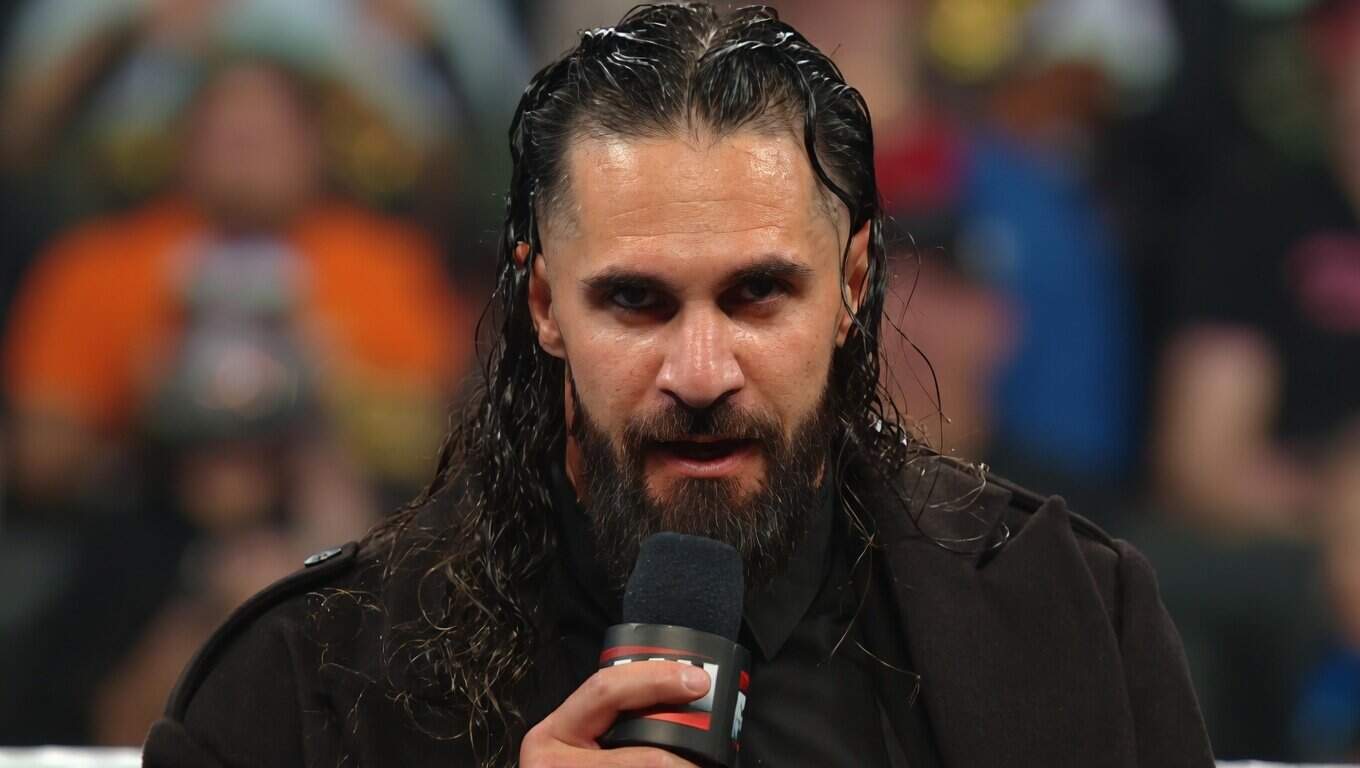
Rollins' presentation on Monday night reflected a shift back to the cold, focused executioner that fans have missed. Dressed in all black with his hair slicked back, he delivered his arguments with a level of clarity and bass in his voice that resonated throughout Boardwalk Hall. On Busted Open Radio, Bully Ray praised the promo:
"I'm sitting by myself, pointing at the TV, going, that’s the guy, that’s the guy right there that we have wanted for so long."
The segment successfully established why Rollins, despite Reigns' historic dominance over the rest of the roster, represents a unique tactical threat. By accepting the challenge, Reigns is risking his legacy against the one opponent who holds the mathematical advantage over him. It is a gamble driven by pride rather than logic.
The Oba Femi Equation: A Risky Devaluation of Title Equity
While the main event scene leans into established history, the booking of the King of the Ring winner Oba Femi raises serious statistical questions. Femi won the tournament at Night of Champions on June 27, earning a guaranteed world title shot at SummerSlam. Yet, on Monday's Raw, Femi voluntarily put his championship match on hold to challenge Brock Lesnar.
As Wrestling Inc reported, Bully Ray defended this decision. Ray argued that Paul Heyman did a masterful job of convincing RAW General Manager Adam Pearce that a Femi-Lesnar match is bigger than any world championship match. From an analytical perspective, however, Femi is giving up immense asset value.
In professional wrestling, a guaranteed title shot at a major PLE is the highest-value contract a competitor can hold. By trading that guaranteed shot for a Hell in a Cell match against Lesnar, Femi is taking on a massive physical risk with zero immediate title equity return. It is a poor business transaction.
Commentator Michael Cole noted on the broadcast that Lesnar has never lost a Hell in a Cell match. This adds to the statistical mountain Femi must climb. Entering a cell match with a wrestler of Lesnar's physical destruction rate is a decision that violates basic career-risk management.
This booking pattern also creates a logistical bottleneck for Raw's championship division. If Femi defeats Lesnar, he will have survived the most punishing match in the industry, but he will still be empty-handed. If he loses, his momentum as the dominant King of the Ring winner is instantly erased.
The choice to put a fresh, ascending talent into a high-risk, non-title feud immediately after a major tournament win represents a questionable allocation of roster resources. Femi might claim he can have a championship match whenever he wants, but the history of lost opportunities suggests otherwise. In the numbers game, momentum is an unstable currency.
Mid-Card Inefficiencies and the Pacing Problem
The undercard of Monday's Raw highlighted a growing inefficiency in match pacing and booking distribution. The opening contest saw Rey Mysterio defeat Ethan Page in 11 minutes after executing a 619 and a frog splash. While the in-ring action was athletic, the result creates a damaging chain reaction for the roster's younger talent.
Page lost to Dragon Lee last week, and by losing to Mysterio this week, both Page and Lee are diminished. Pitting newer prospects against a 51-year-old semi-retired veteran only to have the veteran win clean does little to build the future of the division. It is a short-term booking decision that yields negative long-term interest.
This pacing discrepancy was even more apparent in the match between Joe Hendry and Austin Theory. According to the Raw Hits & Misses report, Hendry defeated Theory in a match that lasted only six minutes. Worse, the match actually began during a commercial break.
Theory, a former United States Champion, is being positioned as a minor obstacle rather than a credible threat. Starting a match off-screen and wrapping it up in under 360 seconds prevents either competitor from establishing a narrative flow. It devalues Theory's standing and makes Hendry's victory feel like an afterthought rather than a significant step forward.
The women's division suffered from a similar issue with Raquel Rodriguez defeating Maxxine Dupri in just four minutes. Rodriguez used the Tejana Bomb for the pinfall to earn an Intercontinental Championship match against Sol Ruca. While Dupri showed some mechanical progression, a four-minute showcase is not enough time to tell a compelling story.
The contrast between Mysterio getting eleven minutes to defeat a rising star and the women's title contender getting four minutes to execute a squash match shows an uneven distribution of ring time. When match times are skewed so heavily, the division's depth becomes statistical background noise.
The Bloodline Factor and Match Flow Distractions
The longest match of the night was Jimmy Uso against LA Knight, which went thirteen minutes before Jimmy secured the win. As detailed in the PWTorch Raw results, the match was heavily disrupted by outside elements. Jey Uso was on guest commentary, which distracted from the physical work in the ring.
The finish came when Jey Uso caught LA Knight's eye from the apron, allowing Jimmy to roll up Knight for the pinfall. This finish, followed by Solo Sikoa's post-match attack and a Samoan Spike, represents a reliance on repetitive interference that hurts the athletic integrity of the contest. It is a predictable formula.
Jimmy Uso's in-ring pacing has improved, and his matches are showing a better flow than they did earlier in the year. However, the constant presence of the Bloodline narrative continues to overshadow the work rate. Knight's post-match attack on Jimmy, followed by Jey's intervention and Solo's subsequent attack, means the physical resolution of the match was entirely dictated by external storylines.
When matches are used purely as backdrops for character angles, the statistical value of the wins and losses begins to decay. WWE must find a better balance between episodic storytelling and ring work if their mid-card is to maintain its competitive weight.
Read Next
- Why Seth Rollins is Roman Reigns' ultimate statistical nightmare
- Why Seth Rollins is guaranteed to dethrone Roman Reigns at SummerSlam
- Why Roman Reigns vs Seth Rollins at SummerSlam is exactly what WWE needs
- Cody Rhodes is heading for another heartbreak at SummerSlam
- 🏆 WrestleMania 41 — Full Coverage Hub
- 💥 WWE Backlash 2026 — Full Coverage Hub
- 👑 Roman Reigns Return 2026 — The Tribal Chief