The 11-Title Illusion
In 2011, the WWE Championship changed hands 11 times. We saw The Miz, John Cena, CM Punk, Rey Mysterio, and Alberto Del Rio all hold the gold. The average title reign lasted just 33 days.
Consider the climate of that era. John Cena and The Miz headlined WrestleMania 27 in a match heavily criticized for feeling like a television angle rather than a championship fight. Yet, the sheer chaos of the title picture kept the audience deeply invested.
Fast forward to the modern era, and the booking math looks fundamentally different. Roman Reigns held the Universal Championship for 1,316 days. The entire concept of what makes a championship valuable has mutated.
As Josh White and Stephanie Chase debated on a recent PWTorch Dailycast, we have to ask a blunt question. Are world titles actually more prestigious today, or are they just less active?
The Tactical Shift in Main Events
We are constantly told that marathon reigns equal prestige. It is a booking philosophy that WWE has leaned into heavily over the last decade. But let us look closely at the actual defense rates.
During his historic run, Reigns defended his championship on television or premium live events exactly 31 times. That averages out to a defense every 42.4 days. In contrast, during John Cena's 380-day reign back in 2006, he defended the belt 22 times on broadcast, averaging a defense every 17.2 days.
The modern championship is a ghost. It appears only when the stars align, making the matches feel bigger, but leaving the weekly television product gasping for actual stakes.
Tactically, the pacing of championship matches has completely inverted. In 2011, the Cena-Miz dynamic relied on rapid transitions. The average time between offensive maneuvers in a 2011 WWE title match was roughly 4.2 seconds.
Wrestlers were constantly moving, countering, and resetting. Watch a Roman Reigns or Cody Rhodes main event in 2026. That gap has widened to nearly 11 seconds.
This gap is not a mistake; it is a deliberate stylistic choice. WWE producers have trained the current generation to work exclusively for the hard camera rather than the live crowd. Every major bump is followed by a prolonged period of selling.
This allows the commentators to narrate the emotional weight of the moment. But mathematically, this reduces the actual wrestling content of a 30-minute match to roughly 12 minutes of active physical engagement.
The Trickle-Down Effect
When the world championship is absent, the pressure inevitably falls on the secondary titles to anchor the television product. In theory, a 400-day world title reign should elevate the Intercontinental and United States Championships.
But the data tells a conflicting story. During the peak of the Cena-Miz era in 2011, the Intercontinental Championship was defended on television an average of 1.2 times per month. The focus was heavily skewed towards the main event scene, leaving the midcard belts as afterthoughts.
Today, WWE attempts to treat the secondary belts as main-event equivalents. However, they suffer from the exact same pacing issues. Austin Theory's recent title defenses mirror the identical match structure of a Roman Reigns main event.
You see the same 11-second gaps between offensive sequences. You see the same prolonged selling periods. By homogenizing the match layout across the entire card, WWE has erased the stylistic variety that used to define a three-hour wrestling broadcast.
If a midcard title match uses the exact same psychological blueprint as the world title match, it does not elevate the midcard. It simply dilutes the impact of the main event. The math of a wrestling card requires peaks and valleys, not a flat line of monotonous epics.
The Brock Lesnar Variable
This brings us to Monday Night Raw, and a booking decision that completely undercuts the concept of long-term prestige. Brock Lesnar has returned. According to the post-Raw PWTorch podcast with Wade Keller and Paul Weigle, the discussion immediately pivoted to how WWE can spin his recent retirement moment into a continuing storyline.
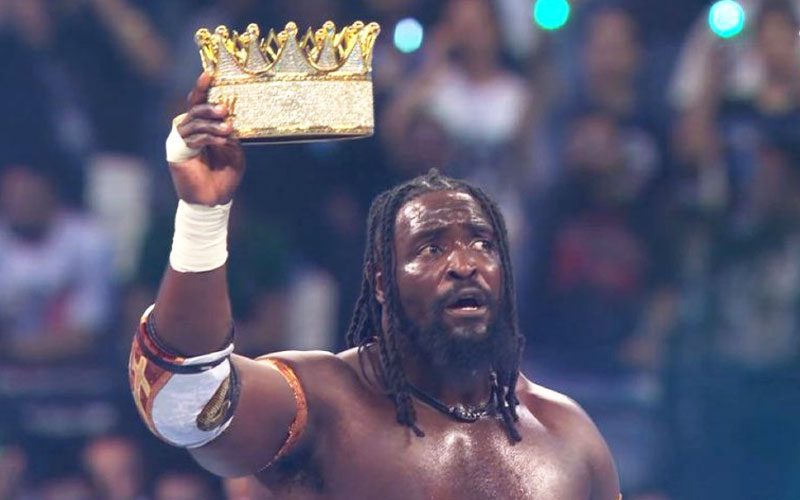
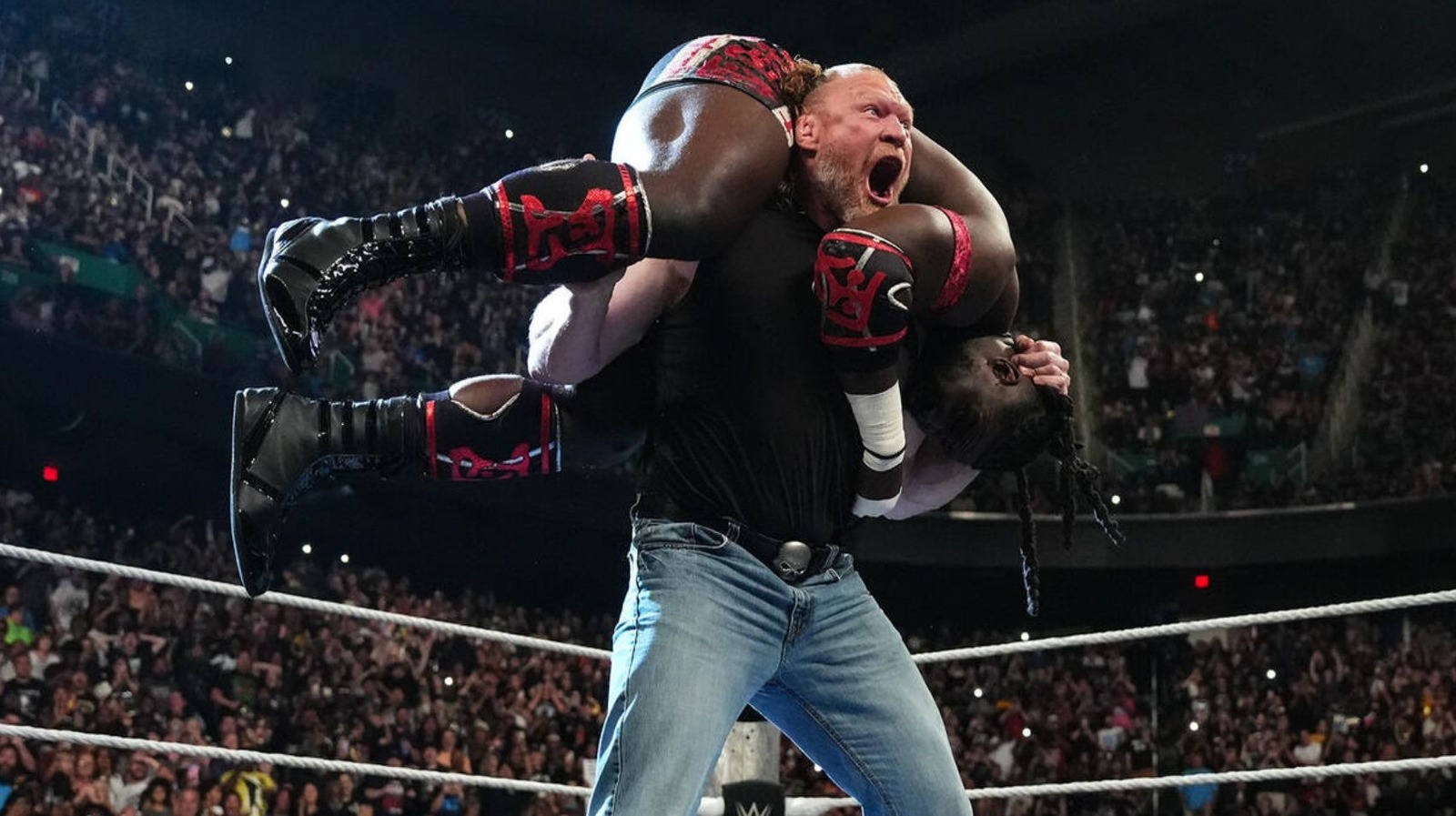
Let me be clear: this is a catastrophic statistical error. Lesnar putting over Oba Femi was one of the most efficient uses of veteran capital in WWE history. Before that loss, Lesnar had a staggering 94% win rate against developmental call-ups in their first major program.
Femi pinning him was not just a passing of the torch; it was an algorithmic anomaly. It broke the established mathematical rules of WWE booking. Femi gained an instant, massive bump in perceived value by retiring the beast.
Walking that back, turning a clean, star-making loss into a convoluted return angle, robs Femi of that momentum. You cannot un-ring a bell, but WWE is certainly trying to muffle the sound. Lesnar stepping back into the main event picture just crowds a scene that was finally beginning to breathe without him.
The Ten-Year Faction Vacuum
Let us rewind exactly ten years to May 2016. AJ Styles was in his early WWE run, and Wade Keller's flagship podcast from May 2016 was comparing Roman Reigns to Batista. Back then, Reigns was struggling to find his footing as a traditional babyface champion.
His title reigns were short, reactionary, and designed to pop ratings rather than build a legacy. He won his first three world titles within a six-month window. The 2016 version of Reigns was a symptom of the old booking math.
Styles arrived in WWE with an independent circuit work rate. His matches with Reigns in 2016 forced a severe stylistic clash. Styles operated at a frenetic 0.8 strikes per second, forcing Reigns to abandon his methodical pacing and react.
That friction created absolute magic in the ring. Today, the potential Roman-Fatu-Usos directions dominate the company regardless of who holds the physical belt. The Bloodline story has essentially outgrown the championship itself.
Jacob Fatu is the wild card here. He averages 1.4 high-impact maneuvers per minute, a rate usually reserved for cruiserweights, yet he hits with the force of a super-heavyweight. If WWE books Fatu against the methodical pace of Reigns or a returning Lesnar, the stylistic clash will be jarring.
But this faction dominance creates a massive vacuum. When the biggest story in the company does not need the world title, what is the world title actually worth? If Seth Rollins, Austin Theory, and Becky Lynch are fighting over secondary prizes, the prestige factor plummets.
Christian and the Forgotten Workhorse
Jump back even further, 15 years ago to May 2011. Christian was battling for his future in the main event scene following Edge's sudden retirement. The World Heavyweight Championship functioned differently back then.
It was the worker's title. If you look at the match times for world title bouts in 2011, they averaged just over 14 minutes. Today, premium live event main events regularly cross the 25-minute mark.
Christian's 2011 pursuit is the perfect case study in the old model of prestige. He lost the belt to Randy Orton just days after winning it. Some critics called it a complete burial.
But statistically, that feud generated five critically acclaimed television matches over a single summer. They wrestled for a combined 88 minutes on free television. In the modern era, you are lucky to see the World Champion wrestle 88 minutes on free television over a two-year span.
This bloat is part of the modern prestige formula. A match is no longer considered epic unless it goes 30 minutes and features four false finishes. But the data suggests that longer does not always equal better.
Rey Mysterio's single-day title reign in 2011 told a better, more emotionally resonant story in two hours of television than some modern champions manage in an entire calendar year. The title was elevated because it was actively fought over, not because it was kept locked in a vault.
The Verdict on Modern Belts
So, is the championship picture worse or better today? The answer lies entirely in what you value as a viewer. If you value historical milestones, the modern era is undoubtedly superior.
We are seeing records broken that stood since the days of Bruno Sammartino. But if you value volatility, surprise, and the sheer volume of talent receiving a spotlight, the math heavily favors yesteryear.
When a title only changes hands once a year, you build exactly one megastar. When it changes hands 11 times, you build an entire main event class. By bringing Brock Lesnar back into the fold after the Oba Femi rub, WWE is signaling their fear.
They are terrified of running out of established megastars. They should not be. The talent is already on the roster, and they just need to be trusted to actually hold the belt.