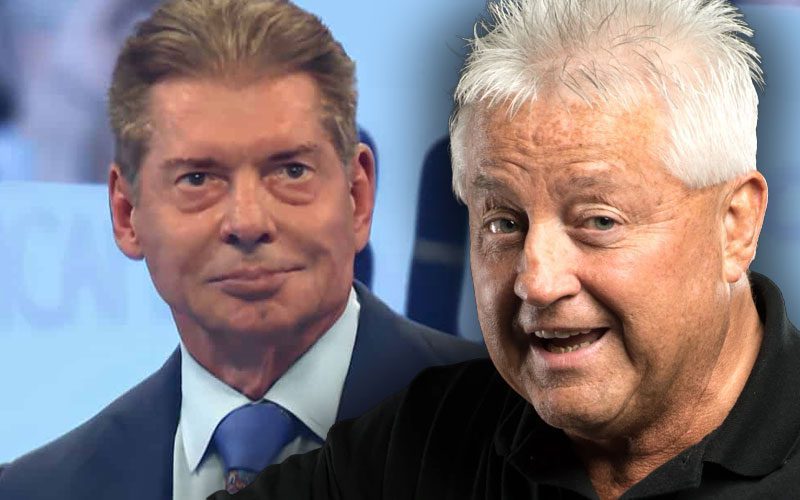
The internet is currently having a collective aneurysm over Danny Davis
If you have spent even five minutes on the wrestling corners of the web since this interview dropped via Ringside News, you know the atmosphere is radioactive. Danny Davis, a man whose black-and-white stripes caused more heart palpitations for viewers in the 1980s than a triple shot of espresso, decided to go against the grain. While the rest of the industry is busy scrubbing its association with the former chairman, Davis is out here claiming Vince McMahon essentially saved his life.
It is a bold strategy, Cotton. Let's see if it pays off. The sentiment reflects a collision between the old guard who view McMahon as a complex father figure and a newer generation of fans who see him as a moral catastrophe. You have the defenders, who cling to the idea of a 'tough love' mentor who steered wayward talent away from the typical rockstar pitfalls of the era. Then you have the skeptics, who view any praise for the man as either delusional or a cynical play for a legend's contract.
The divide in the discourse
The enthusiasts who fall on the side of loyalty argue that we cannot judge the 1980s through a 2026 lens. They highlight how Davis specifically credits the structure of the business for keeping him out of prison or the morgue. Their argument essentially boils down to situational awareness: the circus atmosphere of the 80s was a shark tank, and McMahon provided the only lane that kept people focused on the bell to bell product.
The contrarians in the thread are absolutely losing their minds at this perspective. Their argument is simple: providing a job does not negate the institutional rot that investigators have been digging into for years. They are quick to point out that 'not being dead or in jail' is a remarkably low hurdle for a billionaire CEO to help an employee clear. If the only way to avoid substance abuse or violence was intense management by a single person, that suggests a broken culture, not a savior.
Why this matters for the modern fan
People feel so intensely about this because it forces a choice between reality and nostalgia. We want to believe that the men who created our childhood memories are titans, but the reality is much soggier. Danny Davis was essential to the Hart Foundation push and the mega-heat of the WrestleMania III era, but his personal experience with Vince is being used as a shield against legitimate systemic criticism. It is why threads on this topic are reaching double-digit awards and quadruple-digit comments within hours.
My take? Davis is likely being honest about his experience, which is the problem. Two different people can look at the same mountain and one sees a climb, while the other sees a landslide. Most folks are suffering from binary thinking here. They want Vince to be either a saintly pioneer or a mustache-twirling villain in a cape. The truth is usually some miserable shade of grey.
The fans who get angry at Davis are failing to realize that human beings are fundamentally irrational. He owes his trajectory to a man who, at the time, was the absolute center of his universe. You cannot expect a veteran to suddenly torch his own history because the public opinion tide shifted. However, the skeptics are also correct to point out that a personal anecdote is not a character reference for an entire company’s corporate legacy.
Ultimately, the reason this is blowing up is that we are all tired of the moral exhaustion surrounding WWE history. Whenever we think we can move on to talking about the actual wrestling—the athleticism, the booking, the upcoming June 11th World Cup fervor that is distracting half of us anyway—we get pulled back into the boardroom drama. It is like trying to enjoy a nice steak dinner hosted by a mob boss. Enjoy the beef, but keep your eyes on the exits, because the air in the room is always thin.