The ghost of the ECW Arena
There was a time when Combat Zone Wrestling was the undisputed king of American ultraviolence. You remember the VHS tapes traded in high school cafeterias. You remember the Cage of Death. It was gritty, terrifying, and completely unique.
Yesterday’s show in Worcester, Massachusetts, tells a vastly different story. The May 16 event was another attempt by CZW to plant their flag outside their traditional New Jersey and Pennsylvania strongholds. Running a show in New England is a bold move. The regional indie scene there is notoriously territorial and fiercely loyal to homegrown promotions like Beyond Wrestling.
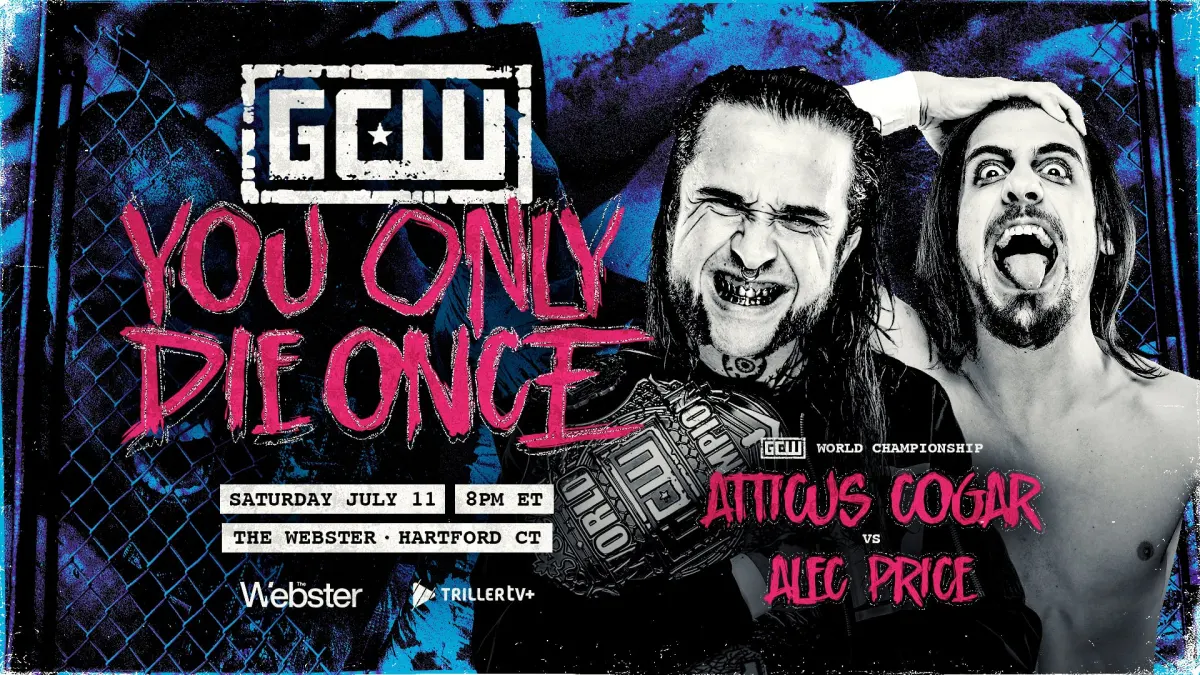
Running Worcester isn't just about finding a new building. It is a statement of intent. They are trying to prove they still matter in a world where Game Changer Wrestling has completely eaten their lunch. GCW took the ultraviolent formula, stripped away the early-2000s edgelord baggage, and made it the coolest ticket in town.
CZW is left playing catch-up. Based on what we are seeing on the ground, they aren’t closing the gap. In fact, they might be running in the wrong direction entirely.
A shrinking piece of the pie
Let’s look at the mathematical reality. In 2005, a standard CZW show at the ECW Arena could realistically draw 800 to 1,000 fans. It was a destination event. Fans would drive for hours just to see the blood. Now, they are grinding it out in smaller rooms, hoping the brand name still holds weight for fans who grew up watching Jon Moxley bleed on DVD.
The Worcester show highlights a fundamental problem. They are relying on nostalgia while trying to present a modernized product. You can’t be both the ghost of John Zandig and a polished indie promotion simultaneously. This creates a tonal clash that alienates the old blood and confuses the new audience.
My prediction is absolute. CZW is never getting their crown back. They will settle into a comfortable, low-ceiling existence as a regional Northeastern touring brand. They won't challenge GCW. They won't be the primary pipeline to the major leagues that they once arguably were.
The market for pure deathmatch wrestling has splintered completely. Fans who want absolute chaos go to ICW No Holds Barred. Fans who want a mix of high-workrate and violence go to GCW. CZW is caught in the middle. They offer a hybrid product that doesn't fully satisfy either extreme of the fanbase.
The deathmatch identity crisis
Look at the pacing of their modern cards. You get some solid grappling in the opener. You get a few decent high-flying exhibitions in the midcard. Then, you get a light tube main event. It feels entirely formulaic. The unpredictable danger that used to define the promotion has been replaced by a paint-by-numbers approach to extreme wrestling.
This isn’t to say the talent isn't working hard. The guys taking bumps on these shows are putting their bodies through absolute hell. But the booking lacks the chaotic urgency that made early CZW required viewing. There is no overarching narrative that forces you to buy the next replay or track down the results immediately.
The Worcester expansion is a symptom of this identity crisis. Why Worcester? Beyond the city's history with chaotic indie crowds, it feels like throwing darts at a map of the I-95 corridor. They need a home base that feels like theirs. Instead, they are playing away games in markets that already have established local favorites.
Let’s talk engagement numbers. The indie wrestling boom of the late 2010s showed that you need either a massive social media presence or a hook that goes viral instantly. CZW’s digital footprint is surprisingly small for a company with their rich history. They struggle to generate the short-form video clips that drive modern indie engagement.
Competence over chaos
When was the last time a CZW spot broke containment and took over your timeline? It has been years. That lack of digital virality means they are entirely dependent on local ticket sales. Local ticket sales in places like Worcester require consistent storytelling that gives casual fans a reason to leave their house on a Saturday night.
To understand why CZW is stuck in this holding pattern, you have to look at the evolution of the talent itself. Twenty years ago, there was a hard line between a traditional professional wrestler and a guy who specialized in deathmatches. CZW built its brand on the backs of the latter. These were guys who couldn't necessarily chain wrestle for twenty minutes, but they could take a bump off a balcony through flaming tables.
That division doesn't exist anymore. The modern independent scene is dominated by hybrid athletes. The guys bleeding buckets on a Saturday night are often the same guys putting on twenty-minute technical clinics on a Sunday afternoon.
This shift has hurt CZW immensely. When every major indie promotion can bring in a top-tier worker who is also willing to bleed, CZW loses its unique selling point. They can no longer just roll out a bunch of light tubes and expect fans to hand over their money. The standard for in-ring quality has skyrocketed across the board.
The economic reality of 2026
Let's consider the financial side of touring right now. Renting a venue in New England is significantly more expensive than it was five years ago. The insurance premiums for a promotion with CZW's notorious reputation are exorbitant. To turn a sustainable profit, they need to consistently pack these smaller rooms to the absolute rafters.
But how do you pack a room when you lack a reliable anchor star? CZW used to be a star-making factory. They were the gritty proving ground that elevated regional talent into national names. Right now, their roster is devoid of that undeniable breakout star. They have solid workers, sure. They have tough guys who work hard and take crazy risks. But they don't have that singular, charismatic draw that forces a casual fan to immediately buy a ticket.
This forces them to rely entirely on the brand name. They are selling the letters "C-Z-W" rather than the names on the marquee. That is a dangerous game to play in this era. Brand loyalty in professional wrestling is notoriously fickle. If the product on the mat doesn't deliver a memorable experience, fans will quickly find somewhere else to spend their disposable income.
The final verdict on the Combat Zone
You could see this tension in the Worcester show. The undercard featured matches that wouldn't look out of place on a standard regional indie card. There were clean arm drags. There were cleanly executed dropkicks. It was competent, professional wrestling. But competence isn't what built the Combat Zone.
When the main event rolled around and the weapons came out, it felt disconnected from the rest of the show. It felt like two different promotions sharing the same ring on the same night. This cognitive dissonance makes it incredibly difficult to build a cohesive, loyal fanbase. Are you catering to the purists who want to see chain wrestling, or are you catering to the sickos who want to see glass shatter?
Trying to appease both groups usually results in satisfying neither. That is the exact trap CZW is currently caught in. GCW solved this problem by leaning into a chaotic, party-like atmosphere that makes the tonal shifts feel intentional rather than accidental. CZW just feels disjointed.
I predict we will see CZW adopt a very specific, scaled-down touring model by the end of 2026. They will run a conservative number of shows a year. They will focus heavily on the tri-state area with occasional, calculated forays into New England. They will formally stop trying to compete on the national indie level.
They will become a legacy brand. Think of it like a band that had a massive hit twenty years ago. They still tour. The diehards still show up in their vintage black t-shirts. But nobody expects them to redefine the genre again. That is the exact trajectory for CZW right now.
The Worcester show was a microcosm of CZW's entire current operational strategy: competent, mildly violent, but ultimately forgettable. They will never again drive the conversation. They will never again be the promotion that sets the internet on fire with a single viral clip. They have accepted their role as a middle-tier player in a crowded market.
For a company that was once built on unapologetic rebellion, this quiet acceptance of mediocrity is the most shocking development of all. They survived the ultraviolent wars, but they lost their teeth somewhere along the way. The fans in Worcester got a decent wrestling show on May 16. But they didn't get the Combat Zone. They got a tribute act playing the greatest hits at half speed.