Cody vs. Gunther on the European tour is a massive summer spoiler
The House Show Laboratory
There is a fundamental misunderstanding about how WWE uses its European tours. Fans see the untelevised nature of these events and assume they are throwaway exhibitions. They are completely wrong. When WWE sends its top stars across the Atlantic for a grueling schedule of consecutive arena dates, they are using those rings as a high-stakes laboratory. This is where main events are stress-tested. This is where chemistry is evaluated before pay-per-view money is on the line.
The recently leaked main events for the upcoming late May and early June loop in Liverpool and Strasbourg are not just promotional tools. According to the initial report from PWInsider, the lineup features matches that frankly deserve a premium live event stage. Instead, the lucky ticket holders in the UK and France are getting an unprecedented glimpse into the creative direction for the second half of 2026.
We are just two days away from AEW Double or Nothing, but WWE has successfully hijacked the news cycle. Let’s break down exactly what these matches tell us about the current booking strategy.
The Heavyweight Standard
The headline attraction is Cody Rhodes defending the WWE Championship against Gunther. We have seen them clash before, most notably in the Royal Rumble, but a structured 25-minute championship match on a European tour is a completely different beast. This is the match everyone has been quietly anticipating since Gunther’s historic Intercontinental run ended.
Tactically, this is a fascinating clash of pacing. Rhodes operates on raw emotion and high-impact sequences. He thrives in the sudden bursts of momentum — the quick snap powerslam, the disaster kick out of nowhere. Gunther wrestles like water slowly eroding a rock. He chops away the base, targets a specific limb, and suffocates the oxygen out of the building.
Putting them together in Liverpool on May 28 requires Rhodes to alter his rhythm. He cannot rely on his usual comeback spots if his chest is quite literally bleeding from Austrian chops. Gunther will punish the standard babyface fire. Rhodes has to wrestle a more grounded, defensive style. He needs to use his amateur background, targeting Gunther's legs to remove the foundation of those heavy strikes.
The fact that WWE is running this match off-camera is a clear signal. They want these two to iron out the transitions. They are figuring out the exact sequence where a powerbomb attempt gets reversed into a Cross Rhodes. You don't burn Cody vs. Gunther on a random Tuesday in Strasbourg on June 2 unless you are planning to run it back for an absolute fortune in August. This is the rehearsal dinner.
The Return of the Queen
Then we have the advertised return of Charlotte Flair. The women's division has shifted significantly during her absence. We are currently living in an era dominated by the sheer physical power of Rhea Ripley and the undeniable star aura of Jade Cargill. Flair returning to this environment is not a simple plug-and-play scenario. The roster has leveled up.
Flair’s traditional booking pattern — arriving, demanding a title shot, and winning — is tired. It worked in 2019, but fans in 2026 are completely exhausted by that routine. The PWInsider report notes she is a top name advertised, but it carefully avoids stating who she will be working with.
If WWE is smart, they use this tour to re-acclimate Flair to a mid-card feud first. Let her work with a rising star to shake off the ring rust. Her moonsault and Figure Eight are iconic, but her timing needs to be precise against opponents who have been wrestling four days a week. The negative observation here is obvious: WWE has a bad habit of rushing Flair back into the main event picture, instantly alienating the audience. If she immediately challenges for a world title in her first television appearance back, it will be a monumental booking failure. The European crowds will absolutely reject it.
The Bloodline Civil War
The most telling booking on the card involves Jacob Fatu. He is scheduled for Street Fights against Solo Sikoa in Liverpool and Drew McIntyre in France. Fatu is currently the most explosive element in the Bloodline saga. Every time he enters the ring, there is a genuine sense of danger. His moonsault is terrifying. His strikes are violent.
Booking him in Street Fights against his own former leader Solo Sikoa is narratively massive. It confirms the internal implosion of the new Bloodline is not just a television angle; it is the anchor of their live event business. However, I have a massive problem with this specific match type.
Why a Street Fight? WWE frequently uses the Street Fight designation on house shows as a crutch. It allows them to hide limitations, rely on kendo sticks and steel chairs, and avoid wrestling a complex 15-minute match. Sikoa is a methodical, slow-paced wrestler. Fatu is a fast-paced wrecking machine. A standard wrestling match between them would force Sikoa to keep up with Fatu’s incredible speed. Putting a weapon in their hands gives them an excuse to slow the pace to a crawl. It is a lazy booking shortcut.
Furthermore, throwing McIntyre into the mix against Fatu in France is wild. McIntyre is a bruiser who lays his stuff in hard. A Fatu vs. McIntyre brawl could be the match of the night, but it also risks injury. Fatu throws his body around with reckless abandon. McIntyre hits the Claymore with maximum force. Doing this on a dark show just days before a major televised block is a massive gamble.
The True Value of the Undercard
While the main events grab the headlines, the structure of these European tours relies heavily on the opening matches to set the tone. This is where younger talent gets to work extended minutes in front of hot crowds.
We often ignore the mechanics of how a wrestling show is paced. You cannot put Cody Rhodes and Gunther on first. You need to warm the crowd up without burning them out. The typical WWE house show format uses a fast-paced tag team match or a high-energy midcard bout to get the audience vocal.
- Match 1: High energy, lots of near falls, crowd-pleasing finish.
- Match 2: A slower, more methodical heel-dominated match to build sympathy.
- Match 3: The women's division showcase, heavily reliant on character work.
- Match 4: The chaotic Street Fight to send everyone to intermission happy.
This formula works. It has worked for three decades. But it also reveals the rigid structure of WWE's creative mind. They rarely deviate from this template. When you read the latest breaking news from PWInsider, you are seeing the bare bones of their booking philosophy.
"FIRST MAIN EVENTS FOR WWE EUROPEAN TOUR, TOP NAME ADVERTISED TO RETURN"
That headline is the hook, but the execution of the undercard is what determines if the live event is actually successful.
Penta and Dominik
Perhaps the most fascinating undercard note is Penta defending his Intercontinental Championship against Dominik Mysterio. Let's pause and appreciate that sentence. Penta in WWE, holding a workhorse title, is a reality that still feels surreal. His transition away from AEW has been seamless. The WWE camera work actually highlights his charisma better than the chaotic production of his previous employer.
Defending against Dominik Mysterio in Europe is a masterclass in crowd manipulation. Mysterio generates a visceral reaction. When he grabs the microphone in Liverpool, expect a chorus of boos so loud from the 11,000 fans in attendance that the building shakes. Penta doesn't even need to speak. He just needs to do the Cero Miedo taunt, hit a few stiff superkicks, and let the crowd hurl insults at Dominik.
Tactically, Dominik has improved immensely. He bumps incredibly well for high-flyers. He will take Penta's Canadian Destroyer perfectly. But the core dynamic is purely psychological. Penta is the cool, collected assassin. Dominik is the cowardly opportunist. The match structure writes itself. Dominik will cheat, grab the tights, perhaps use an exposed turnbuckle. Penta will overcome the odds with a spectacular Fear Factor piledriver.
The European Crowd Factor
We also need to address the environment itself. Wrestling in front of a European audience is fundamentally different from working a taping in Corpus Christi, Texas. The crowds in the UK and France are inherently musical. They chant in continuous loops. They sing along to entrance themes. They pick a random wrestler and decide to make them the focal point of the entire evening.
This forces the talent to adjust their internal metronome. If a crowd in Liverpool starts a five-minute chant for a specific spot, you cannot simply ignore it and move to the next sequence on your call sheet. You have to lean into it. Wrestlers who are rigid in their planning absolutely drown in these environments.
This is why putting a seasoned veteran like Gunther in the main event is brilliant. He understands how to control a loud, unruly audience. If they chant over him, he simply chops his opponent harder until the sound of skin slapping flesh echoes through the arena, forcing a collective gasp. He commands respect through sheer physical dominance. Rhodes, conversely, feeds off the crowd's energy. If they are singing his song, he will milk every second of it. The clash of these two approaches — Gunther suffocating the crowd's joy and Rhodes desperately trying to ignite it — is the true narrative of their matchup.
Evaluating the Strategy
There is a real danger in relying too heavily on the same combinations. If Rhodes and Gunther wrestle 15 times on the house show loop, their eventual pay-per-view match might feel overly rehearsed. Wrestling is at its best when there is a hint of unpredictability, a sense that things could fall apart at any second.
When two wrestlers memorize every counter and reversal, the match looks like a synchronized swimming routine rather than a fight. Gunther is usually excellent at avoiding this trap. His strikes are so stiff that the match always feels authentic. Rhodes, however, leans heavily into set pieces. He wants the match to look like a blockbuster movie.
This European tour is the testing ground. We will see if the grit of Gunther can strip away some of the cinematic gloss of Rhodes. We will see if Charlotte Flair can adapt to a vastly improved women's roster. We will see if Jacob Fatu can survive a series of brutal Street Fights without injuring himself before the summer really begins.
The Risk of Stagnation
Yet, amidst this praise for the top of the card, we must acknowledge the flaws in WWE's touring model. The midcard is often an afterthought on these international loops. While Penta and Dominik will tear the house down, the rest of the undercard usually consists of repetitive tag matches with zero stakes. You will likely see the same six-man tag team match every night, with the exact same finish: the babyfaces hit their finishers in rapid succession, culminating in a splash or a stunner to send the fans home happy.
This is where the product feels sterile. It is a highly polished, incredibly profitable machine that sometimes forgets the chaotic magic of professional wrestling. The house show should be a place to experiment with strange pairings. Why not put a high-flyer against a technical mat-wrestler just to see what happens? Why not test a heel turn in a town where the result won't immediately hit social media? Instead, WWE plays the hits. They act like a legacy rock band playing their greatest hits album from front to back, terrified of playing any new material.
As the roster packs their bags for this grueling stretch, the narrative threads are clearly visible. The company is actively building the second half of 2026. The initial PWInsider report is more than just a list of names; it is the blueprint for the summer.
Cody Rhodes and Gunther are laying the groundwork for a historic title clash. Charlotte Flair is stepping back into a division that frankly didn't miss her as much as she might hope. The Bloodline continues to implode in violent, weapon-filled brawls. And Penta is cementing his legacy as a global star under the WWE banner.
These house shows matter. They are the rough drafts of the masterpieces we will eventually see on premium live events. If you want to know what WWE is planning for the rest of the year, ignore the television promos and look directly at what they are doing in a dark arena in Strasbourg on a Tuesday night.
Read Next
- WWE's Saturday Night's Main Event return faces a major booking problem
- WWE is leaning into the flag again and we all know why
- Charlotte Flair Thinks The Becky Lynch Feud Is Just Beginning. It Shouldn't Be.
- WWE is hitting the panic button with Charlotte and Becky again
- 💥 WWE Backlash 2026 — Full Coverage Hub
WWE Elite Collection Series 117 Seth Rollins Action Figure
The Visionary in all his WrestleMania 40 glory, ready to conduct the crowd.
Frequently Asked Questions
Why does WWE use untelevised European tours for major matches?
When and where are Cody Rhodes and Gunther wrestling on the tour?
How do the wrestling styles of Cody Rhodes and Gunther compare?
What strategy must Cody Rhodes use to defeat Gunther in their match?
Who currently dominates the women's division as Charlotte Flair returns?
More Coverage

Sidney Akeem's meteoric jump to the main roster is still baffling fans
7 minutes ago
The 10 Defining Moments of 2026: Pro Wrestling’s High-Stakes Year
7 minutes ago
Why AAA's NYC involvement signals a major shift for WWE's international strategy
13 minutes ago
Becky Lynch has been gone for six weeks and Raw is feeling the pinch
16 minutes ago
Paige, leaks, and why the surprise return is dying a slow death
an hour ago
AJ Styles is right to be skeptical about a WWE Japan expansion
an hour agoMore Analysis
WWE's European tour is about to expose the cracks in Cody Rhodes' title run
1 month, 3 weeks ago
Cody Rhodes is staring down Gunther and the ghosts of his executive past
2 months ago
Why Cody Rhodes' European tour is the perfect stage for a major WWE debut
2 months ago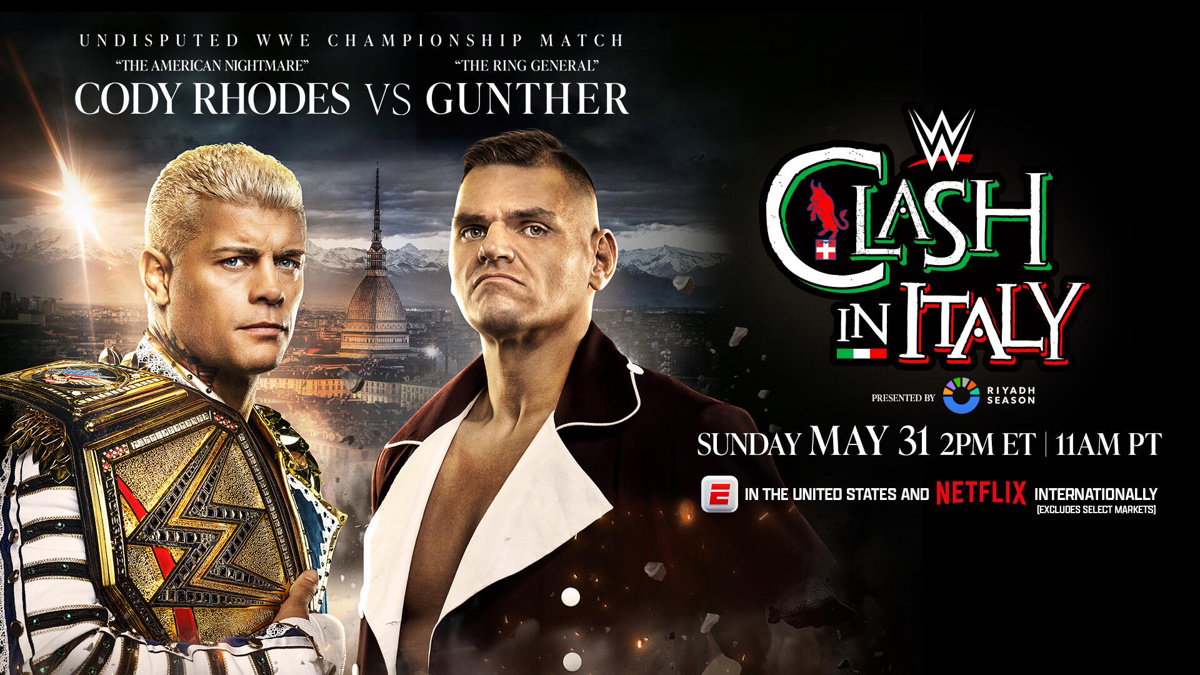
Cody Rhodes is about to walk into a European buzzsaw in Turin
1 month, 3 weeks agoCody Rhodes and Gunther are about to break the 3Arena in Dublin
2 months, 4 weeks ago