Cody Rhodes is right to keep his daughters away from the wrestling machine
The cycle begins again
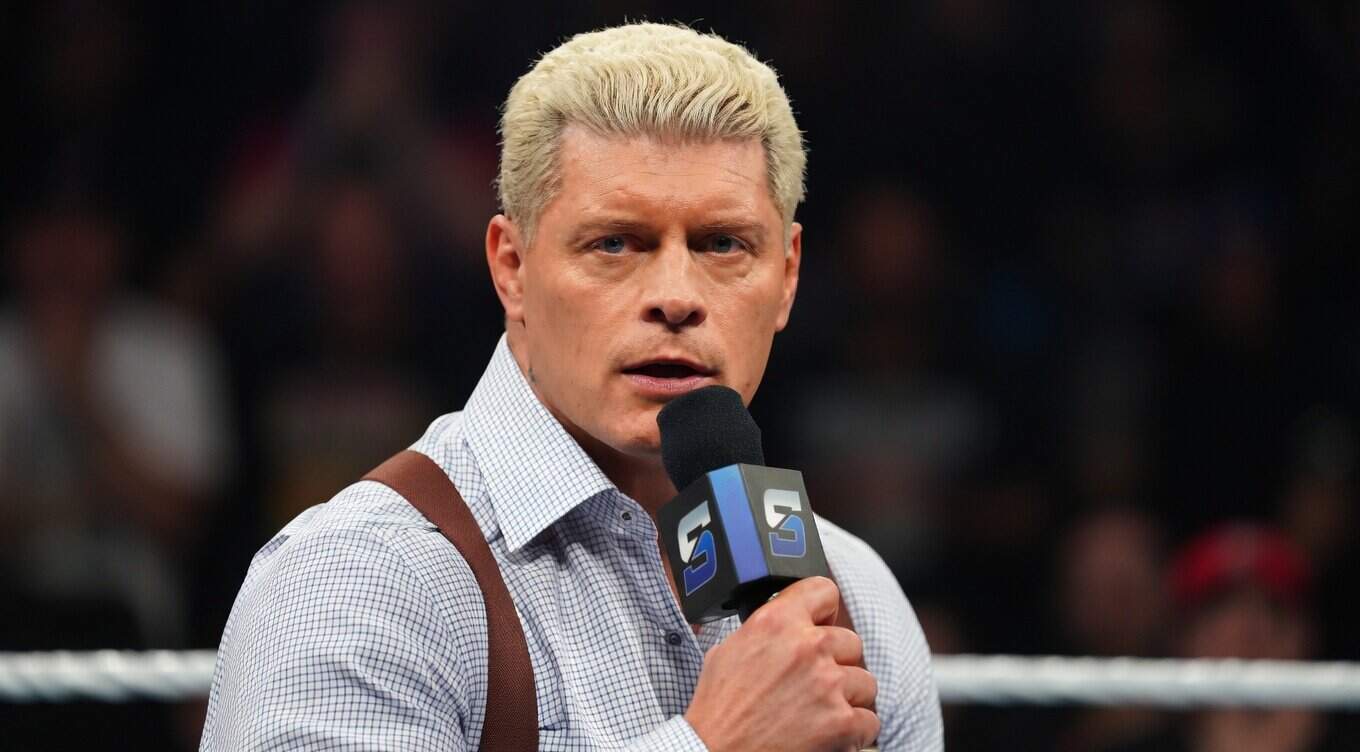
Cody Rhodes stood in the ring at Allegiant Stadium last month and did exactly what he promised. He retained the WWE Championship at WrestleMania 41. He fought off the Bloodline. He held the gold high in Las Vegas, a city built on the exact kind of high-stakes gambles that defined his entire career.
But the most interesting thing Cody has done since that April victory didn't happen in a ring. It happened during a routine media hit.
Asked recently if he envisions his daughters—Liberty and his newest addition—eventually stepping into the squared circle, Cody didn't offer a cheerful PR response. He didn't smile and talk about the women's evolution. He didn't tease a future tag team run.
Instead, he reached into the past. He repeated the exact words his father, Dusty Rhodes, used when asked the same question decades ago. The American Dream didn't want his boys taking flat back bumps. The American Nightmare doesn't want his girls doing it either.
Generational trauma is a heavy phrase, probably too heavy for professional wrestling. But generational burden? That fits perfectly.
Wrestling is a carny business that desperately wants to be a legitimate sport. It operates on bloodlines and legacies. The Anoa'i family, the Harts, the Von Erichs, the Flairs.
When you belong to one of these families, the business is framed as an inheritance. It is treated like a birthright. But for the people actually taking the suplexes, it often feels like a tax they have to pay.
Dusty Rhodes knew the cost of that tax better than anyone. He bled buckets in Florida. He drove thousands of miles through the Carolinas on no sleep. He played backstage politics against Jim Crockett and Vince McMahon.
He saw the toll the industry took on his peers. He saw the substance abuse, the broken marriages, the early graves. So when Dustin and later Cody showed interest in lacing up boots, Dusty pushed back. He pushed back hard.
He wanted them to play football. He wanted them to go to college. He wanted them to be anything other than professional wrestlers.
The burden of the surname
We all know how that turned out. Dustin carved out a bizarre, brilliant, three-decade career that almost killed him before he found sobriety.
Cody took a different path. He arrived in WWE as a pristine, athletic prospect. He formed Legacy with Randy Orton. He became Stardust, hated it, and eventually walked away in 2016.
That decision to leave was the moment Cody truly understood his father. He had to go to Ring of Honor, New Japan, and the independent circuit to figure out who he was without the WWE machine validating him.
Dusty made his name in the old territory system. He bounced from Florida to Texas to the Carolinas. If he got tired of one promoter, he simply packed up his bags and drove to the next town. It was chaotic, unregulated, and incredibly dangerous.
Cody didn't have territories. When he walked out on Vince McMahon, he had the independent circuit. He wrestled in humid high school gyms for PWG. He flew to Japan to join the Bullet Club. He went to Ring of Honor to bleed with the Young Bucks.
It was the modern equivalent of his father's journey. Cody had to prove he wasn't just a corporate creation. He had to prove he could draw money on his own name, without the massive marketing machine of Stamford backing him up.
He succeeded wildly. The creation of All Elite Wrestling completely changed the financial reality of the wrestling business. It forced WWE to adapt. It gave wrestlers negotiating power they hadn't seen since the Monday Night Wars.
Cody was the catalyst for all of that. But building a revolution is exhausting. He left AEW because he hit a ceiling with the fanbase he helped cultivate. They turned on him. They booed his promos. They threw his weight belt back at him.
That rejection hurt. You could see it in his eyes during his final AEW matches. It was a harsh lesson in the fickleness of wrestling fans. They will love you intensely, right up until the moment they decide you are boring.
Why would any father want his daughters to subject themselves to that kind of emotional whiplash? You give your soul to the audience, and they reward you by telling you to turn heel.
By the time Cody returned to WWE at WrestleMania 38, he wasn't just Dusty's kid anymore. He had paid the tax. He was a made man.
Now, sitting at the absolute peak of the industry in May 2026, he looks at his daughters. He sees the same thing Dusty saw in him. He sees a clean slate.
Why would he want them to endure the physical destruction? A torn pectoral muscle is a rite of passage for a Rhodes at this point. Cody wrestled Seth Rollins inside Hell in a Cell with his right pectoral muscle completely torn off the bone. His chest was entirely black and blue. It looked horrifying.
It was a legendary performance. It cemented his main event status. But what father wants his child to go through that kind of agony just to entertain a crowd?
Charlotte Flair and the shadow of greatness
If Liberty Rhodes does decide to train in a decade, she will face a unique, terrifying pressure. The pressure of the third-generation female wrestler.
The women's division today is incredibly advanced compared to what it was during Dusty's prime. Back then, women were treated as sideshow attractions or valets. Today, they main event premium live events. Rhea Ripley and Bianca Belair are hitting moves that would have broken the necks of the men working the midcard in 1985. The athleticism is truly elite.
But the bumps are just as real. A powerbomb on the ring apron hurts just as much in 2026 as it did in 1996. The schedule is slightly better under the TKO banner. You get more weekends off. But you still spend half your life navigating sterile airports, waiting in line at rental car counters, and sleeping in generic Marriott hotel rooms. It is an isolating existence.
Look at Charlotte Flair. She is arguably the greatest in-ring performer in the history of the women's division. She has won countless championships. She has main-evented WrestleMania.
And yet, a vocal segment of the fanbase still refuses to give her total credit. They still claim she was handed opportunities because of her last name. They still chant at her, trying to tether her permanently to her father, Ric.
Charlotte had to be ten times better than everyone else just to prove she deserved to be in the room. Tessa Blanchard faced similar expectations, though her career derailed for entirely different, self-inflicted reasons.
Carmella navigated it differently, leaning into character work rather than technical grappling. But the shadow is always there.
Cody knows this. He knows that if his daughter steps into the Performance Center, she won't just be a rookie. She will be a Rhodes.
Every arm drag will be heavily scrutinized. Every promo will be compared to his own. Every missed spot will generate a toxic wave of social media hate.
That is a miserable existence for a teenager trying to find their footing. It is a suffocating environment.
Cody spent his entire twenties trying to escape his father's shadow. He painted his face. He changed his name. He only truly succeeded when he embraced the legacy on his own terms.
He does not want his daughters to fight that same psychological war. He wants them to be doctors, lawyers, architects. He wants them to build things, not tear their bodies down for ratings.
A critical misstep in the modern product
There is an irony here, of course. WWE loves to monetize these family dynasties. The entire Bloodline storyline, spanning over four years of television, is built entirely on the concept of family duty.
Roman Reigns defends the honor of his elders. The Rock returns to protect the family's corporate interests. The company sells t-shirts based on family trees.
WWE actively encourages the nepotism that makes the industry so claustrophobic. They actively recruit college athletes whose parents used to work for them. They love a second-generation marketing hook. They can show old footage of the father, cut a slick video package, and instantly sell the audience on the kid.
It is one of the more frustrating aspects of the Paul Levesque era. While the booking is generally more logical and coherent than the chaotic final years of Vince McMahon, there is a massive over-reliance on legacy acts to anchor the weekly television product.
Bron Breakker is pushed to the moon because he runs fast, hits hard, and barks like his uncle Scott. Lexis King gets television time in NXT primarily because his father was Brian Pillman.
It creates a two-tiered system. The independent veterans have to grind for a decade, destroy their knees in front of two hundred people in Reseda, and beg for a dark match tryout. Meanwhile, the kids of former stars get a fast pass to the Performance Center in Orlando. They get top-tier coaching and immediate television time.
Cody benefits from this system. He is the ultimate legacy babyface. But his recent comments suggest he is deeply uncomfortable with the reality of it.
He knows the machine will chew his daughters up if they aren't fully prepared. He knows WWE will look at Liberty in 2045 and see dollar signs, not a human being.
That is the cold, hard truth of professional wrestling. The promoters do not care about your physical well-being. They care about the marquee.
Dusty Rhodes figured that out in the 1980s. He tried to warn his sons. They didn't listen.
Now Cody is the one issuing the warning. It is a sobering reminder that behind the pyro and the soaring entrance music, this is a brutal, unforgiving trade.
Finishing the real story
For three years, WWE programming revolved around Cody's quest to finish the story. He needed to win the title his father never could.
He finally did it in Philadelphia at WrestleMania 40. He defended it successfully against the Bloodline at WrestleMania 41 last month in front of over 60,000 screaming fans. The storyline is completely wrapped up.
But the real story of the Rhodes family isn't about championship belts. It is about survival.
It is about Dustin surviving his own demons. It is about Cody surviving his Stardust run and rebuilding his entire identity from scratch.
It is about Dusty surviving the transition from top draw to behind-the-scenes mentor at NXT, a role he excelled at for exactly 36 months before his sudden passing.
Cody repeating his father's warning regarding his daughters is the actual conclusion to his character arc.
He is no longer the hungry upstart trying to prove he belongs. He is the veteran champion who knows exactly how the sausage is made.
He wants a better life for his kids. A quieter life. A life without neck surgeries and concussion protocols.
Will they listen? Probably not. Children rarely listen to their parents when it comes to following in their footsteps. The pull of the crowd is incredibly strong.
If Liberty decides she wants to bump, there is no force on earth that will stop her. She has the stubbornness of a Rhodes.
But Cody's reaction is deeply human. It cuts through the plastic, corporate sheen of modern WWE media scrums.
It reminds us that the people entertaining us every Monday and Friday night are trading their health for our amusement. They know the risks. They just don't want to see their children take them.
Dusty would be incredibly proud of Cody the WWE Champion. But he would probably be even prouder of Cody the father, repeating the exact same tired warning, hoping against hope that this time, it actually works.
Read Next
- Top 10 Moments That Defined the Spring 2026 Wrestling Season
- YEET All You Want, Jey Uso Isn't The Best In The Game
- Top 10: The Defining Wrestling Moments of Spring 2026
- TKO is squeezing the roster dry: The reality of WWE's new 10-date summer loop
- 🏆 WrestleMania 41 — Full Coverage Hub
- 💥 WWE Backlash 2026 — Full Coverage Hub
WWE Unisex-Adult's Stone Cold Steve Austin 3:16 Lucha T-Shirt
The classic attitude era aesthetic reinvented for your daily wardrobe.
More Coverage

Sidney Akeem's meteoric jump to the main roster is still baffling fans
6 minutes ago
The 10 Defining Moments of 2026: Pro Wrestling’s High-Stakes Year
6 minutes ago
Why AAA's NYC involvement signals a major shift for WWE's international strategy
12 minutes ago
Becky Lynch has been gone for six weeks and Raw is feeling the pinch
15 minutes ago
Paige, leaks, and why the surprise return is dying a slow death
an hour ago
AJ Styles is right to be skeptical about a WWE Japan expansion
an hour agoMore Analysis
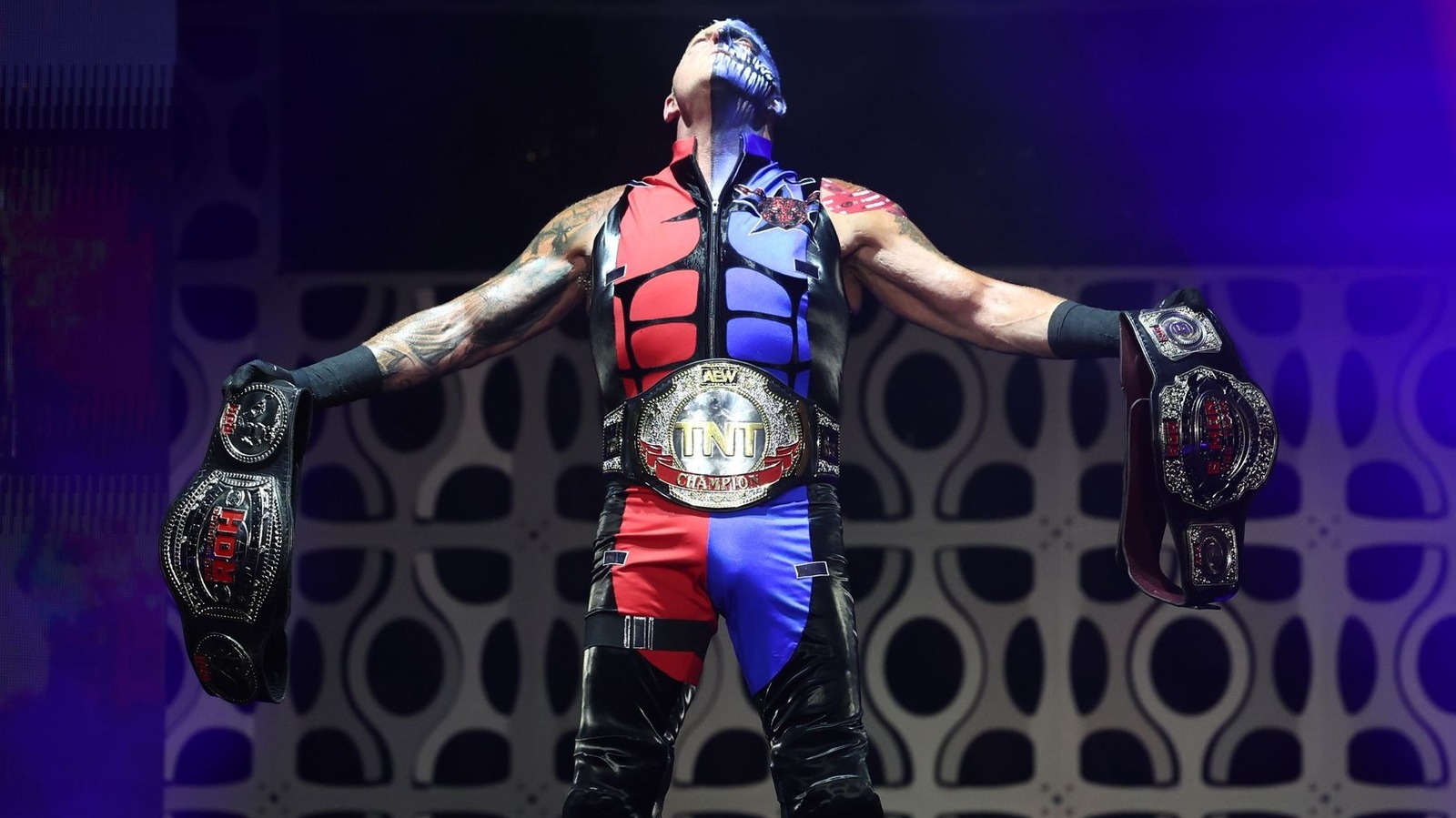
Cody Rhodes and the weight of a professional legacy
1 month ago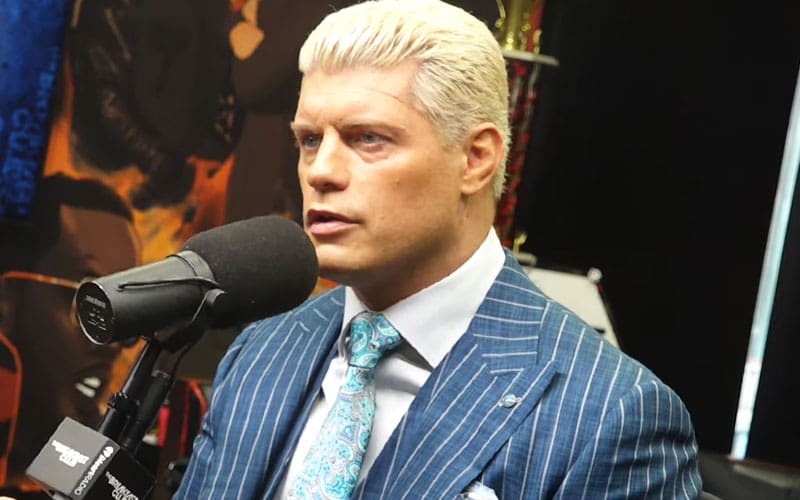
Cody Rhodes and the weight of a generation in flux
3 months, 2 weeks ago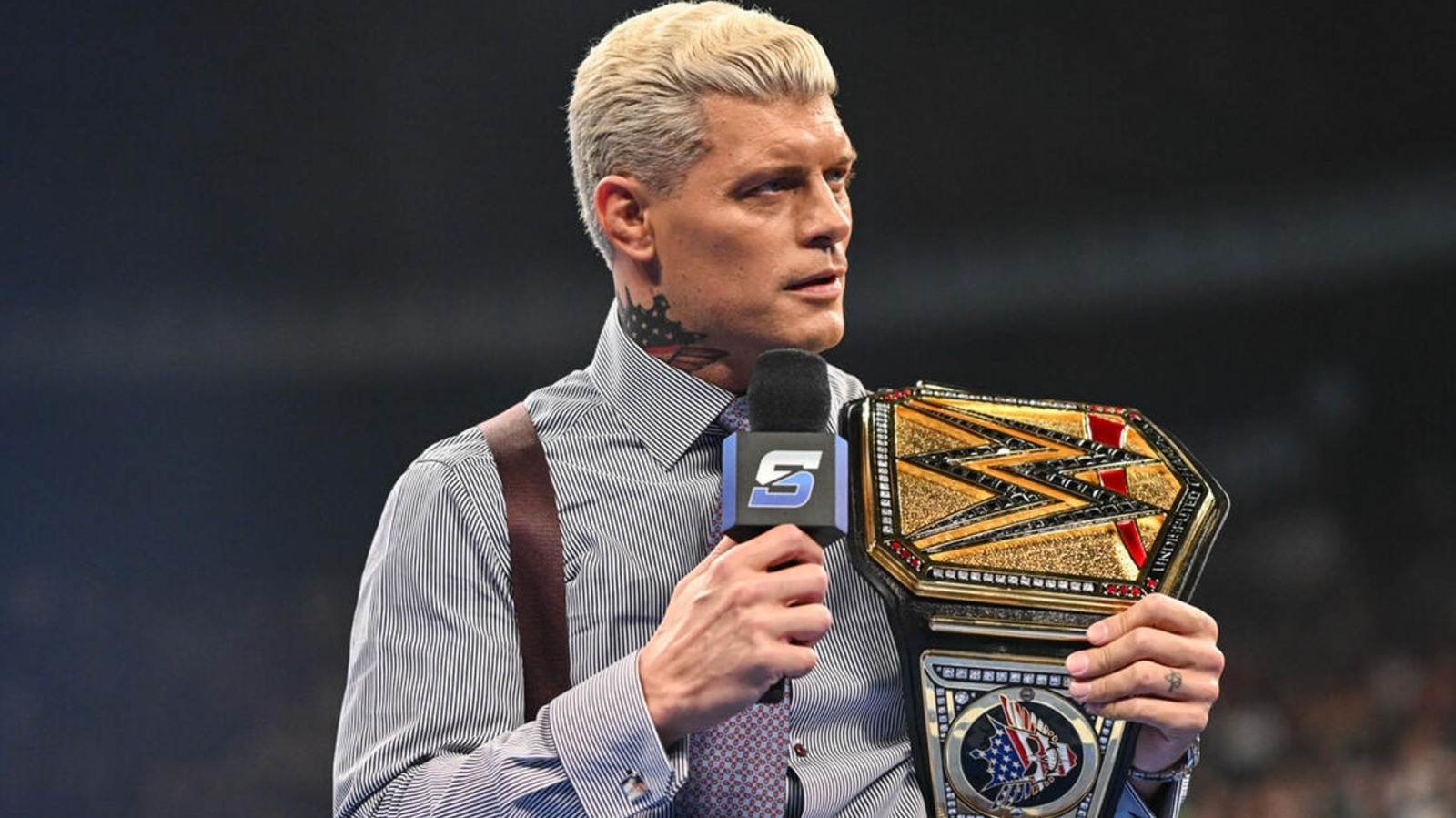
Cody Rhodes and the weight of the generational torch
3 weeks, 3 days ago
Cody Rhodes is finally winning the battle with his father's shadow
3 months, 4 weeks agoCody Rhodes has a massive Bloodline problem at WrestleMania 41
3 months, 3 weeks ago